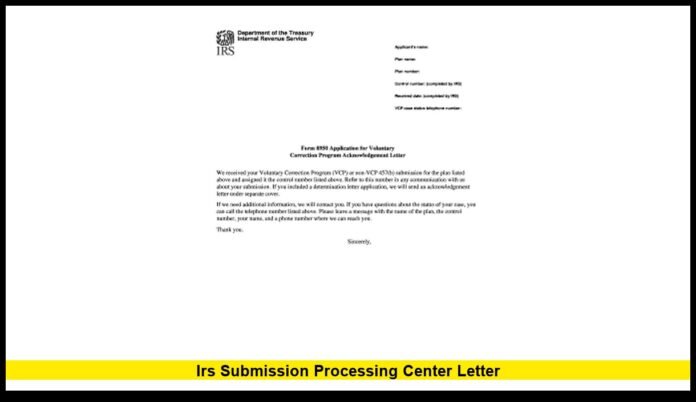

The IRS Submission Processing Center Letter is an official notice sent to taxpayers when the Internal Revenue Service cannot immediately complete the processing of a federal tax return. This letter has become increasingly common as the IRS applies stricter data verification, identity protection measures, and return accuracy checks. For many Americans, receiving this letter raises concern, confusion, and uncertainty about refunds, tax balances, or next steps.
Understanding what this letter means is essential. It does not automatically signal a serious problem, but it does require attention. The letter exists to inform taxpayers that their return has reached an IRS processing center and that additional review, confirmation, or documentation is needed before the return can move forward.
This article explains the IRS Submission Processing Center Letter in full detail. It covers why the letter is issued, how the IRS processing system works, what actions taxpayers must take, and how this notice affects refunds, timelines, and future filings.
What Is an IRS Submission Processing Center Letter
An IRS Submission Processing Center Letter is a formal communication generated during the early or middle stages of tax return processing. Submission Processing Centers are IRS facilities responsible for receiving, reviewing, and validating tax returns submitted by individuals and businesses.
When a tax return enters one of these centers, it undergoes automated and manual checks. If the return passes all system validations, processing continues without interruption. If an issue arises, the system halts progress and generates a letter requesting clarification or action from the taxpayer.
This letter is not a warning or enforcement notice. It is a procedural step that allows the IRS to complete processing accurately. The letter informs the taxpayer of what the IRS needs and explains how to proceed so the return can move forward.
Why the IRS Uses Submission Processing Center Letters
The IRS uses Submission Processing Center Letters to maintain accuracy, reduce fraud, and protect taxpayer accounts. Each year, millions of returns flow through IRS systems. Automated tools compare taxpayer information against employer filings, financial institution records, and government databases.
When inconsistencies appear, the IRS pauses processing instead of making assumptions. The letter allows taxpayers to correct errors, confirm information, or provide missing details.
This approach benefits both sides. Taxpayers avoid incorrect assessments or denied refunds. The IRS ensures compliance and accuracy without unnecessary enforcement actions.
How IRS Submission Processing Centers Operate
Submission Processing Centers serve as the operational backbone of the IRS tax return system. These centers receive electronic and paper returns, scan documents, verify data, and route returns through IRS processing pipelines.
Electronic returns move faster because data is already digitized. Paper returns require scanning and manual verification, which increases the likelihood of processing delays and correspondence.
Once a return enters the system, it is checked for completeness, accuracy, and identity verification. If the return meets all criteria, it proceeds. If not, the system flags it and generates a Submission Processing Center Letter.
Common Triggers for an IRS Submission Processing Center Letter
Several verified issues commonly trigger this letter. Each issue requires IRS review before processing can continue.
Income mismatches are among the most frequent triggers. If wages, interest, or other income reported on the return differ from information submitted by employers or payers, processing stops.
Missing or incomplete forms are another common cause. Returns claiming credits or deductions without required schedules often trigger review.
Identity verification requests also result in letters. The IRS may need confirmation that the taxpayer filed the return to prevent identity-related fraud.
Calculation inconsistencies, filing status questions, and duplicate filings can also prompt this letter.
What the Letter Usually Contains
An IRS Submission Processing Center Letter follows a structured format designed to be clear and actionable.
The letter identifies the specific issue that stopped processing. It explains what the IRS needs to resolve the matter.
It provides instructions on how to respond. This may involve submitting documents, confirming information, or taking no action if the IRS is simply notifying the taxpayer of a delay.
The letter includes a response deadline when action is required. This deadline is critical and should not be ignored.
Reference numbers appear on the letter to help the IRS track responses accurately.
Immediate Steps to Take After Receiving the Letter
The first step is to read the entire letter carefully. Skimming can lead to missed instructions or deadlines.
Next, review your tax return and compare it with the issue described. Identify what the IRS is questioning or requesting.
Gather any documents requested. Make sure they are complete and accurate.
If the letter requires a response, act promptly. Waiting until the deadline increases the risk of delays or complications.
If no response is required, keep the letter with your tax records.
How to Respond Correctly
Responding correctly is essential for resolving the issue efficiently. Follow the letter’s instructions exactly.
Only submit the documents or information requested. Sending unrelated materials can slow processing.
Ensure all documents are legible. Include reference numbers so the IRS can match your response to your return.
Keep copies of everything you send. This protects you if follow-up is needed.
How This Letter Affects Refunds
Refunds are paused while a return is under review. The IRS will not issue a refund until processing is complete.
The length of the delay depends on the issue and how quickly the taxpayer responds. Simple confirmations may result in short delays. More complex issues may take longer.
Once the IRS resolves the issue, processing resumes and refunds are issued according to IRS timelines.
What Happens If You Ignore the Letter
Ignoring an IRS Submission Processing Center Letter can create serious consequences.
If the IRS does not receive a response, it may adjust the return using available data. This can reduce refunds or increase tax owed.
Penalties and interest may apply if balances remain unresolved.
The IRS may send additional notices or escalate the issue.
Responding promptly helps avoid these outcomes.
Processing Timelines After You Respond
After the IRS receives your response, the return enters review again. Processing times vary depending on workload and complexity.
Some cases resolve within weeks. Others take longer, especially during peak tax seasons.
Monitoring your tax status helps track progress. If delays extend significantly, following up may be appropriate.
How This Letter Differs From Audits and Enforcement Notices
This letter is not an audit. It does not indicate an investigation or enforcement action.
Audits involve detailed examinations. Submission Processing Center Letters focus on return completion.
Understanding this difference helps reduce anxiety. Most cases are resolved through simple communication.
Why These Letters Have Become More Common
In recent years, increased data matching and identity protection have increased the use of processing letters.
The IRS prioritizes accuracy and fraud prevention, even if it means additional steps for some taxpayers.
These changes aim to protect taxpayer accounts and ensure fair administration.
How to Reduce the Chance of Receiving This Letter in the Future
While not all letters are avoidable, certain practices help.
Filing electronically reduces errors. Reviewing income documents carefully improves accuracy.
Including all required forms and double-checking calculations helps prevent processing issues.
Maintaining organized records simplifies responses if a letter is issued.
When Professional Help May Be Useful
Tax professionals can help interpret letters and prepare responses.
They are especially helpful in complex cases involving multiple issues.
Professional guidance can prevent mistakes and reduce delays.
Staying Organized and Informed
Keeping copies of returns, documents, and IRS letters is essential.
Opening IRS mail promptly prevents missed deadlines.
Staying informed helps reduce uncertainty and stress.
Final Thoughts for U.S. Taxpayers
An IRS Submission Processing Center Letter is a procedural notice designed to ensure accurate tax return processing. While receiving it can be stressful, it is often resolved through timely and accurate action.
Understanding the letter, responding correctly, and staying organized are the keys to moving forward without unnecessary complications.
If you have received an IRS Submission Processing Center Letter or are waiting for your return to be processed, stay alert, take action promptly, and feel free to share your experience or stay updated as tax processing continues.