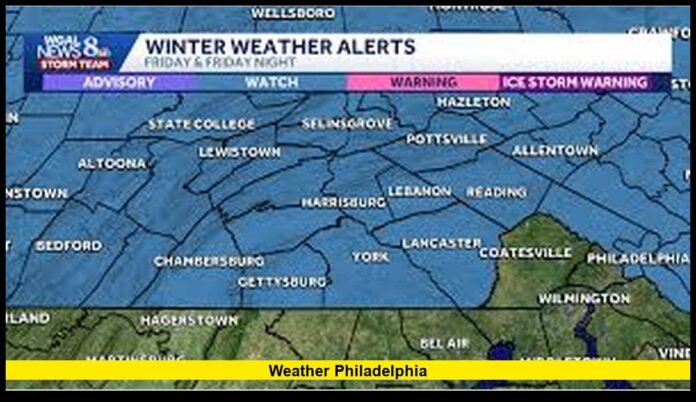

Weather Philadelphia remains a major concern today as a widespread winter storm continues to impact the city and surrounding counties. Cold air, persistent cloud cover, and a steady mix of snow, sleet, and freezing rain are shaping conditions across southeastern Pennsylvania. The storm, arriving just after Christmas, has created dangerous travel conditions, slowed daily routines, and reinforced the arrival of deep winter across the region.
Philadelphia entered the day under cold and overcast skies, with temperatures hovering near freezing. As the storm system moved in, precipitation developed steadily, creating accumulating snow in some areas and icy surfaces in others. City officials and transportation agencies remain focused on safety as the weather event unfolds through tonight and into Saturday.
Current Conditions Across Philadelphia
Early today, Philadelphia experienced calm but cold conditions. Temperatures ranged from the upper 20s to low 30s, with thick cloud cover signaling incoming precipitation. While conditions initially appeared manageable, they deteriorated quickly as moisture spread into the region.
Key observations across the city include:
- Temperatures fluctuating near the freezing mark
- Cloudy skies limiting daytime warming
- Light winds contributing to surface icing
- Snow beginning on colder surfaces
Because temperatures are hovering so close to freezing, even small changes are producing different precipitation types within short distances, making conditions unpredictable at street level.
Winter Weather Advisory and Regional Alerts
A Winter Weather Advisory remains in effect for Philadelphia and neighboring areas as the storm continues to move through the region. The advisory highlights the potential for snow accumulation, sleet, and freezing rain, all of which contribute to slippery roads and walkways.
The primary risks include:
- Snow and sleet accumulation creating slick surfaces
- Light ice formation on untreated roads and sidewalks
- Reduced visibility during periods of steady precipitation
- Slower emergency response times due to road conditions
Residents are urged to limit unnecessary travel and remain alert throughout the event, particularly during evening and overnight hours.
How the Storm Is Developing
The current storm system formed as cold air settled over the Mid-Atlantic while moisture advanced from the south. This setup is common during late December and often produces mixed precipitation rather than a single type.
In Philadelphia, the storm began with snow in many neighborhoods. As warmer air aloft moved in, sleet and freezing rain mixed with snow, creating layered accumulations. This combination is especially dangerous because ice often forms beneath snow, making surfaces deceptively slick.
Weather Philadelphia Forecast: Hour-by-Hour Outlook
Friday Afternoon
Snow spread across the city during the afternoon, with rates varying by neighborhood. Some areas saw steady snowfall, while others experienced intermittent sleet. Temperatures remained near freezing, allowing snow to accumulate on roads and sidewalks.
Travel conditions worsened quickly as traffic increased and precipitation intensified.
Friday Evening
As evening approached, precipitation became heavier in some areas. Snow mixed with sleet and freezing rain, especially in lower elevations and areas closer to the Delaware River. Ice accumulation increased the risk of accidents, particularly on bridges and overpasses.
Drivers encountered slick lanes, slow-moving traffic, and reduced visibility.
Overnight Friday Into Saturday
Overnight conditions remain challenging. Snow and freezing precipitation continue, with temperatures staying cold enough to prevent melting. Road treatment efforts help major routes, but secondary streets and sidewalks remain hazardous.
By early Saturday morning, accumulations vary across the city, with most areas seeing several inches of combined snow and sleet.
Saturday Morning and Afternoon
Precipitation gradually tapers off Saturday morning. While snowfall becomes lighter, icy conditions persist due to lingering cold temperatures. Cleanup efforts continue throughout the day, but shaded areas and untreated surfaces remain slick.
Skies stay mostly cloudy, and temperatures struggle to climb above the mid-30s.
Snow and Ice Totals Across the Area
Snow totals vary depending on location, elevation, and timing of precipitation changes. While some neighborhoods see higher snow accumulation, others experience more sleet and ice.
General trends across the region include:
- Moderate snow accumulation in northern and western sections
- Mixed precipitation closer to the city center
- Lighter snow but increased ice risk in southern areas
Even where snowfall totals are modest, ice significantly increases hazards.
Impact on Roads and Transportation
The storm has significantly affected travel throughout Philadelphia. Road conditions deteriorated rapidly during peak travel hours, leading to delays and congestion.
Transportation impacts include:
- Slower traffic on major highways
- Reduced speeds on city streets
- Delays on public transportation routes
- Increased response times for roadside assistance
Officials continue to stress caution and encourage drivers to stay off the roads whenever possible.
Public Safety Measures and City Response
City crews have been active throughout the storm, treating major roadways and responding to hazardous conditions. Emergency services remain on standby to address weather-related incidents.
Public safety messaging emphasizes:
- Avoiding unnecessary travel
- Using caution when walking outdoors
- Allowing extra time for commutes
- Reporting hazardous conditions when safe to do so
Community cooperation plays a key role in reducing accidents during winter storms.
How This Storm Fits Philadelphia’s Winter Climate
Philadelphia’s winter climate often sits on the boundary between colder northern air and milder southern air. This positioning leads to frequent mixed precipitation events.
Common winter characteristics include:
- Rapid shifts between snow and ice
- Temperature swings near freezing
- Variable storm impacts within short distances
This storm reflects those patterns and serves as a reminder of how quickly winter weather can intensify.
Preparing Homes and Vehicles for Winter Weather
With cold weather firmly established, residents are encouraged to prepare for ongoing winter conditions.
Helpful steps include:
- Clearing snow and ice from walkways
- Checking vehicle tires and fluids
- Keeping emergency supplies accessible
- Ensuring heating systems are functioning properly
Preparation reduces stress and improves safety during extended cold periods.
Weekend and Early Week Outlook
After the storm exits, cold conditions persist through the weekend. While precipitation diminishes, temperatures remain low enough to keep winter hazards in place.
Looking ahead:
- Cold mornings with icy patches possible
- Limited daytime warming
- Mostly cloudy skies continuing into early next week
Winter conditions remain a factor even after snowfall ends.
Why Weather Philadelphia Requires Close Attention
Philadelphia’s dense population, busy transportation network, and older infrastructure make winter weather especially impactful. Even moderate storms can disrupt daily life across the city.
Monitoring forecasts and adjusting plans accordingly helps residents stay safe and avoid unnecessary risks.
Staying Safe During Ongoing Winter Conditions
As winter conditions continue to affect weather Philadelphia, taking extra safety steps is essential to protect yourself and your loved ones during and after the storm.
To reduce risk during and after the storm:
- Walk carefully and watch for ice. Icy patches and hidden black ice can form on sidewalks and parking lots when temperatures are near or below freezing, making even short walks risky if you’re not paying attention.
- Keep hands free to maintain balance. Carrying heavy items or having your hands in pockets can make slips more dangerous; keeping hands available helps you recover if you begin to fall.
- Avoid sudden braking and drive slowly. Vehicles take longer to stop on snow-covered or icy roads. Slowing down and braking gently reduces the chance of skidding or losing control.
- Dress warmly with layers and protective outerwear. Wearing insulation in layers, including a wind-resistant coat, hat, gloves or mittens, and waterproof boots, helps retain body heat and reduces the risk of frostbite and hypothermia in cold conditions.
- Limit time outdoors during extreme cold or wind chills. Short, necessary outdoor trips are safest; prolonged exposure can increase the risk of cold-related illness.
- Keep your vehicle ready for winter travel. If travel cannot be avoided, make sure your car is in good condition with full fuel, winter-appropriate tires, adequate windshield washer fluid, and an emergency kit including blankets, snacks, water, and a flashlight.
- Clear snow and ice from all vehicle windows before driving. This improves visibility and prevents flying snow from hitting other vehicles.
- Stay informed about local advisories and road conditions. Checking current weather and transportation updates before heading out helps you avoid hazardous routes and travel during peak storm conditions.
Simple precautions like these help reduce the dangers posed by winter weather and improve safety for everyone navigating snowy, icy, or cold conditions.
Longer-Term Winter Expectations
As December ends, winter weather patterns are expected to continue across the Mid-Atlantic, keeping weather Philadelphia chilly with recurring cold spells and periodic precipitation through the remainder of the season. Forecast models and regional outlooks indicate that the overall pattern could feature intermittent snow events, mixed precipitation, and generally below-average temperatures in parts of the region, especially in late December and early January. Some weather outlooks suggest that January may bring near to slightly above-average chances for snowfall, even if total precipitation remains modest. There is also potential for additional systems to track through the Northeast, bringing cold fronts that could generate snow showers or brief winter storms as the season progresses. While Philadelphia has already seen notable snow and ice this winter, the overall climate setup suggests more wintry days ahead before entering the mid-winter period, making continued preparedness important for residents and travelers alike.
How is the winter storm affecting your neighborhood? Share your experience and stay alert as Weather Philadelphia continues to evolve.