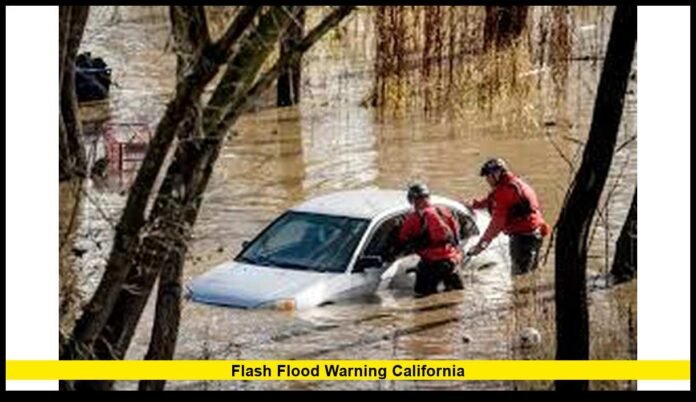

California remains under a flash flood warning as powerful winter storms bring heavy rain, saturated soils, and rising rivers across the state. The National Weather Service reports dangerous conditions in Los Angeles, Ventura, and Central Valley regions. Residents in flood-prone areas are urged to seek higher ground, avoid flooded roads, and follow all emergency instructions immediately.
A flash flood warning California alert is once again a top concern for residents as heavy Pacific storms deliver widespread rain, mountain runoff, and dangerous conditions. With several regions facing saturated soils and ongoing downpours, state and local officials continue to urge communities to stay alert and prepared for sudden flooding.
Severe Weather Patterns Fuel Rising Flood Risks
As of late December 2025, California’s weather has been dominated by a powerful series of winter systems moving inland from the Pacific Ocean. These storms, fed by deep moisture streams known as atmospheric rivers, have already drenched parts of the state from Redding to San Diego.
The National Weather Service (NWS) has placed multiple counties under active flash flood warnings following intense rainfall and fast-moving storm cells. Areas around the Central Valley, Los Angeles foothills, and parts of the Sierra Nevada have seen roads, creeks, and riverbeds overflow, prompting emergency responses and temporary evacuations.
Officials have emphasized that flash flooding can occur within minutes, especially in regions recovering from wildfires or where drainage systems are overwhelmed. Local governments have deployed emergency crews to monitor levees, clear storm drains, and respond to trapped motorists and stranded residents.
Understanding the Flash Flood Warning System in California
In California, a flash flood warning means that rapid flooding is either occurring or expected soon. These alerts are issued by the National Weather Service based on real-time radar data, river gauges, and ground observations.
Residents often receive the warnings through smartphone alerts, television interruptions, and local emergency broadcasts. The alerts are time-sensitive and geographically precise, pinpointing communities most at risk.
A flash flood watch, by contrast, indicates that conditions are favorable for flooding but does not guarantee one will occur. Once rainfall intensifies and runoff begins to threaten property or life, a watch quickly escalates to a warning.
The short lead time—sometimes under 30 minutes—makes it essential for Californians to know their local flood zones and have evacuation routes mapped ahead of any major storm.
Why Flash Flood Warnings Are Increasing Across the State
California’s unique topography and climate patterns combine to create ideal conditions for sudden flooding. A few inches of intense rainfall can turn dry washes into torrents and low-lying intersections into dangerous currents.
Four primary factors drive the state’s recurring flood risk:
- Burn Scars from Wildfires: Each fire season leaves behind unstable slopes with little vegetation. When heavy rain hits, water runs off rapidly, carrying debris and mud downhill.
- Atmospheric Rivers: These powerful moisture corridors from the Pacific Ocean bring enormous rainfall totals in a short time, often exceeding what local watersheds can handle.
- Urban Development: Concrete and asphalt prevent rain from soaking into the ground, increasing runoff in major metropolitan areas.
- Steep Terrain: California’s hills and canyons funnel rainfall toward valleys, compounding the speed and severity of floods.
The result is a pattern of flash floods that can strike both rural communities and densely populated neighborhoods, often catching drivers and residents off guard.
Regions Facing the Greatest Flood Threats
Although flash flood warnings can be issued anywhere in California, certain regions face a higher risk due to their geography, soil conditions, and local weather patterns. From mountain communities to dense urban areas, each part of the state experiences unique challenges when heavy rain arrives.
Los Angeles and Ventura Counties
These counties are among the most flood-prone areas in Southern California. The combination of steep terrain and large burn scars from recent wildfire seasons creates dangerous conditions when rain begins to fall.
When intense storms strike, loose soil and ash quickly turn to fast-moving debris flows that rush down canyons toward residential neighborhoods. Communities near foothills—such as Malibu, La Cañada Flintridge, and Thousand Oaks—are especially vulnerable between December and March, when Pacific storm systems are most active.
San Diego County
Further south, San Diego County faces a different type of flooding risk. Rapid urban growth has replaced natural drainage with pavement and concrete, preventing water from soaking into the ground.
During winter rain events, storm drains can become overwhelmed, leading to street flooding and backups in coastal neighborhoods like Mission Valley and Chula Vista. The risk is highest from January through February, when short but powerful downpours often cause localized flooding across the city.
San Bernardino Mountains
The San Bernardino Mountains experience flash floods primarily due to steep slopes and the unique interaction between snowmelt and rainfall.
When winter storms bring heavy precipitation followed by warmer temperatures, melting snow combines with new rainfall, sending torrents of water downhill. Mountain towns such as Crestline, Running Springs, and Big Bear Lake frequently deal with flooded roads and debris-filled runoff during February to April, when temperatures fluctuate most sharply.
Central Valley
California’s Central Valley—stretching from Redding in the north to Bakersfield in the south—faces widespread flood risks due to its low elevation and river network. The region relies on an intricate levee system to manage overflow from major waterways like the Sacramento and San Joaquin Rivers.
During powerful winter storms, saturated soil and levee strain can trigger flash flood warnings, particularly between December and April. Farming communities and rural roads are often the first to flood, with standing water lingering for days after the rain ends.
Northern Sierra Nevada
The Northern Sierra Nevada is no stranger to flash flood warnings, especially when atmospheric rivers target the region. These long, moisture-packed weather systems can drop several inches of rain in a matter of hours.
When combined with melting snow, rivers such as the Feather and American can rise rapidly, overflowing into nearby valleys. The flood risk typically peaks in winter, when cold Pacific systems repeatedly sweep through the mountain range.
Across these regions, flood risks are intensified by California’s cycle of drought and heavy rain. Prolonged dry periods harden the soil, reducing absorption when storms finally arrive. This combination—parched earth followed by torrential rain—often leads to the rapid runoff and overflowing waterways that prompt flash flood warnings statewide.
For residents in these high-risk zones, preparation and awareness are critical. Knowing the local terrain, monitoring weather alerts, and having an evacuation plan can make a vital difference when storms turn severe.
Recent Impacts Across California
Throughout December 2025, several California counties have experienced flash flooding after days of heavy rainfall. In Los Angeles County, fast-moving water carried debris through canyons near Pasadena and La Cañada Flintridge. Crews closed sections of the 210 Freeway due to mudslides, while nearby neighborhoods received evacuation advisories.
In Northern California, the Russian River basin once again saw elevated water levels, leading to partial road closures and warnings for residents in low-lying areas. The Central Valley faced street flooding and temporary power interruptions, particularly around Fresno and Merced, where runoff from nearby foothills poured into agricultural zones.
Farther south, Ventura and Santa Barbara counties faced flash flood warnings linked to steep terrain and saturated burn scars. These zones, still recovering from past wildfires, continue to pose a high debris-flow risk during intense rainfall.
How Flash Flood Warnings Are Issued
The process of issuing a flash flood warning in California involves advanced meteorological technology and coordination between federal, state, and local agencies.
Meteorologists monitor storm intensity using dual-polarization radar, which helps estimate rainfall rates and detect areas of rapidly rising water. When rainfall exceeds critical thresholds—often more than one inch per hour in steep areas—a warning is issued immediately for the affected zone.
Once the alert goes live, it appears through:
- Wireless Emergency Alerts (WEA) sent to cell phones.
- Emergency Alert System (EAS) messages interrupting radio and television broadcasts.
- Online and mobile updates through official weather platforms.
These warnings often remain active for one to three hours, depending on the storm’s speed and rainfall potential.
Read Also:- Southern California Storm: Evacuation Warnings Issued Ahead of Southern California Storm
How Residents Should Respond During a Flash Flood Warning
When a flash flood warning California alert is issued, it’s a clear signal that immediate action is necessary. Flooding can develop within minutes, leaving little time to react. Emergency officials repeatedly emphasize that waiting to “see the water” before taking precautions is one of the most dangerous mistakes residents can make. Quick, calm decisions save lives.
Essential Safety Steps to Follow
- Move to Higher Ground Right Away
If you live in or near a flood-prone zone, head to higher ground immediately. Avoid low-lying areas, riverbanks, storm channels, and underpasses. Even if the rain appears to be slowing, floodwaters can surge suddenly when runoff from hillsides or upstream areas arrives. - Never Drive Through Flooded Roads
Most flood-related deaths in California occur inside vehicles. It takes only six inches of water to stall a car and about one foot to lift and carry it downstream. Water depth and current strength can be deceiving—especially at night. Turn around and find an alternate route instead of risking a crossing. - Avoid Bridges and Fast-Moving Water
During flash floods, the force of the water can erode bridge foundations or damage supports, making them unsafe to cross. Keep a safe distance from creeks, canals, and riverbanks where water levels can rise rapidly and sweep away bystanders or vehicles. - Keep Devices Charged and Communication Lines Open
Power outages often accompany flash flooding due to downed power lines or damaged transformers. Keep cell phones, power banks, and flashlights fully charged before the storm arrives. Stay tuned to weather updates from the National Weather Service (NWS) or local emergency alerts through mobile apps, radio, or television. - Follow Evacuation Orders Without Delay
When officials issue an evacuation order, do not wait until the last moment to leave. Delays can make it impossible to get out once floodwaters rise. Leave as soon as it’s safe to travel, and take only essential items such as identification, medications, water, and emergency supplies. - Prepare for Pets and Family Members with Special Needs
If you have pets, elderly relatives, or anyone requiring special care, plan ahead. Pack pet carriers, leashes, food, and medications in advance. For those with limited mobility, arrange transportation with neighbors, caregivers, or local emergency services before storms intensify.
Additional Tips for Flood Readiness
- Know Your Evacuation Routes: Identify multiple safe routes in case your usual road becomes blocked.
- Have an Emergency Go-Bag Ready: Include bottled water, non-perishable food, flashlights, batteries, and first-aid supplies.
- Avoid Walking in Floodwater: Even shallow water can hide open drains, debris, or strong currents.
- Stay Indoors if You’re Safe and Elevated: Avoid basements and ground floors where water could enter quickly.
After the Flood Warning Ends
Once the warning is lifted, remain cautious. Do not return to flooded areas until authorities declare them safe. Roads and bridges may appear stable but could be structurally weakened. Avoid touching electrical equipment if it’s wet or if you’re standing in water. Take photographs of any damage for insurance purposes before cleanup begins.
Transportation and Infrastructure Disruptions
California’s transportation system often bears the brunt of flash flood damage. Major highways, such as Interstate 5, Highway 1, and Highway 101, frequently experience closures from flooding, rockslides, or washed-out lanes.
Public transit systems in the Bay Area and Los Angeles may face delays due to power interruptions and track flooding. In mountain regions, mudslides can isolate entire communities for days until debris is cleared.
Utility companies report that flash floods can damage underground cables and substations, causing power and internet outages that complicate rescue efforts. Infrastructure upgrades remain a top priority, with Caltrans and local public works departments expanding drainage systems and reinforcing slopes to handle heavier rainfall.
Economic and Environmental Fallout
The economic impact of flash floods in California runs deep. Property losses, agricultural damage, and repair costs frequently reach into the hundreds of millions of dollars each year. In low-lying farming regions, standing water can destroy crops and delay planting schedules for months.
Environmentally, floods erode soil, uproot vegetation, and carry pollutants into rivers and coastal zones. Burn scars often release sediment and ash into waterways, clouding reservoirs and reducing water quality.
Wildlife habitats can also be disrupted as fast-moving water alters stream channels and displaces aquatic species.
The state’s Office of Emergency Services continues to support county-level recovery programs and infrastructure grants aimed at preventing repeat losses.
Community Preparedness and Public Awareness
Public safety agencies across California have expanded community education campaigns to prepare residents for flash floods. Programs such as Listos California and Ready LA County promote practical steps like sandbag placement, emergency kit storage, and evacuation route planning.
Local fire departments often distribute sandbags before major storms and publish real-time updates on social media. County websites provide interactive flood maps to help homeowners identify whether their property lies within a high-risk zone.
Bilingual outreach has improved communication with residents who may not receive English-language alerts. The goal is to ensure that every household, regardless of location or language, can act swiftly when a warning is issued.
Technological Advances in Flood Prediction
Modern technology has transformed the way California detects and responds to flash floods. What was once dependent on manual observation and delayed reports is now driven by precision data, artificial intelligence, and real-time monitoring networks that give meteorologists a clearer and faster understanding of flood risks.
Artificial Intelligence and Predictive Modeling
Artificial intelligence (AI) plays a growing role in forecasting flash floods. Advanced computer models analyze massive amounts of weather data—from radar scans to satellite imagery—to identify early warning signs of flooding hours before it happens. These systems evaluate rainfall intensity, terrain shape, and soil saturation levels, allowing forecasters to estimate where flooding is most likely to occur and how severe it could be.
AI-based forecasting doesn’t just improve accuracy; it also helps issue warnings sooner. In a state like California, where storms can shift quickly, that extra time can make the difference between safety and catastrophe.
Real-Time River and Rainfall Monitoring
California’s river systems are now lined with thousands of remote sensors that constantly measure rainfall, streamflow, and water levels. These devices transmit live data to National Weather Service (NWS) centers, providing continuous updates on conditions across flood-prone regions. When readings spike unexpectedly, meteorologists can instantly upgrade advisories or issue new flash flood warnings.
This constant flow of information helps local emergency managers anticipate trouble spots. Before a storm peaks, crews can deploy sandbags, close vulnerable roads, or pre-position rescue teams near high-risk areas such as canyons and burn scars.
Radar and Satellite Imaging Improvements
The latest generation of radar and satellite technology allows forecasters to see deeper inside storm systems than ever before. Dual-polarization radar, for example, distinguishes between raindrops, hail, and snow, giving meteorologists a better picture of what’s falling and how fast. Meanwhile, high-resolution satellites track storm movement and cloud density in real time, improving both local and statewide flood forecasts.
These imaging tools help identify intense rainfall “hot spots” that can trigger flash floods, even if the broader region isn’t experiencing severe weather.
The Power of Early Communication
Technology is not only about detection—it’s also about communication. Once data confirms a potential threat, alerts are automatically distributed through wireless emergency systems, mobile notifications, and local emergency broadcasts. Many counties also use GIS-based maps that let residents see exactly which neighborhoods are under a flash flood warning.
This fast and coordinated communication ensures that information reaches people who need it most, no matter where they are.
A Smarter, Safer Future
While no system can completely eliminate flood danger, California’s investment in predictive technology has dramatically improved preparedness and response. Every storm provides new data that makes future forecasts even more accurate. As climate patterns continue to shift, these innovations offer a vital layer of protection—helping save lives, safeguard property, and strengthen communities against the next major flood.
Looking Toward 2026
Weather experts forecast that California’s wet winters will persist into early 2026, with atmospheric river events remaining a key driver of extreme rainfall. Though storm activity varies year to year, the broader trend points toward more intense and frequent precipitation due to shifting climate patterns.
Officials urge residents to remain proactive—review emergency plans, maintain household supplies, and stay tuned to NWS alerts whenever a flash flood warning California notification appears. Community readiness and individual awareness remain the most effective defenses against sudden flooding.
Staying informed and responding quickly when flash flood warnings are issued can save lives. Californians are encouraged to remain alert, prioritize safety, and share verified updates with neighbors whenever severe weather threatens their community.