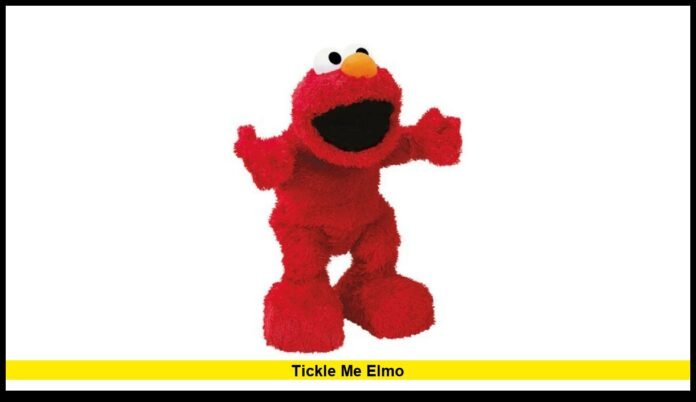

Tickle Me Elmo has remained a defining name in American toy culture for decades, and even today it continues to hold relevance as both a nostalgic symbol and a living product on store shelves. First introduced in the United States during the 1990s, Tickle Me Elmo changed how families viewed interactive toys, transforming a simple plush character into a nationwide phenomenon. In 2025, interest in Tickle Me Elmo remains strong as the toy is discussed not just as a childhood memory, but as an enduring example of how emotional connection, character familiarity, and timing can create lasting cultural impact.
The Birth of Tickle Me Elmo and Its Immediate Appeal
Tickle Me Elmo was built around a deceptively simple idea. The toy featured Elmo, one of the most recognizable characters from Sesame Street, and responded to touch with laughter and movement. When squeezed, Elmo giggled loudly and shook with excitement, mimicking the joyful reaction of a real child being tickled. That response created instant delight.
What made this concept powerful was how natural it felt. Children did not need instructions. They hugged, squeezed, or poked the toy instinctively, and Elmo responded immediately. This instant feedback loop encouraged repeated play and emotional attachment. Parents quickly noticed how children gravitated toward the toy, often laughing along with it.
At a time when many toys relied on complex features or flashy designs, Tickle Me Elmo stood out by doing one thing extremely well. It made children laugh. That simplicity became its greatest strength.
The Role of Elmo as a Trusted Character
Elmo was already a beloved figure in American households long before the toy’s release. As a central character on Sesame Street, Elmo represented warmth, friendliness, and curiosity. Parents trusted the character, and children felt safe engaging with him.
This existing relationship gave Tickle Me Elmo a major advantage. Families did not see the toy as unfamiliar or risky. It felt like bringing a familiar friend into the home. That trust lowered hesitation and helped fuel rapid adoption once the toy became available.
The character’s personality translated perfectly into a physical toy. Elmo’s high-pitched laugh, cheerful demeanor, and expressive reactions aligned seamlessly with the concept of a tickling plush. The toy did not feel forced or artificial. It felt like Elmo had simply stepped out of the television and into children’s arms.
The Holiday Season That Changed Toy History
The release of Tickle Me Elmo coincided with a holiday season that would become legendary in retail history. Demand for the toy grew rapidly, far exceeding expectations. As word spread, store shelves emptied faster than they could be restocked.
Families across the United States searched tirelessly for Tickle Me Elmo, visiting multiple stores and waiting in long lines. Some shoppers arrived before opening hours, hoping to secure one before supplies ran out. Others turned to secondary markets, where prices climbed dramatically.
This intense demand created a sense of urgency that only amplified the toy’s appeal. The harder it became to find, the more desirable it seemed. News coverage and public conversation further fueled interest, turning Tickle Me Elmo into a household topic far beyond children’s playrooms.
That season redefined how Americans talked about “must-have” toys. Tickle Me Elmo became the benchmark against which all future toy crazes would be measured.
Media Attention and Nationwide Recognition
As demand surged, media coverage followed. Tickle Me Elmo appeared on television programs and in widespread discussions about holiday shopping trends. The toy became more than a product. It became a story.
This attention introduced Tickle Me Elmo to audiences who may not have otherwise noticed it. Adults without young children became aware of the toy simply through cultural conversation. That level of visibility helped cement its place in American memory.
The coverage also highlighted changing consumer behavior. People began to recognize how quickly excitement could spread and how emotional attachment could drive purchasing decisions. Tickle Me Elmo became an early example of how collective enthusiasm can transform an ordinary product into a cultural moment.
Long-Term Impact on the Toy Industry
The success of Tickle Me Elmo had lasting effects on how toys were designed, marketed, and distributed. Manufacturers took note of how emotional engagement drove sales. Interactive features that responded directly to touch, sound, or movement became more common in toys released afterward.
Toy companies also reconsidered inventory strategies. The extreme demand for Tickle Me Elmo exposed the risks of underestimating consumer response. Future releases were often planned with larger production runs and more flexible distribution models.
Marketing approaches shifted as well. The importance of visibility, timing, and character recognition became clearer. Tickle Me Elmo demonstrated that a strong emotional hook could outperform even the most technically complex designs.
Transition From Trend to Timeless Classic
Many toys experience brief popularity before fading into obscurity. Tickle Me Elmo followed a different path. While the initial frenzy eventually subsided, the toy did not disappear. Instead, it transitioned into a long-term presence within American culture.
Over the years, Tickle Me Elmo has been revisited in discussions about iconic toys. It appears in retrospectives, documentaries, and cultural analyses focused on consumer behavior and childhood nostalgia. Its story is often told as an example of how simple joy can create lasting influence.
This sustained attention helped elevate Tickle Me Elmo from a seasonal hit to a recognized classic. It became a reference point for discussions about toy history rather than just a product from the past.
New Generations Discover Tickle Me Elmo
As years passed, new generations of children encountered Tickle Me Elmo in updated forms. While designs evolved to meet modern safety standards and preferences, the core experience remained intact. Elmo still laughed when tickled, and children still responded with delight.
Parents who remembered the original toy often introduced it to their own children. This created a shared experience across generations. Grandparents, parents, and children could all recognize and appreciate the same toy, each with their own memories attached.
That continuity is rare in the toy industry. Many products lose relevance as trends shift, but Tickle Me Elmo adapted without losing its identity.
Modern Versions and Continued Popularity
Today, Tickle Me Elmo remains available through various retail channels, especially during gift-giving seasons. Modern versions often include multiple tickle spots and varied responses, adding depth to the interaction while preserving the original charm.
These updates keep the toy engaging for today’s children while honoring its legacy. The laughter remains central, ensuring that the defining feature of Tickle Me Elmo continues to shine.
Its continued presence in stores reflects steady demand. While it may no longer generate frantic crowds, it maintains a reliable place among classic toy options.
Emotional Connection and Child Development
Beyond entertainment, Tickle Me Elmo supports early childhood development in subtle ways. The toy encourages cause-and-effect learning, as children quickly understand that their actions produce a response.
The laughter also promotes emotional expression. Children often laugh along, reinforcing positive emotional feedback. This type of interaction can support social and emotional growth during formative years.
The soft plush design adds a comforting element. Many children treat Tickle Me Elmo as both a toy and a companion, incorporating it into imaginative play and daily routines.
Nostalgia as a Driving Force
Nostalgia plays a significant role in Tickle Me Elmo’s continued relevance. For many adults, the toy represents a specific moment in time tied to family, holidays, and childhood wonder.
As nostalgia becomes an increasingly influential factor in consumer choices, products like Tickle Me Elmo gain renewed appreciation. They offer familiarity and emotional reassurance in a rapidly changing world.
This nostalgic appeal extends beyond personal memory. Tickle Me Elmo symbolizes a shared cultural experience, connecting individuals through collective recollection.
Collector Interest and Historical Value
Tickle Me Elmo has also found a place within collector communities. Early versions are often preserved as examples of significant moments in toy history. Collectors value not only the toy itself, but the story it represents.
The intense demand surrounding its original release adds to its historical value. Tickle Me Elmo is frequently cited when discussing the evolution of consumer behavior and retail dynamics.
This collector interest reinforces the toy’s status as a cultural artifact rather than just a plaything.
Recognition as an Influential Toy
In recent years, Tickle Me Elmo has received renewed attention as discussions around influential toys gain momentum. Being considered among the most impactful toys of all time reflects how deeply it shaped both play and commerce.
This recognition acknowledges more than popularity. It highlights the toy’s ability to connect emotionally, cross generational boundaries, and leave a lasting imprint on American culture.
Such acknowledgment further solidifies Tickle Me Elmo’s place in history.
The Simplicity That Made It Enduring
One of the most remarkable aspects of Tickle Me Elmo is its simplicity. In an era increasingly dominated by screens and digital experiences, the toy’s straightforward design remains refreshing.
There are no menus, no downloads, and no complex rules. Children interact naturally, guided by curiosity and joy. This simplicity ensures accessibility across ages and backgrounds.
That ease of use contributes significantly to its longevity.
Comparison With Modern Interactive Toys
While modern toys often feature advanced technology, many struggle to replicate the emotional immediacy of Tickle Me Elmo. Complex features can sometimes overwhelm young users or limit spontaneous play.
Tickle Me Elmo offers a reminder that meaningful interaction does not require sophistication. Emotional response, character familiarity, and tactile engagement can be just as powerful.
This contrast helps explain why the toy continues to be discussed alongside newer innovations.
A Symbol of Shared Experience
Tickle Me Elmo represents more than individual memories. It symbolizes a moment when millions of families across the United States shared a similar experience.
From crowded stores to joyful playrooms, the toy created connections between strangers who all understood its significance. That shared understanding continues to resonate today.
Few toys achieve this level of collective recognition.
Why Tickle Me Elmo Still Matters in 2025
In 2025, Tickle Me Elmo stands as proof that lasting impact comes from emotional resonance rather than fleeting trends. Its story continues to be relevant as families seek meaningful play experiences.
The toy’s ability to remain present across decades speaks to its thoughtful design and universal appeal. It reminds us that laughter, connection, and simplicity never go out of style.
The Future of Tickle Me Elmo
As the toy industry evolves, Tickle Me Elmo is likely to remain part of the conversation. Whether through updated versions, cultural recognition, or nostalgic reflection, its influence endures.
New generations will continue to discover Elmo’s laughter, while older generations revisit cherished memories. That cycle ensures the toy’s story continues to grow.
A Legacy Built on Laughter
Tickle Me Elmo has earned its place in American history by doing something timeless. It made people laugh. It brought families together. It created memories that lasted far beyond a single holiday season.
Its journey from a simple plush to a cultural icon demonstrates the power of emotional connection in shaping consumer experiences.
Tickle Me Elmo continues to bring joy across generations, and its laughter remains a lasting echo in American toy culture—share your memories and stay connected to the story as it lives on.