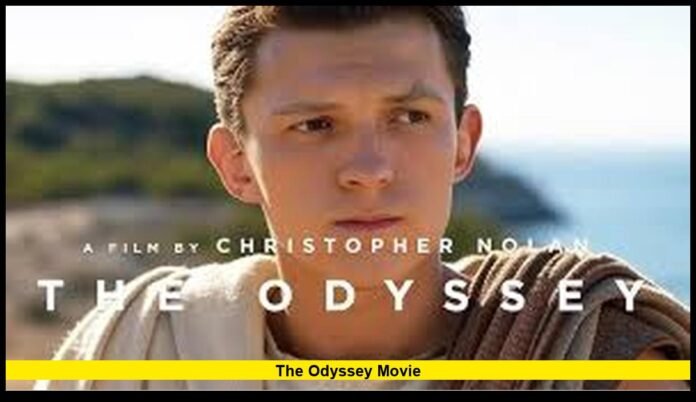

The Odyssey movie has taken center stage in U.S. entertainment coverage following the release of its official trailer and the confirmation of final production details. Directed by Christopher Nolan, the film adapts Homer’s legendary epic into a large-scale theatrical experience designed for modern audiences while staying rooted in the original myth. With production completed and post-production underway, the movie is now firmly positioned as one of the most anticipated theatrical releases of 2026.
Scheduled to arrive in U.S. theaters on July 17, 2026, the film is already drawing attention for its unprecedented use of IMAX technology, its ensemble cast, and Nolan’s commitment to immersive storytelling.
A Defining Moment for the Odyssey Movie
The recent trailer release marked the first time general audiences were able to see extended footage from the film. Prior to that, only limited preview material had been shown in select IMAX theaters. The public debut immediately elevated anticipation, as viewers reacted to sweeping visuals, dramatic pacing, and the unmistakable tone of a Nolan epic.
The Odyssey movie stands out because it blends ancient storytelling with modern filmmaking tools. Rather than reimagining the story in a contemporary setting, the film embraces the scale, danger, and emotional weight of the original journey. The result is a project that feels both timeless and technically forward-looking.
Christopher Nolan’s Approach to Mythic Storytelling
Christopher Nolan wrote and directed the film, continuing his pattern of taking on ambitious material that challenges traditional blockbuster formulas. After achieving major critical and commercial success with Oppenheimer, Nolan turned his focus to one of the oldest stories ever recorded.
His approach to the Odyssey is grounded in realism, even when dealing with mythological elements. The director has emphasized physical locations, natural lighting, and practical effects, limiting reliance on artificial environments. This philosophy aligns with Nolan’s long-standing belief that audiences connect more deeply with stories that feel tangible and lived-in.
The Odyssey movie also represents Nolan’s most demanding technical undertaking to date, as it was filmed entirely using IMAX 70mm cameras. This decision required extensive planning and reshaped how scenes were staged, blocked, and executed.
Release Date and Theatrical Strategy
The film’s U.S. release date of July 17, 2026 places it squarely in the peak summer movie season. Studios often reserve this window for projects expected to draw large crowds, and the positioning reflects confidence in the film’s box office potential.
Audiences will be able to see the movie in multiple formats, including standard theaters, premium large-format screens, and IMAX. However, the movie was specifically crafted for IMAX 70mm presentation, offering expanded image clarity, scale, and sound design.
Early ticket interest has already signaled strong demand. Select premium screenings opened for advance sales well ahead of release, and many sold out quickly in major metropolitan areas.
A Cast Built for an Epic
One of the strongest pillars supporting the Odyssey movie is its extensive ensemble cast. Christopher Nolan assembled a group of actors known for both blockbuster appeal and dramatic range.
Lead Performances
- Matt Damon stars as Odysseus, the warrior-king whose intelligence and endurance define the story. Damon’s portrayal emphasizes both physical resilience and emotional depth.
- Anne Hathaway plays Penelope, whose strength lies not in battle but in patience, loyalty, and strategic thinking.
- Tom Holland appears as Telemachus, Odysseus’s son, whose journey runs parallel to his father’s and carries its own emotional weight.
- Zendaya portrays Athena, the guiding presence who influences events throughout the story.
- Robert Pattinson takes on the role of Antinous, a central figure among the suitors disrupting order in Ithaca.
Supporting Cast
The ensemble also includes Lupita Nyong’o, Charlize Theron, Jon Bernthal, Elliot Page, Himesh Patel, Benny Safdie, Mia Goth, John Leguizamo, Bill Irwin, Samantha Morton, and Will Yun Lee. Each performer contributes to the layered world of the film, bringing depth to characters drawn from myth and legend.
Story Focus and Narrative Direction
The Odyssey movie follows the core structure of Homer’s epic, centering on Odysseus’s long struggle to return home after the Trojan War. The story unfolds across vast landscapes and dangerous waters, reflecting the unpredictability of the hero’s journey.
Rather than compressing the narrative into a simple adventure, the film highlights multiple emotional arcs:
- Odysseus’s endurance in the face of repeated loss and temptation
- Penelope’s resilience under pressure at home
- Telemachus’s search for identity and truth
- The tension between human will and divine influence
The trailer suggests that the film balances action with introspection, allowing moments of silence and reflection alongside large-scale set pieces.
Production Scale and Filming Locations
Production on the Odyssey movie wrapped in August 2025 after months of international filming. The production team selected diverse locations to represent the varied environments of the ancient Mediterranean world.
Natural coastlines, open seas, and rugged terrain play a central role in the film’s visual identity. By prioritizing real locations over digital backdrops, the movie captures a sense of isolation, danger, and vastness that mirrors the emotional state of its characters.
With a reported budget exceeding any previous Nolan project, the film represents a significant investment in traditional theatrical filmmaking at a time when many studios are shifting resources toward streaming.
Music, Cinematography, and Technical Craft
Cinematographer Hoyte van Hoytema once again collaborates with Nolan, capturing the story using large-format film that enhances both scale and intimacy. Close-up performances benefit from extraordinary clarity, while wide shots emphasize the enormity of the journey.
The score, composed by Ludwig Göransson, plays a key role in shaping the film’s emotional rhythm. Early impressions from the trailer suggest a soundscape that blends tension, melancholy, and triumph without overpowering the narrative.
Sound design and practical effects further reinforce the film’s commitment to realism, even when portraying mythological events.
Trailer Impact and Audience Response
Since its release, the official trailer has sparked significant online discussion. Viewers have praised the film’s visual ambition and restrained marketing approach, which reveals just enough to build excitement without spoiling major moments.
Common reactions include:
- Appreciation for the naturalistic look of the film
- Interest in how mythological elements are handled
- Anticipation for the IMAX experience
- Curiosity about how closely the story follows the original epic
The response suggests strong interest across both casual moviegoers and longtime fans of classical literature.
Why This Film Matters for Modern Cinema
The Odyssey movie arrives at a moment when theatrical releases face increased competition from streaming platforms. Nolan’s insistence on a cinema-first approach positions the film as a statement about the value of shared viewing experiences.
The project also demonstrates that ancient stories can still resonate when told with care, scale, and emotional honesty. Rather than updating the setting, the film trusts the power of the original narrative to connect with contemporary audiences.
What to Expect Before Release
In the months leading up to the Odyssey movie’s July 17, 2026 U.S. release, audiences can expect a carefully paced and multi-layered promotional campaign designed to build excitement while holding back major story reveals. Following the launch of the first full trailer, the studio is preparing additional visual content that will gradually deepen audience connection to the film’s world and characters. This will likely include new teaser clips and extended trailers that expand on key moments without releasing major plot twists too early.
Alongside trailer content, behind-the-scenes features are expected to highlight the filmmaking process, giving viewers insight into how the cast prepared for their roles and how Christopher Nolan and his creative team brought this mythic story to life. These features will showcase practical sets, location shoots, stunt work, and the use of IMAX 70mm cameras, offering a look at both technical achievement and narrative artistry.
Cast interviews and press appearances will also play a central role in the lead-up to release. As the calendar moves closer to July, key cast members are anticipated to participate in interviews, roundtable discussions, and televised segments that explore character dynamics, creative challenges, and the emotional heart of the story. These conversations will help audiences connect with the people behind the characters, contributing to overall awareness and enthusiasm.
In addition to traditional marketing, special previews and promotional events tied to other major theatrical releases are expected to offer fans early glimpses of select scenes in premium formats like IMAX. These exclusive experiences will give moviegoers a taste of the Odyssey movie’s visual scale and immersive sound, reinforcing the film’s position as a must-see theatrical event.
Collectively, these elements of the promotional rollout will deepen public familiarity with the movie’s tone, characters, and visual identity while preserving key story surprises and maintaining excitement as the July 2026 release date approaches.
Looking Ahead to a Landmark Release
As anticipation continues to build, the Odyssey movie is increasingly viewed as one of the defining theatrical releases of its year, driven by sustained audience interest and a carefully paced promotional rollout. The recent debut of the full trailer has significantly amplified awareness, while exclusive IMAX preview footage shown in select theaters has reinforced the film’s reputation as a true big-screen event. Early audience reactions from those screenings have focused on the film’s scale, visual clarity, and emotional intensity, signaling strong momentum well ahead of its July 17, 2026 U.S. release.
Momentum has also been fueled by the film’s strong early performance in premium ticket demand, particularly for IMAX 70mm presentations, which continue to draw attention across major U.S. markets. The combination of Christopher Nolan’s return to large-format storytelling, a globally recognized cast, and a narrative rooted in one of history’s most enduring epics has positioned the film as more than a standard summer release. Instead, it is being discussed as a shared cinematic moment designed to bring audiences back to theaters in large numbers.
For U.S. audiences seeking a cinematic experience built for the biggest screens, the Odyssey movie now represents a rare blend of classical storytelling, modern technical ambition, and emotional resonance. As promotional activity continues to roll out in stages, expectations remain high that the film will deliver not only spectacle, but also a lasting impact on how epic stories are experienced in theaters.
What are your expectations for this epic adaptation? Share your thoughts and keep following for future updates as the release date approaches.