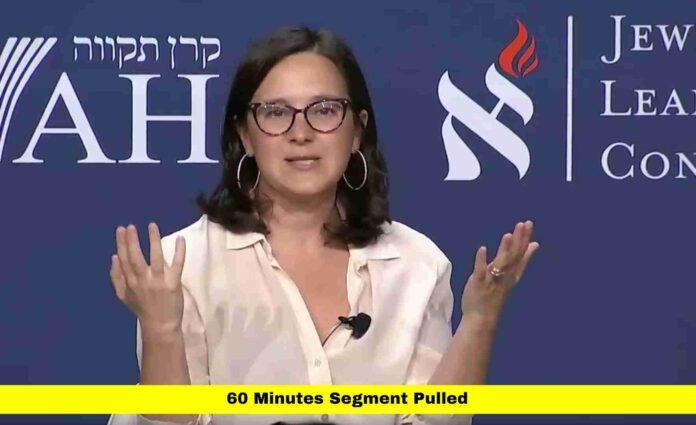

60 minutes segment pulled has become one of the most talked-about media controversies in the United States this week. CBS News abruptly removed a segment from its flagship news program just hours before it was scheduled to air, triggering intense debate about editorial independence, journalistic standards, and political pressure. The segment, titled Inside CECOT, focused on the Trump administration’s deportation of Venezuelan migrants to an El Salvador prison known as CECOT. Its removal raised questions inside and outside the newsroom about why such a high-profile investigation would be postponed at the last minute.
This article provides a comprehensive, factual account of what is known, what has been confirmed by multiple credible reports, and how this decision unfolded. The goal is to give U.S. readers a complete picture without speculation — just the most recent verified information.
What the Segment Was About
The segment that was pulled centered on Inside CECOT, an investigative report by veteran 60 Minutes correspondent Sharyn Alfonsi that examined conditions inside El Salvador’s Terrorism Confinement Center, widely known as CECOT. The report focused on Venezuelan migrants who were deported from the United States during the Trump administration and later detained at the facility, a prison internationally recognized for its extreme security measures and strict confinement policies.
The investigation featured extensive interviews with individuals who were deported and later released, offering firsthand accounts of life inside the prison. Several detainees described prolonged isolation, severe overcrowding, limited access to medical care, and alleged physical mistreatment. The segment highlighted claims that some migrants were held without clear documentation of charges or meaningful legal recourse, raising questions about due process once individuals were transferred out of U.S. custody.
Beyond personal testimony, the report examined how U.S. deportation practices intersected with El Salvador’s mass incarceration strategy. It explored whether migrants with no verified ties to terrorism or violent crime were placed into one of the most restrictive detention environments in the region, and how oversight becomes limited once deportations are finalized. The segment also addressed broader human rights concerns raised by advocates who argue that CECOT’s operating model prioritizes control over transparency.
The story was positioned as a major investigative feature and received significant promotion ahead of its scheduled Sunday broadcast. Teasers aired during prior programming, and promotional clips circulated across social media, signaling its importance within the 60 Minutes lineup. The abrupt decision to pull the segment shortly before airtime amplified public interest, especially given that the report had already undergone extensive editorial preparation.
As a result, the segment has become a point of wider discussion about investigative journalism, editorial judgment, and the challenges of reporting on immigration enforcement and international detention practices during a highly polarized political climate.
Last-Minute Decision to Pull the Segment
Just hours before the scheduled broadcast, CBS News made an unexpected change to the 60 Minutes lineup, announcing that Inside CECOT would not air as planned. Instead, the network said the segment would be held for a future episode once additional reporting was completed. The brief explanation offered by CBS News stated that the investigation “needed additional reporting,” without specifying what elements required further development or verification.
The timing of the decision drew immediate attention. The announcement was made late Sunday afternoon, only a few hours before 60 Minutes was set to air in its traditional prime-time slot. By that point, the segment had already been promoted throughout the week, and viewers were anticipating its release. The sudden reversal contrasted sharply with the program’s usual long lead times and careful scheduling for major investigative pieces.
Following the announcement, CBS moved quickly to remove promotional clips and references to the segment from its official platforms. Previews that had aired earlier were pulled from social media feeds, and online listings were updated to reflect a revised lineup. This rapid cleanup reinforced the perception that the decision was made abruptly rather than as part of a long-planned editorial adjustment.
The last-minute nature of the pull fueled speculation and internal unease, particularly because 60 Minutes investigations typically undergo extensive editorial and legal review well before broadcast. Holding a completed segment so close to airtime is rare for the program, which has built its reputation on thorough vetting and confidence in its reporting. As a result, the decision itself became part of the story, prompting questions about newsroom processes, leadership oversight, and how sensitive investigations are handled under intense public and political scrutiny.
Response From the Correspondent
Sharyn Alfonsi, the 60 Minutes correspondent who led the Inside CECOT investigation, voiced strong opposition to the decision to pull the segment. In an internal email shared with colleagues and later circulated among media observers, Alfonsi described the move as political rather than editorial, signaling deep concern about the reasoning behind the last-minute reversal.
In her message, Alfonsi emphasized that the report had already cleared multiple layers of internal scrutiny, including editorial leadership, legal review, and network standards. She maintained that the reporting met 60 Minutes’ established threshold for accuracy and fairness, and that the segment was considered broadcast-ready prior to its removal from the lineup.
Alfonsi also warned of broader implications for investigative journalism. She argued that allowing the absence of on-the-record responses from government officials to justify delaying or blocking a completed investigation could undermine the ability of journalists to hold powerful institutions accountable. According to her message, such a standard would effectively grant public officials veto power over stories simply by declining to participate.
Her response resonated beyond the newsroom, intensifying debate about editorial independence and the pressures faced by legacy news organizations when covering politically sensitive topics. The public nature of the disagreement highlighted rare internal tension at 60 Minutes and added to concerns about how investigative reporting decisions are made when stories intersect with immigration policy, international detention practices, and U.S. politics.
Editorial Leadership and Internal Debate
The last-minute removal of the segment was overseen by CBS News Editor-in-Chief Bari Weiss, whose leadership has drawn heightened scrutiny since she assumed the role following the acquisition of CBS News’s parent company by a media investment group earlier this year. Her appointment marked a shift in editorial oversight at the network, and the handling of the Inside CECOT segment quickly became one of the most visible tests of that new leadership structure.
Weiss publicly defended the decision, stating that her primary responsibility was to ensure that every story aired by the network meets the highest standards of completeness and editorial readiness. She explained that investigative segments are sometimes postponed when additional context is needed or when key perspectives have not yet been fully incorporated. According to her position, delaying a broadcast does not reflect rejection of the reporting itself but rather a commitment to airing the strongest possible version of the story.
She also emphasized that the segment was not canceled and expressed confidence that it would eventually air once further reporting was completed. Weiss framed the move as a routine editorial judgment, underscoring that 60 Minutes has a long history of refining complex investigations up to the last possible moment.
Internally, however, the decision sparked a deeper debate among journalists and producers within CBS News. Some staff members questioned whether the rationale of “additional reporting” aligned with the segment’s advanced stage of completion, especially given that it had already undergone extensive legal and editorial review. Others raised concerns about whether heightened sensitivity around immigration policy and international detention practices may have influenced the timing and outcome of the decision.
The disagreement between Weiss and Alfonsi exposed broader tensions inside the newsroom about editorial independence, leadership authority, and how investigative journalism should be handled when stories intersect with politically charged subjects. For many inside the organization, the episode became less about a single segment and more about defining the boundaries between editorial caution and journalistic resolve in a changing media environment.
Editorial Standards and Legal Review
According to statements from Sharyn Alfonsi and other members of the 60 Minutes team, the Inside CECOT segment had already undergone multiple rounds of review by CBS News attorneys as well as the network’s standards and practices department. Those involved in the process have indicated that the story cleared each stage without requiring substantive changes, a point that has been repeatedly cited by critics of the decision as evidence that the piece met the network’s established editorial thresholds.
Within major broadcast news organizations, legal and standards screening is designed to evaluate whether reporting is accurate, balanced, and responsibly presented. These reviews also assess potential legal exposure, including defamation risk, sourcing integrity, and the fairness of characterizations involving individuals or institutions. Passing these checks is typically considered a sign that a segment is ready for air, particularly for a program with 60 Minutes’ long-standing reputation for rigorous vetting.
The fact that the segment cleared these reviews before being pulled so close to airtime has intensified internal and external debate. For some journalists, the late postponement raised questions about whether criteria beyond standard editorial and legal considerations influenced the decision. Others noted that delaying a piece after legal approval is unusual and can blur the distinction between editorial caution and non-editorial pressures.
As a result, the episode has fueled broader discussions about how editorial standards are applied in practice, especially when investigations involve politically sensitive topics or international issues. The situation has prompted renewed attention to the role of legal and standards reviews—not just as safeguards for accuracy and risk management, but as markers of editorial confidence in investigative reporting.
Political Context and Criticism
The timing of the segment’s removal—just hours before its scheduled broadcast—prompted swift criticism from media observers and press freedom advocates who questioned whether political considerations influenced the decision. The abrupt nature of the pull, combined with the sensitive subject matter of the report, led some critics to argue that the postponement went beyond routine editorial caution.
Much of the scrutiny focused on the segment’s examination of immigration enforcement and international detention practices, topics that remain highly charged in U.S. political discourse. Observers also noted that key U.S. government departments declined to provide on-the-record interviews, raising concerns that the absence of official participation may have factored into the network’s internal calculus. For critics, the idea that a lack of government comment could delay a completed investigation underscored fears about institutional pressure on news coverage.
Concerns about political influence were further amplified by recent changes in CBS News’s leadership and management structure. With new editorial oversight in place, some journalists and commentators questioned whether heightened sensitivity to political fallout played a role in the decision-making process. The involvement of top leadership in a last-minute programming change added to perceptions that the issue extended beyond standard newsroom procedures.
Critics have argued that postponing a major investigative report on a consequential public policy issue—especially one that had already cleared legal and editorial review—raises broader questions about journalistic independence. For many, the episode has become a case study in how external pressures, real or perceived, can shape editorial outcomes, particularly when reporting intersects with immigration, foreign policy, and domestic political debate.
Network Position and Explanation
CBS News has continued to stand by its original explanation that the Inside CECOT segment required additional reporting before airing. Network leadership has reiterated that the investigation has not been shelved or canceled and that it remains scheduled for a future broadcast once the remaining work is completed. This stance has been presented as a matter of editorial timing rather than a rejection of the reporting itself.
In its public messaging, CBS News has emphasized the importance of thoroughness and contextual depth, particularly for stories involving international detention systems, cross-border cooperation, and government actions. The network has framed the delay as part of a standard editorial process aimed at ensuring viewers receive a complete and fully contextualized account of complex issues.
Rather than addressing speculation about outside influence, CBS has focused its explanations on internal standards and newsroom practices. The network has avoided assigning blame or attributing the delay to any external entity, instead underscoring its commitment to accuracy, balance, and responsible investigative journalism.
By maintaining this position, CBS News has sought to reassure audiences and staff that the decision reflects editorial judgment and a desire to deliver the strongest possible version of the story when it ultimately airs.
Reactions From Journalists and Media Industry
The decision to pull the segment prompted widespread reaction across the media industry, with journalists, editors, and media commentators weighing in on the implications of the move. Many described the postponement as highly unusual, particularly given 60 Minutes’ long-standing reputation as one of the most trusted investigative news programs in the United States. For decades, the show has been synonymous with rigorous reporting, editorial confidence, and a willingness to tackle difficult subjects.
Several journalists expressed concern that delaying a fully prepared investigative segment so close to airtime could undermine confidence in newsroom decision-making. Within broadcast journalism, last-minute changes of this magnitude are rare, especially for flagship programs that operate on extended production timelines. The incident sparked internal conversations across news organizations about how editorial judgments are made when reporting intersects with politically sensitive topics.
Media commentators also noted the potential reputational impact. 60 Minutes has built its credibility on the perception that once a story reaches the broadcast stage, it has already cleared the highest levels of editorial and legal scrutiny. Interrupting that process at the final hour raised questions about whether traditional safeguards for investigative reporting are shifting under modern media pressures.
More broadly, the episode fueled public discussion about newsroom independence and editorial authority in an era of changing ownership structures and heightened political polarization. For many in the industry, the situation became a cautionary moment—highlighting how decisions behind the scenes can quickly become part of the story itself, with lasting implications for trust in legacy news institutions.
Public and Viewer Response
The decision to pull the segment quickly drew attention from viewers, many of whom turned to social media to share their reactions. Responses varied widely, reflecting both trust in the program’s editorial judgment and frustration over the sudden delay of a report that had been heavily promoted. Some viewers expressed understanding, emphasizing the importance of thorough and complete journalism, especially when covering sensitive international and government-related issues.
Others, however, questioned the timing and rationale behind the decision. The removal of a widely anticipated segment just hours before broadcast led some audience members to call for greater transparency, particularly given 60 Minutes’ reputation for careful preparation and editorial confidence. For these viewers, the lack of detailed explanation fueled uncertainty about how and why such decisions are made.
Beyond the immediate reaction, the episode sparked broader conversations among the public about media influence, editorial independence, and trust in legacy news organizations. Many viewers framed the situation as a test of whether long-established programs can maintain credibility while navigating political pressure and evolving newsroom structures.
The level of public engagement underscored the enduring influence of 60 Minutes as a cornerstone of investigative journalism. The strong response highlighted how deeply viewers value the program’s reporting and how closely they follow developments when a highly anticipated story does not air as expected.
Historical Context of Editorial Decisions
Major news organizations have long delayed or revised stories for a range of reasons, including the emergence of new information, unresolved legal concerns, or gaps in sourcing that require further verification. Such adjustments are considered a normal part of the editorial process, particularly for complex investigative reporting that unfolds over long production timelines.
What makes this situation notable is the timing. Pulling a heavily promoted segment just hours before broadcast is rare in broadcast journalism, especially for established programs that typically finalize editorial decisions well in advance. Historically, last-minute changes of this scale tend to occur only in extraordinary circumstances, such as breaking developments that materially alter a story’s accuracy or relevance.
The controversy also stands out because of the nature of the reporting itself. The segment addressed a high-profile public policy issue involving immigration enforcement and international detention practices, placing it at the intersection of journalism, government accountability, and political debate. The public nature of the disagreement between the correspondent and network leadership further set the episode apart from routine editorial adjustments, which are usually handled internally and quietly.
Taken together, these factors have positioned the incident as more than a simple programming change. For many observers, it represents a moment that invites comparison to past debates over editorial independence and decision-making within major news organizations, highlighting how unusual circumstances can turn behind-the-scenes newsroom choices into matters of public scrutiny.
What the Segment Was Scheduled to Air
Inside CECOT was scheduled to air during the December 21 broadcast of 60 Minutes, occupying a prominent place in the program’s lineup. In the days leading up to the episode, the segment appeared in official previews and promotional materials, signaling that it had been cleared for broadcast and positioned as one of the night’s key investigative features.
The report was set to present firsthand accounts from Venezuelan migrants who had been deported from the United States and later detained in El Salvador’s high-security CECOT prison. These personal narratives were expected to anchor the story, offering viewers direct insight into the experiences of individuals held at the facility.
Alongside those testimonies, the segment was planned to include detailed reporting on the prison’s conditions, its role within El Salvador’s broader security strategy, and how U.S. deportation policies intersected with international detention practices. Given the seriousness of the subject matter and the ongoing national debate over immigration and enforcement, the story was widely expected to draw significant public attention.
The fact that the segment was removed after being publicly scheduled and promoted reinforced how unusual the decision was, adding to the scrutiny surrounding the network’s last-minute reversal.
What the Segment Was Scheduled to Air
Inside CECOT was scheduled to air during the December 21 broadcast of 60 Minutes, where it was positioned as one of the episode’s central investigative pieces. In the days leading up to the broadcast, the segment appeared prominently in official previews and promotional materials, signaling that it had completed the network’s editorial process and was fully cleared for air. Its placement in the lineup suggested that the network anticipated strong viewer interest and considered the report a significant journalistic offering.
The segment was set to feature firsthand accounts from Venezuelan migrants who had been deported from the United States and later detained at El Salvador’s high-security CECOT prison. These personal testimonies were expected to serve as the foundation of the report, providing direct insight into the experiences of individuals who passed through the facility. Their accounts were intended to humanize the broader policy discussion by illustrating how deportation decisions translated into real-world consequences.
In addition to personal narratives, the report was planned to deliver detailed, on-the-ground reporting about conditions inside the prison. This included an examination of daily confinement practices, security protocols, and the role CECOT plays within El Salvador’s wider approach to incarceration and crime prevention. The segment also aimed to explore how U.S. deportation policies intersect with foreign detention systems once individuals are removed from American jurisdiction.
Given the gravity of the subject matter and the heightened national conversation surrounding immigration enforcement, international cooperation, and human rights, the segment was widely expected to draw significant public attention. Its sudden removal after being publicly scheduled and promoted underscored how unusual the decision was, further intensifying scrutiny of the network’s last-minute reversal and elevating the segment itself into a subject of public debate.
Journalistic Independence Under Scrutiny
The incident has reignited discussion about journalistic independence and how major news organizations make decisions about what to broadcast. When newsroom leadership intervenes at the last moment, it naturally raises questions about process and influence.
This particular situation highlights the delicate balance between thorough editorial standards and maintaining trust in investigative journalism.
Significance for Viewers and the Public
For many Americans, 60 Minutes remains a trusted source of in-depth reporting. Stories that explore government policy, legal issues, and human rights conditions are part of the program’s legacy.
The decision to delay a major segment touches on broader conversations about media credibility, editorial care, and the responsibilities of broadcast journalism in covering complex national and international topics.
A Rare Move in a Long-Running Program
In its long history, 60 Minutes has occasionally revised segments before broadcast, but the timing and circumstances of this delay have made it particularly noteworthy.
The sudden pull of a major investigative piece draws attention both to how editorial decisions are made and to the changing landscape of newsroom leadership.
What the Network Has Confirmed
As of today:
- The Inside CECOT segment will not air as originally scheduled.
- CBS News stated the reason for postponement is “additional reporting.”
- Correspondent Sharyn Alfonsi disputes the reason and frames the decision as political.
- Network leadership defends the move as upholding editorial standards.
- No new broadcast date has been announced.
These points form the confirmed core of the current situation.
Looking Ahead for the Program
While the segment remains postponed, the attention generated by its removal underscores the continuing relevance of investigative journalism in American media. How and when the report eventually airs may shape future conversations about transparency, editorial direction, and newsroom dynamics.
Whether viewers see the segment in full as originally reported or in revised form, it has already made an impact by drawing scrutiny to internal editorial processes.
What are your thoughts on editorial decisions in major news broadcasts and how they affect public trust? Share your perspective or stay informed as this story develops.