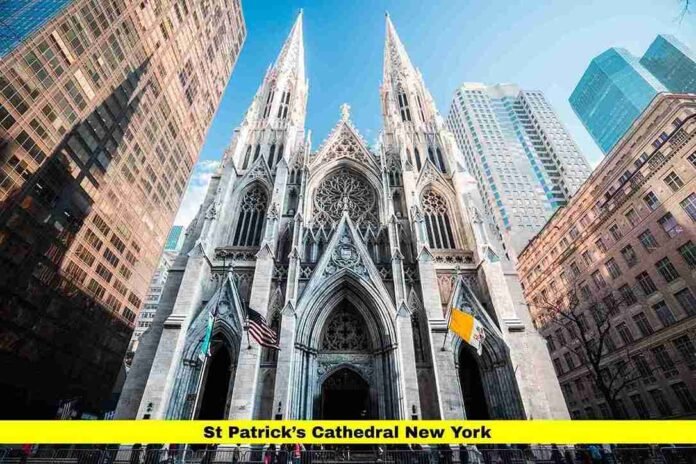

St Patrick’s Cathedral New York remains fully open and active today, welcoming worshippers, visitors, and tourists as one of the most recognized religious and architectural landmarks in the United States. Located on Fifth Avenue in Midtown Manhattan, the cathedral continues to function as a working house of worship while also serving as a major cultural and historical destination.
This detailed report explains the cathedral’s present-day status, its historical foundations, architectural significance, and its role in modern New York life, all with verified and current information.
What the Cathedral Represents Today
St. Patrick’s Cathedral stands as the seat of the Roman Catholic Archdiocese of New York and remains one of the most visible symbols of Catholic heritage in the country. Despite its age, the cathedral is not a museum. It hosts daily Masses, major religious celebrations, and special services throughout the year.
At the same time, it welcomes millions of visitors annually who come for reflection, architecture, or history. This dual role defines its modern identity.
Its Location in Modern Manhattan
The cathedral occupies a prominent position on Fifth Avenue between 50th and 51st Streets, directly across from Rockefeller Center. This location places it at the center of one of the busiest commercial and cultural corridors in the world.
Surrounded by skyscrapers, luxury retail, and constant foot traffic, the cathedral offers a striking visual contrast. Its white marble façade rises above the street, providing a sense of stillness amid the city’s pace.
Current Access and Public Hours
As of today, the cathedral remains open to the public daily. Visitors may enter during designated hours for prayer, services, or quiet observation. Security screenings are in place, reflecting modern safety requirements, but access remains free.
Photography is generally permitted outside of service times, while respectful behavior is expected at all times. These policies balance openness with the cathedral’s religious purpose.
A Brief History of Its Construction
Construction of the cathedral began in 1858 and concluded in 1878, with later additions completed in the late nineteenth century. The site was originally far north of New York City’s developed core, surrounded by open land.
At the time, critics questioned the decision to build so far from downtown. Over time, the city expanded around it, transforming the cathedral into a central landmark rather than a remote outpost.
Architectural Style and Design
The cathedral is designed in the Neo-Gothic style, inspired by medieval European cathedrals. Its twin spires rise more than 300 feet above street level, making them visible from blocks away.
Pointed arches, ribbed vaults, and detailed stonework define the exterior. Inside, soaring ceilings and long sightlines draw attention toward the altar, reinforcing a sense of verticality and light.
Materials and Craftsmanship
White marble sourced from New York and Massachusetts forms the exterior, while the interior features stone, wood, and stained glass crafted by skilled artisans. Many of the stained-glass windows were produced by renowned European studios.
These materials have been carefully maintained through ongoing conservation efforts, ensuring structural integrity and visual clarity.
Interior Highlights Visitors Notice First
Upon entering, visitors often notice the scale of the nave. The ceiling rises dramatically, creating an immediate sense of openness. Light filters through stained glass, casting soft color across the interior.
Side chapels line the nave, each dedicated to different saints and themes. These spaces provide quieter areas for prayer and reflection away from the central aisle.
The High Altar and Sanctuary
The high altar serves as the focal point of the cathedral. Its design reflects traditional Catholic symbolism while maintaining visual balance with the surrounding architecture.
Behind the altar, the apse features detailed artwork that reinforces the cathedral’s spiritual focus. This area is reserved for major liturgical celebrations and remains central to the building’s purpose.
Ongoing Restoration and Preservation
In recent years, the cathedral underwent a major restoration project that addressed structural issues, cleaned stone surfaces, and restored interior elements. That work has been completed, and the building continues to be monitored through regular maintenance.
These efforts ensure that the cathedral remains safe, accessible, and visually consistent with its historic character.
Religious Life and Daily Services
The cathedral hosts multiple Masses each day, serving a diverse congregation that includes local residents, commuters, and visitors. Major religious holidays bring larger crowds and special liturgical programming.
Despite its prominence, the cathedral maintains a welcoming atmosphere for individual prayer throughout the day.
National Events and Historic Moments
Over the decades, the cathedral has hosted significant national and international events. These include funerals for prominent public figures and memorial services following major historical moments.
Such occasions reinforce its role as a place of collective reflection beyond religious boundaries.
Cultural Importance Beyond Religion
While rooted in faith, the cathedral also holds cultural significance. It appears frequently in films, television broadcasts, and photography, symbolizing New York’s historical depth.
Its presence on Fifth Avenue has become part of the city’s visual identity, often used to represent continuity amid constant change.
Visitor Experience Today
Visitors today encounter a carefully managed environment. Informational signage explains architectural features and historical context without overwhelming the space.
Staff and volunteers assist guests, answer questions, and help maintain respectful use of the building. This approach supports both education and contemplation.
Seasonal Interest and Major Holidays
Interest peaks during major holidays, particularly Christmas and Easter. Seasonal decorations enhance the interior while preserving its solemn tone.
Despite increased attendance during these periods, the cathedral continues to operate smoothly through coordinated scheduling and security planning.
Accessibility and Modern Amenities
The cathedral has implemented accessibility features, including ramps and designated seating areas. These improvements ensure that visitors of varying mobility levels can participate in services and tours.
Restrooms and visitor facilities are managed discreetly to preserve the sacred atmosphere.
Tourism and Economic Impact
As one of New York City’s most visited landmarks, the cathedral contributes significantly to tourism. Nearby businesses benefit from the steady flow of visitors, particularly those exploring Midtown Manhattan.
Unlike commercial attractions, the cathedral does not charge an entry fee, reinforcing its role as a public space.
Why It Continues to Matter
The cathedral remains relevant because it serves multiple roles at once. It is a functioning church, a historic monument, and a cultural symbol.
Few buildings manage to balance these identities as effectively, especially within such a dense urban environment.
A Place of Quiet in a Busy City
One of the cathedral’s most valued qualities is its ability to offer calm amid Manhattan’s intensity. Visitors often remark on the contrast between the busy sidewalks outside and the stillness within.
This quality has become increasingly important in modern city life.
Its Role in New York’s Identity
The cathedral reflects New York’s layered history, shaped by immigration, faith, and ambition. It stands as a reminder that the city’s story includes spiritual and cultural dimensions alongside commerce.
That balance helps explain its enduring appeal.
Why People Keep Returning
Many visitors return multiple times, whether for worship, architecture, or reflection. Each visit offers a different experience depending on time of day, season, or event.
This repeat interest speaks to the cathedral’s depth rather than novelty.
Looking Ahead
The cathedral’s leadership continues to focus on preservation, community engagement, and accessibility. Future plans center on maintaining stability rather than expansion.
This steady approach supports long-term relevance without altering the building’s historic character.
Final Perspective
St Patrick’s Cathedral New York remains a living landmark, deeply woven into the fabric of the city. It stands not only as a masterpiece of architecture but also as an active space for faith, history, and reflection in the heart of Manhattan.
Have you visited the cathedral or plan to experience it soon? Share your thoughts or stay informed as this iconic landmark continues to shape New York’s story.