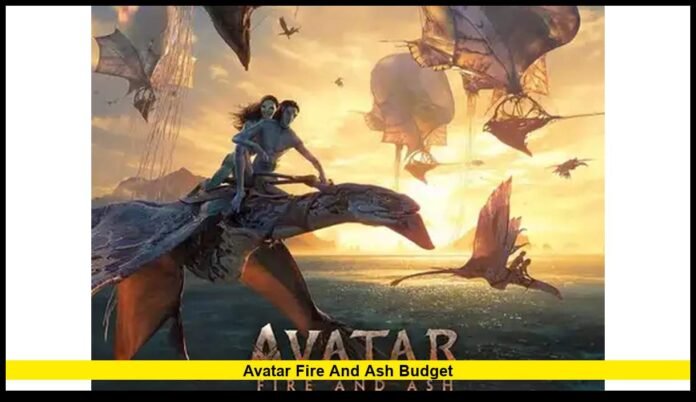

The Avatar Fire and Ash budget has become one of the most discussed topics in entertainment news this winter. As director James Cameron prepares to unveil the next chapter of his groundbreaking sci-fi saga, insiders confirm that Avatar: Fire and Ash ranks among the costliest film productions in movie history.
Filming and Production Progress
20th Century Studios, under the Walt Disney Company, has officially kept Avatar: Fire and Ash on track for its worldwide release on December 19, 2026. The film completed principal photography in New Zealand alongside footage for the fifth Avatar installment. Since mid-2025, post-production teams at Weta FX in Wellington have been refining thousands of visual-effects shots featuring volcanic and ash-covered environments.
James Cameron continues to oversee the edit and 3D color grading personally, using new display technology developed specifically for the Avatar franchise. Studio representatives have stated that the movie remains on schedule, with no delays in visual rendering or soundtrack production.
The Reported Cost Range
Industry trackers currently estimate that the Avatar Fire and Ash budget stands between $350 million and $400 million, not counting worldwide advertising. That number positions it beside Avatar: The Way of Water (2022), which carried a similar price tag before promotional costs.
Although Disney has not published an official figure, financial disclosures for large-scale projects in 2025 confirm that Cameron’s team received one of the highest allocations ever approved for a feature film. The post-production portion alone—primarily driven by rendering volcanic effects, water interaction, and photorealistic Na’vi characters—accounts for over $150 million of the total.
Approximate Internal Spending Breakdown
| Category | Estimated Cost (USD) | Purpose |
|---|---|---|
| Principal Photography | $120 million | Filmed simultaneously with sequel 5 for continuity |
| Visual Effects & Rendering | $150 million | Massive computational workload at Weta FX |
| Set Construction & Props | $35 million | Volcanic interiors, new clans’ habitats |
| Cast & Crew Compensation | $55 million | Returning and new ensemble members |
| Sound, Score & Editing | $20 million | Orchestral recording and Dolby Atmos mastering |
| Global Marketing | $150 million | Theatrical rollout and partnerships |
Together, these figures highlight how Disney positions Avatar: Fire and Ash as a flagship release capable of dominating global box offices for months.
Why the Costs Are So High
Every Avatar entry involves technological breakthroughs that increase spending but often redefine what audiences expect from modern cinema. Cameron’s commitment to real scientific realism—particularly in light, water, and now lava simulations—demands unprecedented computing power and expertise.
Key reasons for the towering budget include:
- Dual Production Schedule: Scenes for two sequels were captured together, requiring overlapping crews and longer principal photography.
- Underwater and Volcanic Environments: Specialized motion-capture rigs allow actors to perform submerged and surrounded by heated vapor while maintaining facial precision.
- New Rendering Pipelines: Custom software handles light diffusion through ash clouds, adding a natural volcanic glow unseen in prior installments.
- 3D HDR 48 fps Output: Delivering in ultra-high-definition 3D nearly doubles data-processing needs compared with standard digital films.
These expenses, while immense, also reduce future costs for the fifth movie since much of the technology will be reused.
Returning Cast and Story Themes
Sam Worthington, Zoe Saldaña, Sigourney Weaver, Stephen Lang, Cliff Curtis, and Kate Winslet have all confirmed their return. New additions include Oona Chaplin and David Thewlis, both portraying members of newly introduced volcanic clans.
The narrative reportedly moves beyond Pandora’s oceans into its fiery interior regions, examining how native cultures adapt to devastating geological shifts. The film’s title suggests duality—fire as destruction and ash as rebirth—reflecting Cameron’s continued interest in the balance between humanity and nature.
Concept artwork revealed through Disney’s official channels depicts glowing magma rivers, vast smoke columns, and a darker palette than the previous film. Costume designers developed heat-resistant materials that appear translucent under bright lava reflections, creating a vivid but authentic aesthetic.
Read Also:- Avatar Fire and Ash: Everything to Know About the Third Avatar Movie
Comparing Blockbuster Budgets
| Title | Release Year | Reported Budget | Worldwide Gross |
|---|---|---|---|
| Avatar | 2009 | $237 million | $2.92 billion |
| Avatar: The Way of Water | 2022 | $350 million | $2.32 billion |
| Avengers: Endgame | 2019 | $356 million | $2.79 billion |
| Star Wars: The Rise of Skywalker | 2019 | $275 million | $1.07 billion |
| Avatar: Fire and Ash | 2026 (coming) | $350–$400 million | — |
These comparisons confirm how the latest Avatar sequel sits at the top of Hollywood’s cost scale. Cameron’s earlier films justified massive spending through equally massive box-office returns, making this new figure unsurprising.
Economic Reach and Local Impact
New Zealand’s film industry continues to thrive largely thanks to the long-term presence of the Avatar franchise. The nation’s film commission reports that since 2017, the sequels have injected over NZ$3 billion into the economy through large-scale infrastructure projects, tourism boosts, and digital production contracts. The sprawling production network spans everything from construction crews building elaborate sets to software engineers creating advanced animation systems at Weta FX in Wellington.
The franchise has provided steady employment for thousands of local technicians, costume designers, camera operators, and visual-effects artists. Many of these professionals have remained engaged with the project for several consecutive years, creating a reliable source of income and helping New Zealand maintain its reputation as one of the world’s leading film-production hubs. Local universities and training centers have also benefited, offering specialized programs in motion capture and virtual production inspired by the Avatar workflow.
Across the Pacific, the impact extends to the United States, where final sound mixing, editing, and mastering occur at Disney’s state-of-the-art facilities in Burbank, California. These post-production efforts employ hundreds of audio engineers, editors, and colorists working on high-resolution 3D and HDR content. The investment reinforces the importance of American expertise in finishing and distributing global blockbusters.
Beyond direct employment, Avatar: Fire and Ash also influences tourism, with fans visiting filming locations in New Zealand that have become iconic since the first movie’s release. Local businesses—from hospitality to equipment rentals—report long-term gains tied to ongoing production activity.
Together, these efforts show how a single major studio project can stimulate multiple economies at once, merging creative ambition with tangible real-world benefits that extend far beyond the screen.
The Business Strategy Behind the Spending
Disney executives have made clear that Cameron’s sequels are cornerstone properties for the company’s long-term content strategy. The first Avatar film remains the highest-grossing movie of all time when adjusted for re-releases. By maintaining that brand momentum, Disney leverages each sequel across several revenue streams:
- Theatrical Distribution: Premier screens in IMAX 3D and Dolby Cinema formats
- Streaming on Disney+ after the exclusive run
- Merchandising and Licensing: Toys, collectibles, and apparel lines
- Theme-Park Integration: New experiences at Disney’s Animal Kingdom
This approach ensures that the Avatar Fire and Ash budget functions as a foundation for broader corporate returns rather than a single-film gamble.
Marketing Plans
The marketing rollout for Avatar: Fire and Ash is shaping up to be one of Disney’s biggest global campaigns to date. The promotional drive is expected to start in mid-2026, roughly six months before the film’s theatrical debut. Early reports from industry insiders indicate that the studio has already reserved major convention slots at San Diego Comic-Con 2026 and D23 Expo 2026, where the first extended trailer and behind-the-scenes footage are anticipated to premiere.
Disney’s strategy focuses on building sustained excitement rather than a single launch moment. The campaign will unfold in several phases—initial teasers, character reveals, and large-scale collaborations with international brands in technology, automotive, and travel sectors. These partnerships will ensure the Avatar imagery reaches audiences across multiple platforms, from airline safety videos to immersive store displays.
Digital marketing will play a central role. Exclusive 3D trailers optimized for IMAX, Dolby Cinema, and streaming services will highlight the film’s groundbreaking visual effects. Disney+ and YouTube will host documentary-style features showcasing Weta FX’s visual artistry and the innovative camera systems developed for the movie.
Merchandise promotions will accompany the marketing push, including limited-edition collectibles, eco-friendly apparel, and themed experiences at Disney parks. This approach mirrors the successful campaign for Avatar: The Way of Water, which maintained high engagement for months before release.
With its mix of traditional promotion, digital storytelling, and global brand integration, Disney aims to make the Avatar: Fire and Ash marketing campaign not only visible but unforgettable—setting the stage for one of the most anticipated cinematic events of 2026.
Profit Threshold and Box-Office Expectations
Analysts estimate that the film will need to earn roughly $900 million worldwide to break even once marketing is included. Based on the sustained interest in The Way of Water, expectations remain high for another billion-dollar success.
James Cameron has mentioned publicly that the studio’s investment supports long-term storytelling, explaining that technical tools built for Fire and Ash can power several future films. His confidence aligns with historical performance: every Avatar release so far has surpassed global revenue predictions.
Technical Innovations
Weta FX engineers have introduced a new particle-simulation system capable of producing realistic lava behavior, including light refraction through heat haze. This same software generates dynamic ash clouds that interact with digital water and atmospheric fog, pushing realism far beyond traditional computer graphics.
The film also uses custom camera housings for sub-surface motion capture, allowing simultaneous recording of actor movement and facial data under liquid pressure. Each sequence demands hundreds of hours of rendering on specialized GPU farms across multiple continents.
Sound design has advanced as well. Composer Simon Franglen returns with a hybrid orchestra that blends tribal instruments and volcanic percussive elements recorded in Icelandic lava tubes to capture authentic reverberation.
Environmental Focus
Environmental advocacy remains central to Cameron’s filmmaking. Production teams adopted strict sustainability protocols, running sets on renewable energy and enforcing waste-reduction programs. The film’s story, centered on ecological imbalance and regeneration, mirrors these real-world commitments.
Collaborations with scientists ensured accurate depictions of volcanic terrain and wildlife. Cameron’s goal, as stated in multiple interviews, is to connect entertainment with environmental awareness without sacrificing storytelling.
Project Timeline
| Year | Milestone |
|---|---|
| 2017 | Story development begins for sequels |
| 2019 | Principal photography starts in New Zealand |
| 2022 | The Way of Water premieres worldwide |
| 2023–2024 | Concurrent filming for Fire and Ash and sequel 5 |
| 2025 | Final editing and visual-effects compositing |
| 2026 | Global theatrical release scheduled |
This timeline confirms steady progress and careful coordination across nearly a decade of production work.
Broader Cultural Anticipation
Audiences continue to express excitement about returning to Pandora’s universe. Early footage screened privately for studio partners reportedly drew standing ovations for its visual depth and emotional tone. The anticipation suggests that Avatar: Fire and Ash could once again define the next era of large-format 3D cinema.
With the Avatar Fire and Ash budget already reaching historic levels, expectations ride high for equally monumental creative returns. Whether the sequel ultimately surpasses its predecessors in cultural impact will be revealed next year, but for now, the numbers—and the ambition—stand unmatched in Hollywood.
The scale of the Avatar Fire and Ash budget shows how far modern filmmaking has come. Do you think this record-setting investment will pay off? Share your thoughts below.