
Polygenic inheritance is central to how scientists now understand the genetic basis of many human traits, from height and skin tone to disease risk. In recent years, advances in large-scale genetic studies, biobanks, and genome analysis tools have refined how researchers identify, measure, and interpret traits influenced by many genes acting together rather than a single gene.
This article explains the concept in depth, outlines the latest confirmed scientific developments, and shows how this genetic mechanism is shaping modern medicine, education, and public health in the United States.
Understanding the Core Concept
Polygenic inheritance refers to a pattern where a single trait is controlled by multiple genes, often spread across different chromosomes. Each gene contributes a small effect, and the combined influence produces a wide range of observable outcomes.
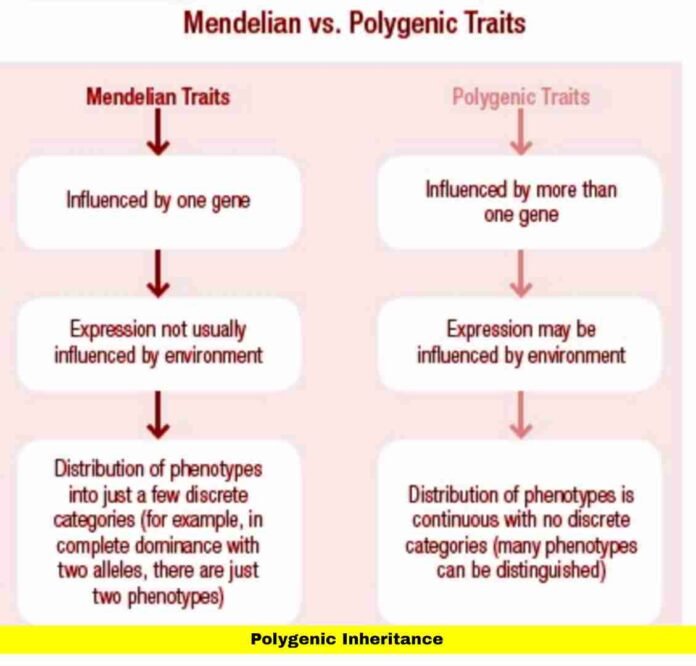
Unlike single-gene traits, these characteristics do not fall into neat categories. Instead, they show continuous variation across populations. This explains why many traits exist along a spectrum rather than as distinct options.
Researchers now recognize this pattern as one of the most common forms of genetic inheritance in humans.
Why This Type of Inheritance Matters Today
Modern genetics has moved beyond simple dominant and recessive models. Large genome-wide studies conducted in the United States and globally have confirmed that many physical and health-related traits depend on dozens, hundreds, or even thousands of genetic variants.
This shift has practical consequences. Medical risk prediction, personalized treatment strategies, and population health planning now rely on understanding how many genes interact with environmental factors over time.
Traits Commonly Influenced by Multiple Genes
Many well-known human traits follow this inheritance pattern. These traits do not show sharp boundaries but instead display gradual differences across individuals.
Common examples include:
- Height and body proportions
- Skin pigmentation and eye shade
- Body mass index and fat distribution
- Blood pressure levels
- Cholesterol regulation
- Cognitive performance measures
Each gene involved adds a small contribution. Together, they shape the final observable trait.
How Environmental Factors Interact With Genes
Genes do not operate in isolation. Environmental influences play a major role in shaping outcomes linked to multiple-gene traits.
Nutrition, physical activity, exposure to sunlight, stress levels, and socioeconomic conditions can all amplify or reduce genetic effects. For example, height potential is influenced by genetics, but childhood nutrition strongly affects final adult stature.
This interaction explains why individuals with similar genetic profiles can still show different outcomes.
Advances in Genome-Wide Association Studies
One of the most important developments in recent years has been the expansion of genome-wide association studies, often called GWAS. These studies analyze genetic data from hundreds of thousands or millions of participants to identify variants linked to specific traits.
U.S.-based biobanks and research institutions have played a major role in this progress. These studies have confirmed that many traits are influenced by a large number of genetic markers, each with a very small effect size.
This evidence has strengthened confidence in multi-gene inheritance models.
Polygenic Scores and Risk Prediction
A major application of this research is the development of polygenic scores. These scores combine the effects of many genetic variants into a single numerical estimate.
Polygenic scores are now used in research settings to estimate risk for conditions such as:
- Heart disease
- Type 2 diabetes
- Certain autoimmune disorders
- Some mental health conditions
In clinical contexts, these scores are used cautiously. They provide probability estimates, not diagnoses.
Limits and Responsible Use of Genetic Scores
While polygenic scores are scientifically validated, they have limitations. They do not account for all genetic variation, and environmental influences remain critical.
Researchers emphasize responsible use. Scores are more accurate for populations well represented in genetic studies, which has led to ongoing efforts to diversify research samples across the United States.
Ethical guidelines now stress transparency, patient education, and avoidance of genetic determinism.
Role in Precision Medicine
Precision medicine aims to tailor prevention and treatment strategies to individual biological differences. Understanding multi-gene inheritance patterns is essential to this goal.
In oncology, cardiology, and metabolic medicine, researchers are using genetic profiles to refine screening recommendations and treatment pathways. These approaches are designed to complement, not replace, traditional clinical assessments.
Hospitals and research centers continue to integrate genetic insights into patient care models.
Educational Impact and Public Understanding
As genetics becomes more prominent in healthcare, education systems have updated curricula to reflect current science. U.S. biology textbooks now emphasize continuous variation and gene interaction rather than oversimplified models.
Public understanding has also improved. Media coverage increasingly explains that most traits arise from complex genetic networks rather than single genes.
This shift reduces misconceptions and promotes informed decision-making.
Differences From Single-Gene Inheritance
It is important to distinguish between multi-gene and single-gene inheritance patterns. Single-gene traits often show clear inheritance ratios and predictable outcomes.
In contrast, traits influenced by many genes:
- Show gradual variation
- Are strongly affected by environment
- Do not follow simple inheritance ratios
- Require statistical analysis to study
This distinction is now foundational in modern genetics education and research.
Implications for Public Health Policy
Public health strategies increasingly consider genetic diversity and risk distribution across populations. Understanding how many genes contribute to disease risk helps policymakers design prevention programs that target modifiable factors.
For example, lifestyle interventions can reduce disease risk even when genetic susceptibility is present. This approach supports equitable healthcare by focusing on prevention rather than genetic labeling.
Ethical and Social Considerations
The expansion of genetic research has raised ethical questions. Privacy, consent, and data security remain top priorities in U.S. research institutions.
There is also ongoing discussion about how genetic information should be used by insurers, employers, and schools. Federal laws currently protect individuals from discrimination based on genetic information in many contexts.
Responsible communication remains essential to avoid misuse or misunderstanding.
Current Research Directions
As of today, research continues to refine how genetic variants interact with each other and with environmental factors. New computational tools allow scientists to model these interactions more accurately.
Artificial intelligence and machine learning are now being applied to genetic datasets. These tools help identify patterns that were previously difficult to detect using traditional methods.
These advances continue to confirm and expand knowledge about multi-gene traits.
Why This Knowledge Matters for Individuals
Understanding how traits develop can empower individuals to make informed health and lifestyle choices. Genetics provides context, not destiny.
Knowledge of genetic risk can support early screening, healthier habits, and proactive care. It can also reduce stigma by highlighting the biological complexity behind human diversity.
This perspective aligns with modern, evidence-based approaches to health and wellness.
The Future of Genetic Research
Looking ahead, researchers aim to improve accuracy, inclusivity, and clinical relevance. Larger and more diverse datasets will strengthen predictions and reduce bias.
Collaboration between medical professionals, geneticists, and policymakers will remain critical. The goal is to translate scientific insight into meaningful benefits for patients and communities across the country.
Final Thoughts on Genetic Complexity
The study of traits shaped by many genes has transformed biology and medicine. It has replaced oversimplified models with a nuanced understanding of human variation.
By embracing complexity, science continues to move closer to personalized, ethical, and effective healthcare solutions.
What are your thoughts on how genetics influences everyday traits and health outcomes? Share your perspective in the comments and stay engaged as genetic science continues to evolve.