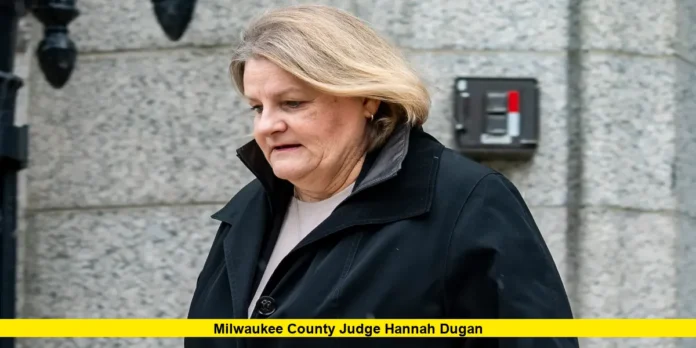

In a landmark federal trial that drew national attention, Milwaukee County Judge Hannah Dugan was convicted on December 18, 2025, of a felony obstruction charge stemming from an immigration enforcement incident inside the Milwaukee County Courthouse. The verdict, delivered by a federal jury after days of testimony, marks a rare moment in U.S. legal history in which a sitting state judge was found guilty of interfering with a federal proceeding. The case has raised urgent questions about judicial conduct, federal authority, and how local courts interact with immigration enforcement.
A Split Verdict That Reshaped the Case
The jury returned a split decision after several hours of deliberation. Judge Dugan was acquitted on a misdemeanor count that accused her of knowingly concealing an individual to prevent arrest. However, jurors found her guilty on the more serious felony count of obstruction, concluding that her actions interfered with federal agents attempting to carry out a lawful arrest.
The distinction between the two charges proved critical. While jurors were not convinced that Dugan intentionally hid the individual, they determined that her conduct still crossed the legal threshold for obstruction of a federal proceeding. The conviction carries potential prison time and serious professional consequences.
The April Courthouse Incident at the Center of the Trial
The charges stem from events on April 18, 2025, when federal immigration agents arrived at the Milwaukee County Courthouse to arrest Eduardo Flores-Ruiz, a Mexican national appearing before Judge Dugan on unrelated state misdemeanor charges.
Evidence presented at trial showed that Judge Dugan became aware of the agents’ presence outside her courtroom before Flores-Ruiz’s hearing concluded. Prosecutors argued that she confronted the agents in a hallway, questioned their authority, and directed them away from her courtroom. After the hearing, Dugan allowed Flores-Ruiz and his attorney to exit through a restricted jury door rather than the public hallway where agents were waiting.
Flores-Ruiz temporarily avoided arrest inside the courthouse but was later apprehended outside after a brief foot pursuit. He was subsequently removed from the United States. Prosecutors argued that Dugan’s actions delayed and complicated the federal arrest, constituting unlawful obstruction.
How Prosecutors Framed the Case
Federal prosecutors presented the case as a clear example of interference with federal authority. They emphasized that no public official, including a judge, has the power to unilaterally redirect or obstruct federal law enforcement operations.
The prosecution relied on testimony from federal agents, courthouse staff, and surveillance footage showing movements inside the courthouse. They argued that directing agents away while allowing the defendant to exit through a nonpublic door created an intentional barrier to enforcement, even if the arrest ultimately occurred.
In closing arguments, prosecutors stressed that the issue was not immigration policy but adherence to the rule of law. They urged jurors to consider whether Judge Dugan’s conduct interfered with a lawful federal action, regardless of motive.
Defense Arguments Focused on Policy and Intent
Judge Dugan’s defense acknowledged that the events occurred but strongly disputed the claim that she acted with criminal intent. Her attorneys argued that she was following her understanding of courthouse protocols designed to manage interactions between federal agents and state court proceedings.
The defense emphasized that courthouses across the country have struggled with how to handle immigration enforcement without disrupting judicial operations or deterring individuals from attending court. They argued that Dugan believed she was acting within administrative boundaries rather than attempting to block an arrest.
Defense attorneys also highlighted the lack of direct evidence showing that Dugan instructed anyone to evade law enforcement. They contended that confusion, not criminal intent, explained her actions that day.
Why the Jury’s Decision Matters
The jury’s split verdict underscored the complexity of the case. By acquitting Dugan on the concealment charge, jurors indicated they did not believe she deliberately hid Flores-Ruiz. However, the felony conviction demonstrated that they concluded her actions still interfered with federal enforcement in a legally significant way.
Legal analysts say the verdict reflects a careful weighing of intent versus impact. The decision sends a clear message that even indirect interference with federal proceedings can meet the legal definition of obstruction.
Immediate Consequences for Judge Dugan
Following her arrest earlier this year, Judge Dugan was suspended from the bench. That suspension remains in effect, and her felony conviction could permanently disqualify her from serving as a judge under Wisconsin law.
Sentencing has not yet been scheduled. The obstruction conviction carries a potential penalty of up to five years in federal prison and substantial fines, though the final sentence will be determined by the presiding judge after reviewing sentencing guidelines and arguments from both sides.
Dugan’s legal team has indicated plans to pursue post-trial motions and appeals, which could extend the legal process well into the future.
National Reaction and Divided Opinion
The conviction of Milwaukee County Judge Hannah Dugan sparked immediate and polarized reactions nationwide. Supporters of the verdict argue it reinforces accountability and affirms that judges are not exempt from federal law. They view the outcome as a necessary safeguard against interference with enforcement actions.
Critics, however, warn that the case could have chilling effects on judicial independence. Some legal scholars and civil rights advocates argue that prosecuting a judge for courtroom decisions risks discouraging judicial discretion, especially in sensitive areas involving immigration and federal-state overlap.
The case has become a focal point in broader debates about immigration enforcement, federal authority, and the autonomy of state courts.
Broader Implications for Courthouses Nationwide
Beyond the fate of one judge, the case is expected to influence how courthouses nationwide handle interactions with federal immigration agents. Legal experts anticipate renewed reviews of courthouse policies, staff training, and communication protocols to avoid similar conflicts.
Courts may seek clearer guidelines to balance federal enforcement responsibilities with the need to maintain access to justice and orderly court proceedings. The verdict highlights how easily those boundaries can become blurred.
A Defining Moment for Judicial Accountability
The conviction stands as a defining moment in the discussion of judicial accountability. It illustrates the high standards imposed on judges and the potential consequences when actions intersect with federal authority.
Whether viewed as a necessary enforcement of the law or a controversial extension of federal power, the case will likely be referenced for years in discussions about judicial conduct and the limits of discretion within the American legal system.
What are your thoughts on how this case could shape the future of courts and federal enforcement? Join the conversation and stay updated as developments continue.