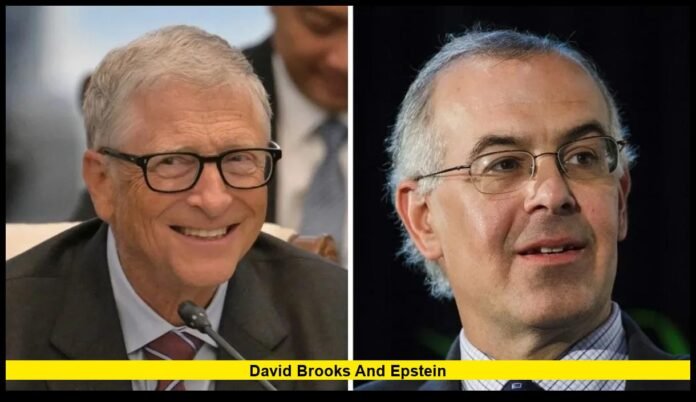

David Brooks and Epstein became part of renewed national discussion in late 2025 after newly released materials connected to Jeffrey Epstein brought fresh attention to the breadth of his social reach and the many influential figures who once appeared in his orbit. The renewed scrutiny is not rooted in allegations against Brooks, but in how Epstein’s long-hidden associations continue to surface, forcing a broader reckoning over power, access, and accountability in American public life.
The episode illustrates how Epstein’s legacy remains unresolved. Years after his death, new disclosures continue to reshape public understanding of how deeply he embedded himself in elite circles. Each release brings renewed debate about responsibility, context, and the standards applied to prominent individuals whose names appear in connection with one of the most notorious criminal cases in modern U.S. history.
Why the Story Resurfaced Now
The renewed attention did not emerge in isolation. It followed the release of previously unseen records drawn from Epstein’s private holdings and government archives. These materials were made public as part of a broader federal transparency effort aimed at disclosing unclassified information related to Epstein and his network.
For many Americans, the Epstein case symbolizes systemic failure. His ability to evade lasting accountability for years raised serious questions about institutions meant to protect the vulnerable. As a result, each new disclosure carries emotional and political weight, regardless of whether it contains evidence of wrongdoing.
The appearance of David Brooks in these materials drew attention because of his role as a nationally recognized commentator. His inclusion underscored how Epstein’s reach extended far beyond criminals or conspirators and into mainstream intellectual and social spaces.
The Nature of the Records
The materials that renewed attention include photographs and documents recovered from Epstein’s properties. These records span many years and involve hundreds of individuals from different professions.
The images involving Brooks show him in a group setting at a social gathering. There is no accompanying narrative, date, or explanation. The records do not describe the purpose of the event, the nature of conversations, or any subsequent interaction.
This lack of context is central to understanding the significance of the release. The records reveal proximity, not intent. They illustrate how Epstein positioned himself among influential people, often without their knowledge of his criminal behavior at the time.
Who David Brooks Is in the Public Mind
David Brooks has been a visible figure in American public life for decades. His work often focuses on values, ethics, and the moral dimensions of politics and culture. He is widely known for examining how character and institutions shape society.
Because of this role, Brooks occupies a space of moral authority for many readers. That status explains why his name drew attention when the Epstein materials became public. The interest is less about accusation and more about expectations placed on those who comment on power and responsibility.
Brooks is not accused of criminal conduct. His relevance to the story lies in how public trust interacts with proximity to controversial figures.
Separating Presence From Participation
One of the most important distinctions in the current discussion is the difference between presence and participation.
The records involving Brooks do not show:
- Criminal behavior
- Private meetings
- Ongoing association
- Financial relationships
- Knowledge of Epstein’s crimes
The materials document that Brooks was present at an event attended by Epstein. That fact alone does not establish awareness or involvement. Still, public reaction shows how association can carry symbolic weight in the aftermath of institutional failure.
This tension reflects a broader cultural shift. Americans increasingly question how power operates behind closed doors and who gains access to influential spaces.
Why Epstein’s Social Network Still Matters
Epstein did not operate in isolation. His influence depended on proximity to respected institutions and individuals. That proximity provided credibility, access, and insulation from scrutiny.
Understanding Epstein’s social network is essential to understanding how his crimes persisted. The presence of prominent figures in his orbit, even incidentally, raises questions about how warning signs were overlooked or dismissed.
The current disclosures aim to illuminate patterns rather than assign guilt. They help explain how Epstein blended into elite environments for so long.
Brooks’s Past Views on the Epstein Story
Before the release of the materials, Brooks had publicly expressed skepticism about the enduring media focus on Epstein. He argued that constant attention risked turning the case into a distraction rather than a path toward reform.
After the records became public, that position was revisited by critics and supporters alike. Some questioned whether Brooks should have acknowledged his own past proximity when writing about the topic. Others argued that incidental presence does not require disclosure.
The debate reflects changing expectations rather than established ethical rules. It highlights how public figures are now judged not only by actions, but by perceived transparency.
The Role of Transparency in Restoring Trust
Transparency sits at the heart of the current moment. The release of Epstein-related materials is part of a broader effort to address public distrust fueled by years of secrecy and perceived protection of powerful individuals.
For many Americans, the Epstein case exposed deep flaws in accountability systems. Transparency is seen as a corrective measure, even when disclosures are uncomfortable or incomplete.
The process is ongoing. Each release tests whether institutions are willing to confront past failures openly.
Public Reaction and the Speed of Judgment
Public response unfolded quickly. Social media amplified the story within hours. In many cases, nuance was lost as images circulated without explanation.
This rapid spread reflects how modern information environments operate. Speed often outruns context, and perception can harden before clarification emerges.
For public figures, this dynamic creates challenges. Even when no allegations exist, association alone can shape narrative.
Why Proximity Has Taken on New Meaning
In earlier eras, incidental association might have attracted little attention. Today, proximity carries greater significance because of heightened skepticism toward elites.
Epstein’s case intensified public awareness of how power can shield wrongdoing. As a result, Americans scrutinize connections more closely, even when evidence of misconduct is absent.
This environment places new pressures on public figures to explain context and address perception directly.
Media Ethics and Evolving Expectations
The discussion surrounding David Brooks and Epstein has prompted broader reflection on media ethics. Opinion writers and journalists are increasingly expected to consider how personal history intersects with public commentary.
Questions being asked include:
- When does incidental contact become relevant?
- How much disclosure is appropriate?
- Should ethical standards evolve with public expectations?
There is no consensus. What is clear is that transparency expectations have shifted significantly in recent years.
Political Dimensions of the Epstein Disclosures
The Epstein records have become politically charged. Different groups interpret the releases through ideological lenses, even though Epstein’s network crossed political boundaries.
Some see transparency as long overdue. Others worry about selective disclosure or misinterpretation.
The diversity of names appearing in the records complicates attempts to frame the issue as partisan. Epstein’s reach extended across sectors and ideologies.
Social Media’s Influence on Narrative Formation
Social platforms played a major role in shaping how the story was understood. Short clips, screenshots, and headlines often traveled farther than full explanations.
This environment favors emotional response over careful analysis. It also reinforces existing distrust of institutions and public figures.
For stories involving complex context, this dynamic can distort understanding.
The Lasting Impact of Epstein’s Crimes
Epstein’s crimes reshaped public expectations of accountability. His death left many questions unanswered, fueling ongoing suspicion and demand for transparency.
Each new disclosure reopens wounds for survivors and reignites debate over systemic failure. The focus on names and associations reflects a desire to understand how such abuse was enabled.
The case continues to influence how Americans view power, privilege, and oversight.
Why This Story Extends Beyond One Individual
The attention on David Brooks is not solely about him. It represents a broader struggle to reconcile proximity with responsibility.
The story raises fundamental questions:
- How do elite spaces operate?
- Who is granted access and why?
- What safeguards failed?
These questions matter far beyond one name or one photograph.
Current Status of the Epstein Transparency Process
As of now, additional records remain under review. More disclosures are expected as transparency efforts continue.
Public interest remains high. Each release is scrutinized not only for content, but for what it represents about institutional willingness to confront the past.
The process is incremental. Clarity will come slowly rather than all at once.
The Challenge of Fair Interpretation
Fair interpretation requires restraint. Presence alone does not establish culpability. At the same time, transparency requires acknowledgment rather than dismissal.
Balancing these principles is difficult in a climate shaped by distrust and emotional response. Still, careful analysis remains essential to avoid replacing secrecy with speculation.
A Moment That Reflects Larger Change
The renewed focus on David Brooks and Epstein reflects how standards of accountability are evolving. Public figures are now evaluated through a lens shaped by past failures and heightened skepticism.
This shift does not imply guilt. It signals a demand for openness and context that did not exist to the same degree in earlier decades.
Looking Ahead
As transparency efforts continue, additional names and materials will likely surface. Each disclosure will test the public’s ability to distinguish evidence from implication.
The Epstein case remains a cautionary tale about unchecked power and institutional blind spots. Understanding its full scope requires patience, context, and commitment to truth.
Final Reflection
The ongoing discussion surrounding David Brooks and Epstein highlights the lasting impact of unresolved wrongdoing and the evolving standards applied to public life. As more information becomes available, thoughtful engagement and careful interpretation will remain essential for rebuilding trust and understanding how such failures occurred.