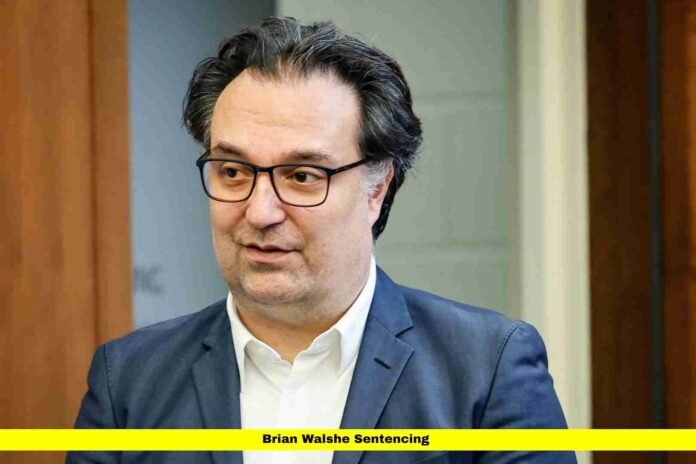

Brian Walshe sentencing has reached its final stage, closing one of the most disturbing and closely followed criminal cases in Massachusetts in recent years. The courtroom decision delivered permanent consequences, not only for Walshe himself but also for the family and community forever altered by the crime. What follows is a detailed, factual account of how this case unfolded, how the sentence was decided, and why it continues to resonate across the country.
A Courtroom Decision With Permanent Consequences
The sentencing hearing marked the moment when years of investigation, courtroom testimony, and emotional strain culminated in a single ruling. The judge imposed a sentence of life in prison without the possibility of parole, the harshest penalty available under Massachusetts law. This outcome followed a jury’s decision that the killing was intentional and premeditated, leaving the court no discretion to consider a lesser punishment.
The sentence ensures that Walshe will remain incarcerated for the rest of his life. It also reflects the court’s conclusion that the crime was not impulsive but involved deliberate planning and sustained efforts to avoid detection.
The Crime That Led to Conviction
The case traces back to the start of 2023, when Ana Walshe disappeared from the family home during the New Year holiday. She was a working professional, a mother of three, and a visible presence in her community. When she failed to appear for work and could not be reached, concern quickly escalated.
Authorities initially treated the situation as a missing person case. However, early inconsistencies in the timeline and conflicting explanations raised serious doubts. Investigators soon shifted their focus toward the home and the people closest to her.
Investigation That Changed Direction
As the investigation deepened, detectives uncovered evidence that reshaped the case. Surveillance footage, purchase records, and digital activity revealed patterns that contradicted earlier statements. Investigators documented movements, transactions, and online searches that pointed to deliberate efforts to conceal a crime.
Even without the recovery of Ana’s body, the evidence formed a consistent narrative. The investigation demonstrated that physical remains were not the only path to establishing responsibility. Behavioral patterns and digital footprints played a central role in reconstructing events.
Building a Case Without Physical Remains
One of the most notable aspects of this prosecution was the absence of a recovered body. This factor often complicates murder cases, but prosecutors relied on a wide range of corroborating details to present a complete picture.
The jury heard how timelines failed to align, how key actions occurred after Ana was last seen, and how attempts were made to mislead authorities. These details, taken together, convinced jurors that a homicide had occurred and that it was intentional.
Trial Proceedings and Key Moments
The trial unfolded over several days, featuring testimony from law enforcement officers, forensic specialists, and witnesses who helped establish routine patterns and deviations from them. Each piece of testimony added another layer to the prosecution’s argument.
Walshe chose not to testify, a legal right that jurors were instructed not to interpret as evidence of guilt. His defense focused on challenging the strength of circumstantial evidence, but the prosecution maintained that the volume and consistency of the evidence removed reasonable doubt.
The Jury’s Decision
After deliberations, the jury returned a guilty verdict for first-degree murder. This classification carries significant legal weight, as it requires proof of intent and premeditation. The verdict reflected the jury’s agreement that the crime was planned rather than accidental.
Once the verdict was read, sentencing became mandatory under state law. The court was required to impose a life sentence without parole, underscoring the seriousness of the conviction.
Additional Criminal Conduct Addressed
Beyond the murder conviction, the court also considered other criminal actions connected to the case. These included providing false information during the investigation and engaging in conduct aimed at concealing what had occurred.
The judge imposed additional prison terms for these offenses. While they do not change the reality of a life sentence, they serve as formal acknowledgment that the wrongdoing extended beyond the killing itself.
Emotional Impact on the Family
The sentencing hearing included statements from Ana Walshe’s family, offering a rare and deeply personal glimpse into the aftermath of the crime. Loved ones described the pain of loss, the anguish of unanswered questions, and the lasting trauma inflicted on the family.
These statements were delivered directly to the court and the defendant. The judge referenced them when explaining the sentence, emphasizing the irreversible harm caused and the absence of any path toward reconciliation or restoration.
Children Caught in the Aftermath
Among the most heartbreaking elements of the case is the impact on the couple’s children. With their mother gone and their father facing permanent incarceration, their lives have been reshaped in profound ways.
The court avoided public discussion of custody and care arrangements to protect the children’s privacy. Even so, their situation stands as a reminder that the consequences of violent crime often fall heaviest on those who had no role in it.
Public Reaction and Broader Meaning
Public attention surrounding this case remained intense from the early days of the investigation through sentencing. Many observers were struck by how modern technology played a decisive role in securing a conviction.
Search histories, location data, and recorded movements proved critical in establishing intent. The case highlighted how digital behavior can become central evidence, even in the absence of traditional forensic findings.
Legal Path After Sentencing
Although sentencing marks a major endpoint, the legal process does not fully conclude here. Under Massachusetts law, first-degree murder convictions are eligible for automatic appeal. Any such appeal would focus on legal procedures and trial conduct rather than reexamining evidence.
Appeals can take years and rarely result in overturned convictions. Until and unless a higher court rules otherwise, the sentence remains in effect and enforceable.
A Case That Will Be Studied
Legal experts and criminal justice observers are likely to reference this case for years to come. It demonstrates how prosecutors can successfully pursue convictions using circumstantial and digital evidence when direct physical proof is unavailable.
It also reinforces the judiciary’s firm stance on crimes involving premeditated violence and deception. The sentence reflects both accountability and the limits of punishment in addressing irreversible loss.
Current Status
As of today, Walshe has been transferred into state custody to begin serving his sentence. No parole hearings will occur, and his incarceration will continue for life unless overturned through appeal.
The courtroom phase of the case has ended, but its impact continues to be felt by family members, legal professionals, and the broader public.
Why This Case Still Matters
This case matters not only because of its outcome, but because of what it reveals about modern investigations, family tragedy, and the permanence of certain legal decisions. It serves as a reminder that justice, while decisive, cannot undo the damage caused by violent acts.
The sentencing brought closure in a legal sense, yet emotional healing remains a far more complex and ongoing process.
What are your thoughts on how justice was delivered in this case? Share your perspective or stay informed as the legal process continues to unfold.