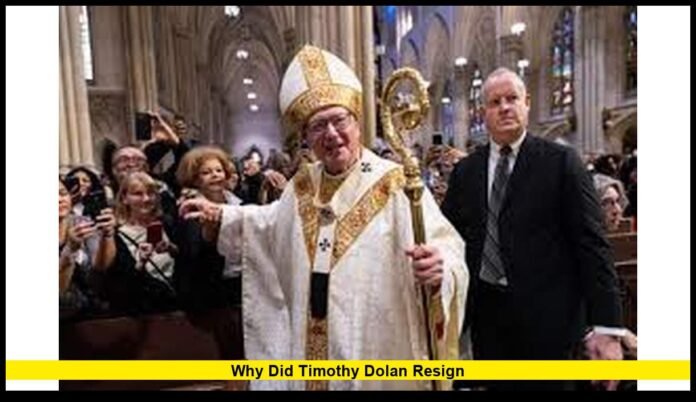

Why did Timothy Dolan resign became a widely searched question across the United States after a major leadership change was confirmed at the Archdiocese of New York in December 2025. Cardinal Timothy M. Dolan officially stepped down after the pope accepted his resignation, ending a lengthy tenure that shaped Catholic life in one of the country’s most influential dioceses.
The resignation followed long-standing Church governance rules and marked a planned leadership transition rather than a sudden or controversial departure. Still, because of Dolan’s national prominence, the announcement drew intense public interest and raised questions about timing, leadership succession, and what lies ahead for the Church in New York.
The Formal Reason Behind Timothy Dolan’s Resignation
The primary reason Timothy Dolan resigned is clearly defined by Catholic canon law. Bishops and archbishops are required to submit their resignation once they reach the age of 75. This requirement applies universally and exists to ensure orderly leadership transitions across dioceses worldwide.
Dolan reached that age earlier in 2025 and submitted his resignation in accordance with Church rules. While submission is automatic, acceptance is entirely at the pope’s discretion. In December 2025, the pope formally accepted Dolan’s resignation, making the leadership change official.
This process is standard and does not reflect disciplinary action, scandal, or loss of confidence.
Why the Archdiocese of New York Draws National Attention
The Archdiocese of New York holds a unique position in American Catholic life. It oversees one of the largest Catholic populations in the country and operates in a region that strongly influences culture, media, politics, and public debate.
Because of this prominence, leadership changes in New York often resonate far beyond church walls. The archbishop’s voice frequently reaches national audiences, and decisions made in the archdiocese can influence broader Catholic discussions across the United States.
This context explains why Dolan’s resignation received such widespread attention.
Timothy Dolan’s Rise to National Influence
Timothy Dolan’s path to becoming one of America’s most visible Catholic leaders began decades before his appointment in New York. After his ordination, he served in academic, pastoral, and administrative roles that shaped his leadership style.
By the time he was named Archbishop of New York in 2009, Dolan had already earned a reputation as a strong communicator with a clear public presence. His elevation to the rank of cardinal in 2012 further increased his influence within both the U.S. Church and the global Catholic hierarchy.
Over time, Dolan became a familiar figure in national conversations involving faith, culture, and public policy.
A Leadership Style That Defined an Era
Dolan’s leadership style was energetic and outward-facing. He was known for direct language, humor, and a willingness to engage the public square. This approach helped him connect with many Catholics while also drawing criticism from others who preferred a quieter or more reserved style.
During his tenure, Dolan emphasized:
- Strong public defense of Church teachings
- Visibility in national religious discussions
- Engagement with civic leaders and institutions
- Support for traditional Catholic practices
This approach shaped how the Archdiocese of New York was perceived during his years of leadership.
Major Challenges During Dolan’s Tenure
While Dolan’s leadership included many high-profile moments, it also unfolded during a period of significant challenge for the Catholic Church in the United States.
Financial Pressures
Like many dioceses, New York faced rising operational costs, aging infrastructure, and declining attendance in some areas. Managing these pressures required difficult decisions, including parish mergers, school closures, and property sales.
Clergy Abuse Accountability
The archdiocese also navigated the ongoing impact of clergy abuse cases. Addressing these claims required financial settlements, administrative reform, and renewed commitments to accountability and transparency.
These challenges formed part of the backdrop during Dolan’s later years as archbishop, even though they were not cited as reasons for his resignation.
Why the Timing of the Resignation Matters
Although Dolan’s resignation followed mandatory age requirements, the timing of its acceptance carried practical importance. Accepting the resignation in December allowed the Church to prepare for a new archbishop early in the coming year.
This timing helped ensure:
- Administrative continuity
- Stability during budget planning cycles
- Clear leadership direction for clergy and staff
Large dioceses benefit from orderly transitions, especially during periods of institutional strain.
Appointment of a New Archbishop
Following the acceptance of Dolan’s resignation, the Vatican announced the appointment of Bishop Ronald A. Hicks as the next Archbishop of New York.
Hicks brings a background shaped by pastoral ministry, diocesan leadership, and outreach to diverse communities. His appointment reflects continuity in Church governance while also signaling a shift toward a different leadership tone.
The installation of the new archbishop is scheduled for early 2026.
What the Transition Period Looks Like
Leadership transitions in major dioceses rarely happen overnight. After stepping down, Dolan remained temporarily involved in the administration to ensure continuity until the new archbishop formally assumed office.
This transition period allowed:
- Ongoing oversight of diocesan operations
- Stability for parishes and institutions
- A structured handover of responsibilities
Such arrangements are common and help avoid disruption during leadership changes.
Was There Any Controversy Behind the Resignation?
No evidence supports claims that Timothy Dolan was forced to resign or removed due to misconduct. His departure followed established Church law tied to age limits and governance norms.
There were:
- No disciplinary announcements
- No emergency actions
- No statements suggesting wrongdoing
Understanding this distinction is essential, as public speculation often accompanies high-profile resignations.
Life After Stepping Down as Archbishop
Although Dolan retired from diocesan leadership, his role within the Catholic Church did not end. As a cardinal, he remains eligible for advisory responsibilities and continues to hold a respected position within Church life.
Retired cardinals often remain active through:
- Teaching and preaching engagements
- Participation in major Church ceremonies
- Support for charitable and pastoral initiatives
Dolan’s experience ensures his voice will still be heard, even outside formal administrative leadership.
Why Did Timothy Dolan Resign and What It Signals
The question of why did Timothy Dolan resign carries broader meaning beyond a single leadership change. His departure reflects how the Catholic Church manages generational transitions and prepares dioceses for future challenges.
The resignation signals:
- Adherence to long-standing governance rules
- Planned leadership renewal
- Continued institutional stability
- Opportunity for fresh pastoral approaches
For many Catholics, this moment represents both continuity and change.
What Lies Ahead for the Archdiocese of New York
Under new leadership, the Archdiocese of New York faces a critical period of reflection and action as it navigates both longstanding responsibilities and emerging pastoral needs. The transition to Archbishop-designate Ronald A. Hicks marks a moment of strategic planning and renewed focus for one of the most prominent Catholic jurisdictions in the United States. Key priorities moving forward include:
Financial sustainability: One of the archdiocese’s most immediate and complex challenges is ensuring long-term financial stability. This includes finalizing financial plans tied to significant settlement obligations and strengthening budgeting systems to support parishes, schools, and ministries. The archdiocese must balance prudent fiscal management with pastoral priorities, ensuring that resources are available for ongoing operations while responsibly addressing legacy commitments. This work will require careful oversight and transparency, as well as collaboration with diocesan staff, clergy, and lay leaders to build a sustainable financial foundation for years to come.
Parish engagement and renewal: Strengthening parish engagement remains central to the archdiocese’s mission. Under new leadership, there is a renewed emphasis on revitalizing parish life by encouraging active participation across generations. Efforts are underway to create programs that support catechesis, encourage vocations, and foster community involvement. Archbishop-designate Hicks is expected to deepen outreach efforts, emphasizing face-to-face pastoral care, listening sessions with parishioners, and initiatives that make parish life more vibrant and accessible, especially to young families and youth.
Support for survivors and accountability efforts: Continuing support for survivors of clergy abuse and enhancing accountability mechanisms remain priorities. The archdiocese has been working to implement comprehensive support systems for those affected and to strengthen policies that prevent future harm. Under new leadership, these efforts are expanding, with ongoing evaluations of safeguarding practices, survivor outreach programs, and protocols for increased accountability and transparency. This work is seen not as a one-time initiative but as essential to healing and trust-building across the archdiocese.
Strengthening trust within Catholic communities: Trust between the Church hierarchy and parish communities has been tested in recent years. Rebuilding this trust hinges on open communication, responsiveness to community needs, and a commitment to pastoral care that resonates with individuals’ lived experiences. The archdiocese is placing renewed emphasis on listening to parishioners, holding forums for dialogue, and involving lay leaders in decision-making processes. By engaging diverse voices and promoting collaborative leadership, the archdiocese aims to foster a culture of mutual respect and confidence.
Expanding pastoral outreach and unity: Beyond these core priorities, there is a growing emphasis on expanding pastoral outreach to diverse Catholic populations within the archdiocese. New York’s Catholic community is culturally varied, with significant representation from immigrant populations, multilingual congregations, and communities with unique spiritual and social needs. Strengthening unity among these groups involves intentional support for multicultural ministries, language-specific liturgies, and pastoral programs that reflect the rich tapestry of Catholic life in the region.
Youth and young adult engagement: Another emerging focus is on engaging youth and young adult Catholics in meaningful ways. Recognizing that younger generations often seek authentic community and purpose-driven participation, the archdiocese is developing initiatives to connect faith with service, social justice, and personal development. These efforts aim to foster a sense of belonging and spiritual growth among younger Catholics who are vital to the future of parish life.
The direction set by the new archbishop will shape how these priorities are pursued and realized. His leadership will influence not only administrative decisions but also the tone and energy of pastoral engagement across the archdiocese. As the Catholic community responds to both longstanding needs and fresh opportunities, the Archdiocese of New York stands at a pivotal moment — one that blends tradition with a renewed commitment to compassionate, community-centered ministry. priorities are addressed in the coming years.
National Implications of the Leadership Change
Because of New York’s influence, this transition also matters nationally. Other dioceses often look to New York as a reference point for pastoral strategy, administration, and public engagement.
Leadership changes in such a prominent archdiocese can influence:
- Episcopal appointments elsewhere
- National Church messaging
- Public perception of Catholic leadership
This is why Dolan’s resignation drew attention far beyond New York State.
Public Response Across the United States
Reactions across the United States to Dolan’s resignation have been mixed but thoughtful, reflecting a range of perspectives within American Catholicism. Many Catholics have expressed gratitude for Dolan’s years of service, pointing to his visibility, pastoral presence, and strong leadership as defining features of his tenure. Parishioners and clergy alike noted his ability to connect with diverse communities, his outspoken engagement in public life, and the loyalty he inspired among many faithful during his time as Archbishop of New York.
At the same time, others have welcomed the opportunity for a new direction and pastoral emphasis under incoming leadership. Some Catholics see Archbishop-designate Ronald A. Hicks as bringing a fresh voice that may help unify different segments of the Church and address emerging priorities with a renewed focus on community outreach and pastoral care. This sentiment reflects a desire among certain groups for leadership that balances tradition with a renewed emphasis on grassroots pastoral engagement and intercultural understanding.
These reactions reflect broader conversations within American Catholicism about leadership style, accountability, and the future of the Church. Many discussions online and within parish circles have highlighted a growing interest in clergy who can bridge institutional continuity with compassion-driven pastoral work. For some, this moment has underscored the importance of leaders who can engage effectively with young adults, support immigrant communities, and navigate the evolving spiritual needs of diverse Catholic populations.
At the same time, some observers have underscored the value of Dolan’s stability, noting that his long tenure helped define a clear voice for the Church during a period of cultural and societal shifts. His visibility in national debates around faith, education, and public policy left a lasting impression on many Catholics who appreciated his willingness to represent Church perspectives on a broad stage.
In parishes across multiple states, congregants have shared personal reflections on how Dolan’s leadership influenced their faith lives, with many expressing affection for his pastoral style, sermons, and public presence. Others have expressed curiosity and cautious optimism about what new leadership might bring, particularly in terms of pastoral priorities, engagement with social issues, and strategies for strengthening parish communities.
Overall, the public response reflects a Church in conversation with itself — appreciating the legacy of one leader while simultaneously looking forward to the possibilities offered by his successor. These discussions speak to deeper themes within American Catholicism about balancing tradition with innovation and addressing both spiritual and institutional needs in a changing cultural landscape.
A Clear and Factual Summary of Why Dolan Resigned
In straightforward terms, why did Timothy Dolan resign can be explained without ambiguity. The core reason was his reaching the mandatory retirement age of 75, a requirement under Catholic Church governance that applies to bishops and archbishops worldwide. Upon reaching that age earlier in 2025, Dolan submitted his resignation to the pope, as stipulated by Church law, which calls for such submissions to ensure regular leadership transitions.
Following this submission and a period of review, the pope accepted Dolan’s resignation in December 2025, officially bringing his long tenure as Archbishop of New York to a close. The timing of the acceptance aligned with the Vatican’s broader emphasis on careful succession planning and readiness for new leadership, allowing for a smooth and orderly transition rather than an abrupt change.
To maintain stability and continuity within one of the largest and most influential Catholic dioceses in the United States, a successor was quickly appointed by the pope. Archbishop-designate Ronald A. Hicks was named to lead the Archdiocese of New York, bringing his own pastoral experience and priorities to the role. The appointment ensures that diocesan operations, pastoral ministry, and administrative planning continue seamlessly, with leadership already in place ahead of the formal installation expected in early 2026.
This entire process — from resignation submission to acceptance and successor appointment — followed established Church law and long-standing practice. It reflects the Catholic Church’s structured approach to governance, balancing respect for experienced leaders with the need for generational renewal. The transition was managed in a way that prioritized continuity for clergy and parish communities, reinforcing confidence among the faithful and positioning the archdiocese for future pastoral and organizational work.
In summary, Dolan’s resignation was not the result of dispute or crisis, but rather a canonical and institutional transition that reflects both respect for tradition and readiness for the next chapter in leadership.
Why This Moment Matters
Leadership transitions often serve as moments of reflection. For the Archdiocese of New York, this change marks the end of a long chapter and the beginning of a new one.
It invites renewed focus on:
- Pastoral care
- Financial responsibility
- Community trust
- Faith engagement in a changing society
The coming years will determine how effectively the archdiocese adapts to these challenges.
What does this leadership change mean to you and your community? Share your thoughts and stay connected for future developments.