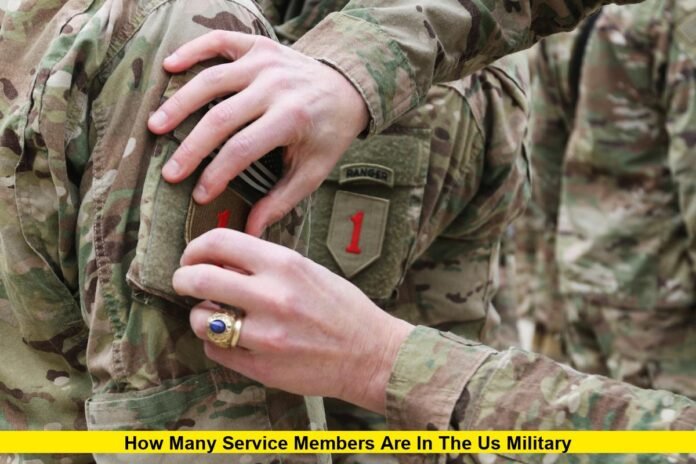

In 2025, how many service members are in the US military is a question that continues to draw national attention as global security challenges, defense spending, and recruitment trends evolve. The most current verified figures show that the United States maintains a large, structured, and globally active military force made up of active-duty troops, reserve units, and National Guard members working together to support national defense at home and abroad.
This in-depth report explains the latest numbers, how the force is structured, and why these figures matter for the country’s future.
Understanding Who Counts as a U.S. Military Service Member
To understand military size accurately, it is important to define who is included in official personnel counts.
A U.S. military service member is a uniformed individual serving in one of the nation’s armed forces. These personnel fall into three main categories:
- Active-duty members who serve full time
- Reserve members who train regularly and can be mobilized
- National Guard members who serve under state authority but can be federally activated
Civilian employees, contractors, and veterans are not included in these totals, even though they play critical roles in supporting defense operations.
Active-Duty Military Strength in 2025
As of the most recent confirmed data available in 2025, the United States maintains approximately 1.32 to 1.33 million active-duty service members.
Active-duty personnel form the core of the U.S. military. They are responsible for daily operational readiness, overseas deployments, training missions, intelligence activities, and rapid response to emerging threats. These service members are stationed across the United States and in strategic locations around the world.
Despite fluctuations in recruitment and retention over recent years, active-duty numbers have remained relatively stable due to targeted enlistment efforts and force management policies.
Total Military Personnel Including Reserves and National Guard
The size of the U.S. military increases significantly when reserve components are included.
In addition to active-duty forces, the United States has approximately 760,000 to 800,000 reserve and National Guard members. When combined, this brings the total number of U.S. military service members to roughly 2.1 million.
These part-time forces play a vital role in national defense. They support disaster response, overseas deployments, homeland security missions, and large-scale mobilizations. In many cases, reserve and Guard units operate alongside active-duty troops in real-world missions.
Military Branches and Their Roles
The U.S. military is organized into distinct branches, each with specialized responsibilities. While exact personnel numbers shift throughout the year, the overall structure remains consistent.
Army
The Army is the largest branch by personnel. It provides ground combat forces, logistical support, engineering units, and humanitarian assistance worldwide.
Navy
The Navy maintains maritime security, operating aircraft carriers, submarines, and surface fleets to protect sea lanes and project power globally.
Air Force
The Air Force delivers air superiority, global mobility, intelligence, surveillance, and precision strike capabilities.
Marine Corps
The Marine Corps is a rapid-response force designed for expeditionary and amphibious operations, often serving as the first force deployed during crises.
Space Force
The Space Force focuses on satellite operations, space-based communications, missile warning systems, and space domain security. It is the smallest branch by personnel.
Coast Guard
The Coast Guard conducts maritime law enforcement, border security, environmental protection, and search-and-rescue missions. During wartime, it can operate under military command.
Where the U.S. Military Stands Globally
In terms of total uniformed personnel, the United States ranks among the largest military forces in the world. While some countries maintain higher troop counts, the U.S. military is notable for its global presence, technological capabilities, and sustained readiness.
American forces operate across multiple continents, supporting alliances, deterring aggression, and responding to crises. Personnel strength, combined with advanced training and equipment, remains a cornerstone of U.S. military influence.
Recruitment and Retention Trends
Military size is closely tied to recruitment and retention success.
After facing recruitment challenges in earlier years, enlistment showed improvement leading into 2025. Several factors contributed to this shift, including updated recruiting strategies, expanded outreach, and adjustments to eligibility policies.
Retention efforts have also played a role in maintaining force levels, with incentives designed to keep experienced service members in uniform. These trends help stabilize personnel numbers and preserve institutional knowledge within the ranks.
Defense Policy and Force Planning
Military personnel levels are shaped by long-term defense planning and budget decisions.
Policymakers aim to balance troop strength with modernization priorities, such as cyber operations, space defense, and advanced weapons systems. While technology continues to reshape warfare, human capital remains essential for operating, maintaining, and commanding military systems.
Strategic reviews regularly assess whether current force levels align with national security objectives, global commitments, and emerging threats.
Why Military Personnel Numbers Matter
Knowing how many service members are in the US military is more than a statistical exercise. These numbers have real-world implications for:
- National security readiness
- Military family support programs
- Veterans’ services and benefits
- Disaster response and homeland defense
Personnel strength affects how quickly and effectively the military can respond to crises, whether overseas conflicts or domestic emergencies.
The Human Element Behind the Numbers
Behind every statistic is an individual who has committed to serve. Active-duty troops, reservists, and National Guard members come from communities across the country, bringing diverse skills and experiences to the force.
Their service supports not only military missions but also disaster relief efforts, infrastructure protection, and international cooperation. Understanding the scale of this commitment helps place military service in proper national context.
Looking Ahead
As global conditions evolve, the size and structure of the U.S. military will continue to adapt. Recruitment trends, policy decisions, and strategic priorities will shape future personnel levels, but maintaining a capable and ready force remains a top national priority.
Clear, accurate information about military strength helps Americans stay informed and engaged with issues that affect national defense and global stability.
What are your thoughts on the current size and role of the U.S. military? Share your perspective and stay connected for timely updates on America’s armed forces.