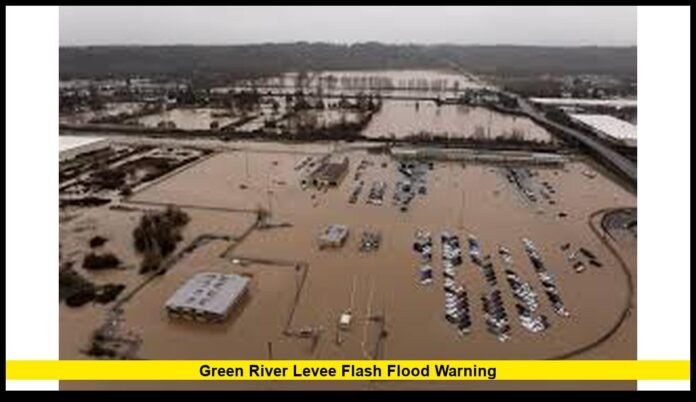

The green river levee flash flood warning continues to dominate emergency response efforts in King County, Washington, as officials manage ongoing flooding caused by a confirmed levee failure along the Green River that has displaced residents, disrupted transportation, and placed thousands on high alert.
As of December 16, 2025, emergency managers confirm that flood conditions remain unstable in areas near Tukwila, Kent, and Renton. Crews are actively reinforcing flood defenses while evacuation orders stay in place for neighborhoods closest to the river. Authorities emphasize that the situation remains dynamic, with safety conditions subject to rapid change.
Timeline of the Flood Emergency
The flood emergency developed after several days of sustained rainfall across western Washington. The persistent storms saturated soil throughout the Green River basin, reducing the land’s ability to absorb additional water. As runoff increased, the river rose sharply above its normal winter levels.
On Monday morning, pressure on the Desimone Levee reached a critical point. Despite earlier efforts to reinforce vulnerable sections, a breach occurred, allowing river water to escape into nearby low-lying areas. Emergency alerts were issued immediately after the failure was detected.
Officials described the initial hours following the breach as critical, with water spreading quickly into areas not designed to handle river overflow.
Understanding the Levee Failure
Levees are designed to protect communities from high water events, but they rely on stable ground and manageable river pressure. In this case, extended rainfall weakened the soil beneath and around the Desimone Levee.
As the Green River continued to rise, water pressure increased against the levee wall. Once seepage and erosion began, the structure could no longer hold. The failure created a direct pathway for river water to enter surrounding areas.
Emergency crews have since focused on monitoring the breach and preventing further erosion, while assessing other sections of the levee system for potential weaknesses.
Areas Most Affected by Flooding
Flood impacts have been concentrated along the river corridor, particularly in communities with lower elevation and proximity to the levee breach. The most affected areas include:
- Tukwila, especially neighborhoods near the river
- Portions of Kent close to flood-prone zones
- River-adjacent areas of Renton
- Industrial and warehouse districts built near floodplains
At the peak of the warning, a large portion of the population in these areas was included in emergency alerts. As water movement patterns became clearer, officials refined evacuation boundaries to focus on zones facing the highest risk.
Despite this adjustment, authorities stress that flood dangers remain significant.
Evacuation Orders and Resident Safety
A Level 3 evacuation order was issued for areas closest to the levee breach. This level instructs residents to leave immediately due to imminent danger. Emergency notifications were distributed through multiple channels to ensure broad awareness.
Residents were urged to act quickly and avoid delays. Key guidance included:
- Leave the area without hesitation
- Move to higher ground away from the river
- Avoid floodwaters, even if they appear shallow
- Follow directions from emergency personnel
Officials emphasized that floodwaters can rise rapidly and unpredictably, leaving little time to respond once conditions worsen.
Emergency Response and Coordination
Local and state emergency teams mobilized rapidly following the levee failure. Response efforts have involved close coordination between public safety agencies, public works departments, and emergency management officials.
Key response actions include:
- Sandbagging and temporary flood barriers
- Road closures to limit access to dangerous areas
- Evacuation assistance for residents and workers
- Continuous monitoring of river levels and weather conditions
State-level resources were also activated to support logistics, safety operations, and manpower needs during the emergency.
Transportation Disruptions and Road Closures
Flooding has caused widespread transportation challenges across the affected region. Roads near the Green River and low-lying corridors have been closed due to standing water, erosion, or safety concerns.
Drivers have been advised to avoid flood zones entirely. Officials stress that driving through floodwater is extremely dangerous, as even a few inches of moving water can sweep a vehicle off the road.
Traffic restrictions remain in place to protect the public and allow emergency crews to operate without interference.
Shelters and Support Services
Emergency shelters have been established in nearby communities to provide temporary housing for evacuees. These shelters offer a safe place to stay for individuals and families displaced by flooding.
Shelter services include:
- Overnight accommodations
- Basic supplies and sanitation
- Space for families and individuals
- Limited accommodations for pets at select locations
Emergency staff remain on-site to assist evacuees and provide updates as the situation evolves.
Conditions Along the Green River
Water levels along the Green River remain elevated as runoff continues to flow into the system. While some stabilization has been reported in certain areas, officials caution that conditions can change quickly.
River monitoring teams are tracking water movement, pressure on levees, and signs of seepage. Crews are prepared to respond if additional vulnerabilities are identified.
The green river levee flash flood warning remains in effect due to the ongoing risk posed by high water and compromised flood defenses.
Industrial and Economic Impacts
In addition to residential areas, flooding has affected industrial zones located near the river. Several businesses temporarily shut down operations due to evacuation orders, road closures, or floodwater intrusion.
Supply chain disruptions and access limitations have impacted deliveries and logistics in the region. Officials note that economic recovery efforts will follow once safety conditions allow.
Damage assessments will be conducted after floodwaters recede and access is restored.
Public Safety Messaging and Alerts
Emergency managers continue to issue updates to keep residents informed. Public safety messaging focuses on clarity, urgency, and consistency to reduce confusion during the evolving situation.
Residents are encouraged to rely on official emergency alerts rather than unverified information. Authorities stress that following instructions promptly can significantly reduce the risk of injury or loss of life.
Environmental Considerations
Flooding of this scale can have environmental consequences, including erosion, debris movement, and water contamination. Officials are monitoring potential impacts to nearby waterways and infrastructure.
Environmental assessments will be conducted as conditions stabilize to evaluate longer-term effects and guide cleanup efforts.
Why This Flood Event Is a Serious Concern
The current flooding highlights the vulnerability of river communities during prolonged periods of heavy rain. Saturated soil, aging flood infrastructure, and increased runoff create conditions where levee systems can be overwhelmed.
Emergency managers emphasize that preparedness and rapid response play a critical role in reducing harm. Public cooperation with evacuation orders has been a key factor in maintaining safety so far.
Guidance for Residents Moving Forward
Officials continue to advise residents to remain cautious and prepared. Key recommendations include:
- Stay informed through emergency alerts
- Avoid flooded or restricted areas
- Do not return to evacuated zones until cleared
- Check on neighbors who may need assistance
Even after water levels drop, hazards such as damaged roads and unstable ground may persist.
Recovery and Next Steps
Once floodwaters recede, attention will shift toward cleanup and recovery. Crews will inspect levees, roads, and buildings to determine the extent of damage.
Officials caution that recovery will take time and emphasize the importance of patience and coordination during the process.
Community support services will continue to assist residents affected by displacement or property damage.
Community Resilience and Preparedness
Events like this underscore the importance of flood preparedness for communities along major waterways. Emergency managers encourage residents to understand evacuation routes, maintain emergency kits, and stay informed during severe weather events.
Long-term planning efforts aim to strengthen flood defenses and improve response capabilities to reduce future risks.
Looking Ahead
While conditions remain challenging, officials are committed to protecting lives and minimizing damage as the situation evolves. Continuous monitoring and response efforts remain in place.
The green river levee flash flood warning serves as a reminder of the power of nature and the importance of swift, coordinated action during emergencies.
As the situation along the Green River continues to develop, stay alert, follow official guidance, and share your thoughts or experiences as recovery efforts move forward.