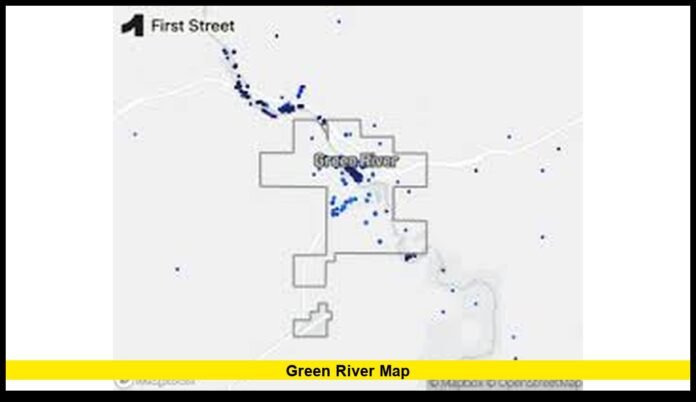

The green river map remains a critical tool for Americans as updated river mapping continues to guide flood response, public safety decisions, and regional planning, particularly in Washington state where river conditions have required close monitoring in recent days.
This article delivers a comprehensive, factual, and current overview of what the Green River map shows today, how it is used by agencies and residents, and why accurate mapping matters now more than ever.
What the Green River Map Represents Today
A Green River map is not a single static chart. It is a collection of official, continuously updated mapping systems that visualize river levels, flood risks, evacuation areas, and infrastructure impacts.
These maps combine geographic data with live river measurements, making them essential for emergency managers, city planners, and residents living near the river. The information displayed reflects verified measurements from monitoring stations and updated flood modeling.
For communities along the river, these maps function as real-time decision-making tools rather than reference materials.
Focus on the Green River in Washington State
The Green River in Washington flows through King County and affects several populated areas, including Auburn, Kent, and Tukwila. Due to its geography and history of flooding, it is one of the most closely monitored rivers in the region.
Current Mapping Activity
Recent weather conditions have caused elevated river levels, prompting agencies to rely heavily on Green River maps to determine flood phases and public safety actions. The maps show rising and falling water levels throughout the day, allowing for quick response when thresholds are crossed.
River mapping in this region updates frequently, ensuring that the information reflects real-world conditions with minimal delay.
Flood Phases Displayed on the Green River Map
Flood phase indicators are one of the most important features shown on Green River maps. These phases translate numerical river data into clear risk categories that the public can understand.
Typical flood phases include:
- Normal Conditions: River remains within its banks
- Early Alert Stage: Water levels increase but impacts remain limited
- Moderate Flood Stage: Low-lying areas face potential flooding
- Major Flood Stage: Widespread flooding becomes likely
- Severe Flood Stage: Evacuations and emergency actions may occur
Current mapping along portions of the Green River reflects advanced flood stages, especially in areas with known floodplain exposure.
Evacuation Zones and Safety Boundaries
Green River maps now highlight evacuation zones that change as river conditions evolve. These zones are displayed using color-coded overlays that clearly mark areas of concern.
What Residents See on the Map
- Mandatory evacuation areas
- Voluntary evacuation recommendations
- Safe travel corridors
- Closed or restricted roads
- Areas at risk from levee stress or overflow
These features allow residents to quickly determine whether their location falls within a risk zone without needing technical expertise.
Real-Time Data Layers on the Green River Map
Modern river maps integrate multiple data layers into a single interactive display. This layered approach improves clarity and helps users understand how different factors interact.
Common Data Layers
- River height measurements
- Water discharge rates
- Short-term forecasts
- Flood boundaries
- Infrastructure impacts
Users can toggle these layers on or off, zoom into neighborhoods, and view timestamps showing when data was last updated.
Why Accuracy Matters for River Mapping
Every data point on the Green River map reflects direct measurements or validated modeling. Accuracy is essential because even small changes in river height can significantly affect flood risk.
Emergency managers rely on precise mapping to decide when to issue warnings, adjust evacuation boundaries, or reopen roads. Inaccurate data could delay action or cause unnecessary disruption.
This focus on accuracy ensures that decisions are based on current conditions rather than assumptions.
How Residents Use the Green River Map
For people living near the river, the Green River map has become a daily reference tool during periods of severe weather.
Residents use it to:
- Monitor rising or falling water levels
- Confirm whether their area is within an evacuation zone
- Identify safe routes for travel
- Avoid flooded or closed roadways
The map’s accessibility allows people to check conditions from mobile devices, which is especially important during emergencies.
Green River Map and Infrastructure Awareness
Beyond flooding, Green River maps also help track infrastructure impacts. Roads, bridges, utilities, and industrial areas are often shown in relation to flood zones.
This helps local governments coordinate responses and prioritize repairs once water levels begin to recede.
For businesses and homeowners, the map offers a clearer understanding of potential exposure and recovery timelines.
The Green River Map Beyond Washington
The Green River also flows through Wyoming, Utah, and Colorado, where it serves as a major tributary of the Colorado River. While there are no active flood emergencies along this stretch, mapping remains essential.
Uses in the Southwest
In these states, Green River maps support:
- Water resource management
- Long-term planning
- Environmental monitoring
- Outdoor recreation
These maps focus more on watershed boundaries, elevation, and flow patterns rather than real-time flood response.
Differences in Mapping Approaches
| Aspect | Washington Green River | Southwest Green River |
|---|---|---|
| Primary Purpose | Flood response | Basin planning |
| Update Frequency | Continuous | Periodic |
| Public Safety Role | Immediate | Long-term |
| Map Style | Interactive GIS | Hydrologic & topographic |
Despite these differences, both rely on verified geographic and hydrologic data.
How Mapping Supports Emergency Decisions
Green River maps play a central role in emergency coordination. Agencies use them to:
- Time evacuation notices
- Coordinate law enforcement and rescue teams
- Identify high-risk neighborhoods
- Communicate clearly with the public
Because the maps update rapidly, decision-makers can respond as conditions change rather than relying on outdated projections.
Public Communication and Transparency
One of the most valuable aspects of the Green River map is transparency. The same information used by officials is available to the public.
This shared access helps reduce confusion, limit rumors, and improve trust during emergencies. When residents can see the same data, they better understand why certain actions are taken.
What to Monitor on the Green River Map
Residents should pay close attention to:
- Flood phase changes
- Expansion or contraction of evacuation zones
- Road closure updates
- Trends showing rising or falling water levels
These indicators provide early warning and help residents plan safely.
Looking Ahead
As weather systems move through the region, the Green River map will continue to change. Some areas may see gradual improvement, while others may remain under close watch.
Monitoring the map helps communities transition from response to recovery while staying alert for new developments.
Why the Green River Map Will Remain Essential
River mapping is no longer a background tool. It has become a frontline resource for safety, planning, and awareness.
The Green River map shows how technology, data accuracy, and public access work together to protect lives and property.
Keep checking the Green River map and share how conditions look in your area to help others stay informed as updates continue.