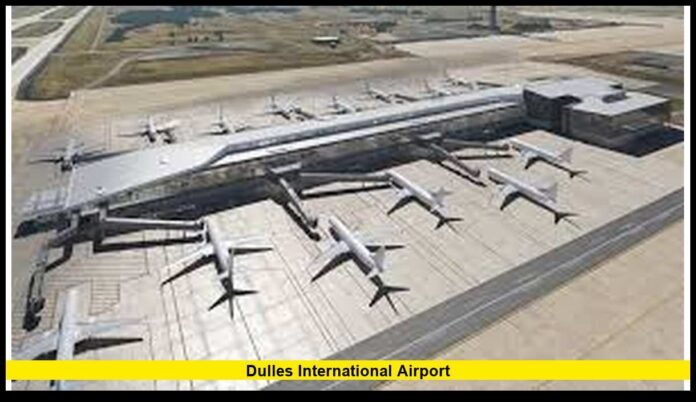

dulles international airport drew nationwide attention this week after a United Airlines international flight returned safely following an in-air engine issue, an event that highlighted the airport’s emergency response systems while broader expansion plans and new international routes continue to shape its future.
The incident occurred amid a period of steady growth for the airport, which serves as a critical hub for long-haul travel, government traffic, and international connectivity for the Washington metropolitan region.
United Airlines flight returns safely with no injuries
On December 13, 2025, a United Airlines Boeing 777 operating a scheduled flight to Tokyo experienced a reported engine problem shortly after departing the airport. Flight crews followed established safety procedures and remained in the local airspace before returning to land safely.
All 275 passengers and 15 crew members exited the aircraft without injury. Airport emergency personnel were already positioned by the time the plane touched down, ensuring a controlled and orderly response.
Following the landing, airport officials confirmed that a component linked to the aircraft’s engine cowling had separated during flight. That debris ignited a small brush fire near the runway area, which was extinguished quickly by airport fire crews.
Runway response and temporary operational impacts
The presence of emergency vehicles and the need to secure the affected runway area resulted in brief operational adjustments. Departures were slowed while airfield crews assessed conditions and confirmed that no additional debris posed a risk to aircraft movement.
At major airports, even contained incidents can trigger ripple effects. Ground stops, delayed pushbacks, and altered taxi routes are standard precautions when emergency responses occur near active runways.
Airport operations staff coordinated closely with air traffic control to restore normal traffic flow as soon as safety checks were completed.
Federal review begins as standard procedure
As expected after an in-flight mechanical event, the Federal Aviation Administration opened a formal review. Such investigations are routine and are designed to determine the cause of the failure, assess maintenance factors, and evaluate whether any procedural changes are needed.
United Airlines arranged for passengers to continue their journey later the same day using a different aircraft. Airline representatives emphasized that safety protocols guided every decision from the moment the issue was identified.
What passengers experienced inside the terminal
For travelers inside the terminal, the incident was most noticeable through gate changes, updated departure boards, and announcements regarding minor delays. Some arriving flights were briefly held at their origin airports to manage spacing while the situation was resolved.
Airport staff increased communication with passengers during the response period, a key component of managing traveler confidence during unexpected events.
While the aircraft itself landed without further complication, post-landing inspections required additional time, reinforcing the importance of thorough checks before resuming standard operations.
Emergency readiness at a major U.S. airport
Large international airports maintain dedicated aircraft rescue and firefighting units trained to respond within seconds. These teams regularly conduct drills involving engine fires, emergency landings, and runway incidents.
During this event, the response demonstrated coordination across multiple units:
- Fire and rescue teams secured the runway perimeter
- Air traffic control managed airspace and sequencing
- Airport operations monitored surface conditions
- Airline ground crews prepared alternate gates and aircraft
This layered approach is designed to handle worst-case scenarios even when outcomes remain controlled.
Expansion planning continues behind the scenes
Beyond the immediate incident, the airport remains in an active planning phase aimed at accommodating future passenger growth.
In 2025, airport leadership advanced long-term development plans that outline potential terminal replacements, concourse upgrades, and passenger flow improvements. These plans are essential for maintaining competitiveness among U.S. international gateways.
Federal review processes tied to environmental analysis and infrastructure compatibility have also moved forward, allowing the airport to explore phased construction timelines rather than a single disruptive build.
Design and construction planning enters next phase
During December 2025, a federal request for information was issued to gather industry input on terminal and concourse design concepts. This step helps airport authorities understand available construction approaches, cost considerations, and operational impacts before formal bidding begins.
Such planning phases often last years, but they shape decisions that affect travelers for decades, including gate availability, customs processing capacity, and security screening layouts.
Infrastructure upgrades beyond passenger terminals
Not all airport development is visible to travelers. Supporting infrastructure plays a critical role in managing increased traffic.
Projects tied to airfield operations, including a new air traffic control tower site and supporting facilities, remain part of the airport’s broader modernization strategy. These upgrades help controllers manage more aircraft movements while maintaining separation standards.
As flight volumes grow, modernized control systems become as important as expanded terminal space.
Airlines strengthen international service offerings
The airport’s role as a global gateway continues to attract airline investment. In mid-December 2025, Air Premia announced plans to begin nonstop service between Incheon, South Korea, and the Washington region starting April 24, 2026, with four weekly flights.
This addition reflects sustained demand for trans-Pacific travel and adds another option for passengers seeking nonstop connections between the United States and East Asia.
United Airlines, which operates a major hub at the airport, continues to rely on it for long-haul service to Europe and Asia, reinforcing its strategic importance within the carrier’s international network.
Why nonstop routes matter for travelers
For U.S. passengers, new nonstop flights can significantly reduce travel time and missed-connection risk. They also increase fare competition, which can lead to more pricing options during peak travel seasons.
Business travelers, government officials, and international visitors all benefit from expanded direct service, particularly in a region tied closely to global diplomacy and commerce.
Managing growth while maintaining reliability
As passenger numbers rise, airports face the challenge of expanding capacity without sacrificing reliability. Incidents like the December 13 engine issue test these systems in real time.
The ability to resolve an unexpected aircraft return, manage ground conditions, and resume operations efficiently reflects both infrastructure investment and staff training.
Airport officials consistently emphasize that safety protocols remain the top priority, even when growth pressures increase.
What travelers should consider when flying soon
Passengers departing in the coming weeks can take simple steps to reduce stress:
- Allow extra time during peak travel periods
- Monitor airline notifications closely
- Be prepared for gate or aircraft changes
- Expect occasional delays tied to airfield operations
These precautions help travelers adapt smoothly when schedules shift due to operational or safety considerations.
Looking ahead to 2026 and beyond
As new routes launch and planning advances toward construction phases, the airport’s profile is likely to remain prominent in national aviation discussions.
Future changes may include terminal reconfigurations, expanded international facilities, and improved roadway access designed to support rising demand.
For now, the most recent incident stands as a reminder that aviation safety systems are designed to handle complex scenarios effectively while keeping passengers protected.
At the intersection of daily operations and long-term development, dulles international airport continues to play a central role in U.S. air travel, balancing immediate response with strategic planning for the years ahead.