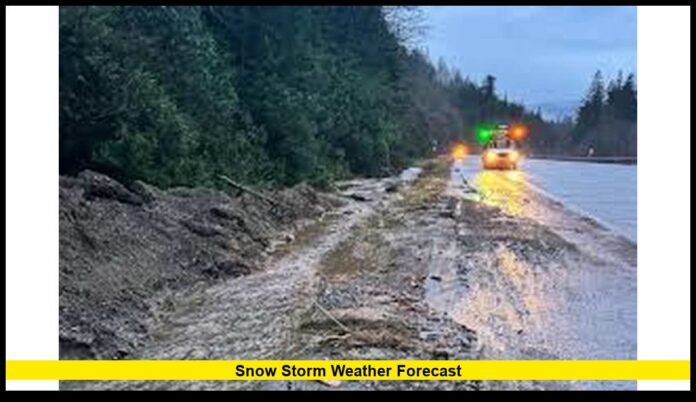

The United States is facing a complex mix of winter weather as a powerful Pacific system pushes inland. This snow storm weather forecast highlights confirmed conditions affecting millions today, from flooding in the Pacific Northwest to disruptive snow across major mountain ranges. Weather offices across the country are reporting rapidly shifting patterns, prompting travel alerts, flood warnings, and winter preparedness efforts in several regions.
The storm’s structure, intensity, and evolving temperature gradients are creating sharp contrasts from one area to another. Heavy rain dominates coastal zones, while wind-driven snow is expanding across the Cascades, northern Sierra, and portions of the inland Northwest. With multiple hazards unfolding at once, communities are preparing for a challenging stretch of winter weather that will continue into the weekend.
A powerful West Coast system bringing widespread disruption
The strongest activity remains centered on the Pacific Northwest, where an incoming moisture surge has produced heavy rainfall across river basins in Washington and Oregon. Meteorologists note that many rivers in these states have risen quickly, prompting flood warnings and evacuation advisories in vulnerable locations.
In higher terrain, the situation looks very different. Cold air aloft is allowing snow to pile up rapidly over mountain passes, creating dangerous travel conditions. Crews are working continuously to plow major routes, but road surfaces remain slick, visibility varies widely, and chain requirements are in place on many mountain corridors.
Snow in the Cascades has intensified due to wind patterns pushing moisture up mountain slopes. This lifting effect enhances snowfall rates, causing deep drifts that make travel unpredictable. Drivers attempting to cross these routes should expect long delays and intermittent closures as crews clear fresh snow and remove downed trees.
Rainfall flooding and runoff concerns continue to increase
While many states are dealing with snow, rainfall remains the most significant hazard across western lowlands. The storm’s tropical moisture feed has produced sustained heavy rain, overwhelming drainage systems in some areas. Cities are reporting water-covered roads, stalled vehicles, and disruptions to public transit.
Small towns along riverbanks are especially at risk. Rapid runoff from saturated hillsides and melting snow has increased river levels, and officials have urged residents to prepare for possible evacuations. Emergency operations centers are monitoring real-time conditions and deploying crews to reinforce levees, clear debris, and provide shelter support where needed.
Urban neighborhoods are not immune to these challenges. Standing water is affecting highways and major commuting routes, creating backups that extend well beyond typical rush-hour patterns. With more rain expected through the evening, drivers are encouraged to stay updated and avoid low-lying road sections that flood quickly.
Mountain snowfall intensifies across multiple ranges
Mountain regions are bearing the heaviest winter impacts from this system. The Cascades have reported rapidly building snowpack, and the northern Sierra Nevada is experiencing similar conditions. High-elevation zones continue to receive continuous snowfall as colder air settles in behind the storm’s warm front.
As new snow layers accumulate on top of older, compacted layers, avalanche risk is rising. Backcountry travelers have been advised to avoid steep slopes until assessments show more stability. Search-and-rescue teams are on standby in several mountain counties, anticipating that some recreation areas may become difficult to reach if winds strengthen overnight.
The northern Rockies are also seeing moderate snowfall, though totals remain lower than in the Cascades or Sierra. Still, even modest accumulations can make mountain valleys hazardous due to quick temperature changes that produce icy surfaces.
Interior states and the Northeast experience lighter winter effects
As the system spreads inland, parts of the northern Plains, Upper Midwest, and interior Northeast are experiencing intermittent snow showers. These areas are not seeing major accumulations, but temperatures are dropping behind the main storm, creating scattered slick spots on roadways.
Some regions could see narrow snow bands develop as colder air interacts with local moisture sources. These pockets often shift quickly, meaning conditions can change within minutes. Commuters should remain cautious, especially during early morning and late-evening hours when temperatures fall below freezing.
Airports across the Midwest and Northeast have reported minor delays due to changing visibility and winter operations, though disruptions are far less widespread than those along the West Coast.
Travel impacts and transportation concerns
Transportation systems across the western United States are experiencing significant strain. Mountain passes in Washington, Oregon, and northern California remain the most disrupted, with chain controls and intermittent closures continuing throughout the day.
High winds combined with heavy snow are bringing down branches and power lines, adding another layer of risk for both drivers and utility crews. Several counties have advised residents to limit travel to essential purposes only until conditions improve.
Even areas dealing primarily with rain face difficulties. Flooded roadways and landslide risks are forcing crews to close sections of highways. City transit services in some regions are operating modified schedules due to blocked streets and mechanical issues caused by water exposure.
Air travel may continue to see residual delays as the storm progresses eastward. Airlines have encouraged passengers traveling through major West Coast hubs to check updated schedules.
Why this storm is producing such varied conditions
This system’s complexity comes from the combination of a strong moisture plume, sharp elevation changes, and contrasting air masses. Moisture arriving from the Pacific brings heavy rain to coastal zones, but as the air rises over mountains and cools, it transitions into snow.
These temperature gradients create narrow but powerful snowfall bands across higher elevations. Meanwhile, lower valleys remain warm enough to receive rain until the back edge of the system brings cooler, drier air.
Once the colder air arrives, snow levels gradually fall, allowing more areas to see wintry precipitation even if earlier conditions favored rainfall. This kind of pattern is typical during early winter when atmospheric rivers collide with colder northern air.
Emergency responses underway
Local and state agencies are actively responding to the storm. Emergency managers have activated command centers to coordinate flood relief, road clearing, shelter operations, and public communication.
In flood-prone regions, rescue crews are delivering sandbags and monitoring levees. Some school districts have adjusted schedules due to dangerous commuting conditions. Utility companies are preparing for possible outages as saturated soil weakens tree roots, increasing the risk of falling trees during wind gusts.
Mountain regions are conducting avalanche evaluations and preparing to enforce temporary closures if conditions worsen. Outdoor recreation sites have advised visitors to postpone travel until crews confirm that slopes and trails are safe.
How residents can stay safe during this storm
Authorities are urging residents across affected states to take practical steps to protect themselves:
- Follow local alerts for evacuation updates, road closures, and weather developments.
- Avoid driving through standing water—even shallow water can disable vehicles.
- Prepare emergency supplies including flashlights, water, warm clothing, medications, and portable chargers.
- Keep vehicles stocked with chains, blankets, food, and traction tools when traveling through mountain regions.
- Stay clear of riverbanks, which can erode quickly due to swift currents.
- Charge devices ahead of possible power outages and check on neighbors who may need assistance.
- Postpone travel in high mountain areas until conditions stabilize and crews reopen routes.
These precautions help reduce risks during a storm that continues to shift as new moisture arrives.
Short-term outlook and what to expect next
The system is expected to maintain its strength for at least another 24–36 hours. Heavy rain in western Washington and Oregon should continue into the night before gradually decreasing. Snowfall across the Cascades and Sierra is forecast to remain steady, adding to accumulations already measured today.
As colder, drier air moves in behind the main band of precipitation, more regions may see a transition from rain to snow. Even light snowfall can cause travel disruptions when temperatures drop rapidly.
Floodwaters will take time to recede. River levels may remain elevated into the weekend as runoff continues from saturated hillsides and melting snow. Communities near these rivers should stay alert for updated warnings and possible evacuation instructions.
Inland states will experience lighter snowfall patterns as the system weakens, though icy surfaces remain possible during overnight hours. The Northeast may see scattered snow showers as cooler air arrives, but no widespread major snow event is expected at this time.
The broader winter pattern
Early winter often brings active weather cycles across the United States, and this week’s storm fits that trend. Moisture-rich Pacific systems are common during this season, especially when temperature contrasts between the coast and inland regions are strong.
Forecasters expect additional storm activity later in the month, though details will become clearer closer to each system’s arrival. For now, the focus remains on safely managing the impacts of the current storm and monitoring ongoing hazards such as flooding, avalanche risk, and freezing roadways.
Final overview
This storm is a reminder of how quickly winter weather can escalate. Heavy rain, significant mountain snow, and widespread travel disruptions continue to affect millions across the country. Communities in the Pacific Northwest face the most immediate risks due to flooding and rising rivers, while mountain regions in the Cascades and Sierra contend with dangerous snow conditions.
As the storm continues moving inland, residents should remain attentive to official alerts and prepare for conditions that may shift hour by hour. This snow storm weather forecast outlines the most up-to-date overview of hazards, travel concerns, and regional impacts, giving residents the information they need to stay aware and ready.