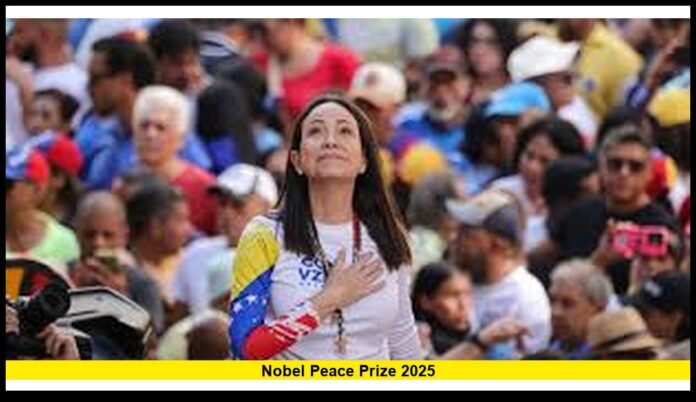

The announcement that María Corina Machado had been selected as the recipient of the nobel peace prize 2025 set the tone for one of the most closely watched ceremonies in recent years. Her recognition brought global attention not only to her years of political advocacy, but also to the wider struggle for democratic freedoms in Venezuela, a nation still facing economic collapse, political unrest, and profound humanitarian challenges. The award ceremony in Oslo became a defining moment that blended celebration, controversy and heightened security concerns.
Global spotlight on Machado’s long advocacy
For more than a decade, Machado has been a central figure in Venezuela’s opposition movement. Her leadership emerged during a period when democratic institutions weakened, and political participation became increasingly restricted. She consistently pushed for electoral transparency, civil liberties, and stronger democratic safeguards. Her outspoken criticism of the government made her a recognizable symbol among Venezuelans seeking reform.
Her work involved organizing civic groups, participating in legislative efforts, and mobilizing citizens who felt excluded from political processes. Over the years, she faced accusations, travel restrictions, legal challenges, and public intimidation. Supporters say her resolve remained intact despite those hurdles, and it was this determination that led to her winning one of the world’s most notable honors.
A ceremony marked by tension, symbolism and security
Oslo City Hall is known for its dignified Nobel events, but the 2025 ceremony carried a noticeably different atmosphere. Increased security presence surrounded the building, and Norwegian officials adjusted crowd management in anticipation of potential unrest.
One of the most discussed details was Machado’s decision not to walk on stage to accept the award herself. Instead, her daughter represented her during the formal presentation. The moment carried emotional weight for many in attendance. Reports of safety concerns surrounding Machado amplified the tension and contributed to the unique nature of the ceremony. Her absence from the podium did not lessen the significance of the moment. If anything, it underscored the political challenges she continues to face.
Inside the hall, the seat reserved for Machado remained visible. The empty space became a symbol of both her presence and her vulnerability — a reminder of how political conflicts can reach far beyond national borders.
Emotional messages and reflections from Machado
Although she did not personally take the stage, Machado delivered remarks through prepared statements shared during the ceremony. In her message, she focused heavily on Venezuelans who have suffered due to political repression, economic hardship, and lack of access to basic freedoms.
She dedicated the honor to families separated by migration, activists detained for participating in protests, and communities still calling for honest elections. Her tone conveyed gratitude, but it also conveyed urgency. She emphasized that the award was not just a recognition of individual work, but a reflection of millions who continue striving for democratic rights.
For many Venezuelans living abroad, those words resonated deeply. The diaspora has grown rapidly due to economic instability and safety concerns. Supporters said the recognition made them feel seen on an international stage.
Celebration and criticism from multiple sides
As happens with many Nobel Peace Prize selections, the response to Machado’s win was far from unanimous. In several countries, political leaders and human-rights organizations praised the decision. They emphasized that her persistence demonstrated courage during a time when political dissent can carry severe personal risks.
Other voices questioned the choice. Critics argued that the prize should focus strictly on nonviolent conflict resolution rather than political opposition efforts, regardless of the context. The debate highlighted how Venezuela’s situation remains deeply polarizing, even beyond its borders.
Protests and counter-protests formed outside Oslo City Hall during the award week. Supporters held signs emphasizing freedom and democracy. Opponents held banners challenging the Committee’s selection. Although both sides maintained peaceful conduct, the visual contrast demonstrated how influential — and divisive — Machado has become.
A defining chapter for Venezuela’s political landscape
Machado’s rise within the opposition movement did not happen overnight. She became well-known through years of public speeches, civic organizing, and participation in political campaigns. Her efforts grew during a period when economic collapse pushed millions into poverty and forced many to leave the country.
Her advocacy centered on several goals:
- Fair and transparent elections
- Protection of civil liberties
- Humanitarian relief for struggling communities
- Renewal of democratic institutions
- Respect for free speech and press independence
Venezuelans who support her believe she represents their fight for democratic reform. They view the award as validation of the challenges they have endured. For many families, this recognition became a symbol of hope that international pressure could lead to long-term change.
How the award is being interpreted across the Americas
In the United States, analysts and policymakers have closely monitored the award’s impact. Venezuela remains a major foreign-policy topic in Congress and among advocacy groups. Machado’s recognition placed renewed focus on:
- Political prisoners
- Migration patterns affecting U.S. borders
- Diplomatic relations between Washington and Caracas
- Humanitarian assistance programs
- Sanctions and future negotiations
Her award may influence how U.S. officials approach conversations about Venezuela. Some see the recognition as an opportunity to reopen diplomatic discussions, while others believe it strengthens the case for continued pressure on the country’s leadership.
Across Latin America, reactions varied by nation. Some leaders welcomed the decision as a strong statement supporting democracy. Others remained cautious or critical, reflecting the region’s complex geopolitical alignments.
Inside the ceremony: music, speeches and significant moments
The Oslo ceremony included traditional Nobel elements such as musical performances and formal addresses. Attendees included diplomats, activists, former laureates and representatives of international organizations. Many observed a mix of celebration and solemnity, recognizing the challenges Machado still faces in her home country.
Notable moments included:
- A standing ovation when Machado’s daughter approached the stage
- A musical tribute dedicated to individuals affected by political oppression
- A reflective speech by a Nobel official highlighting global threats to democracy
- A quiet moment of respect acknowledging victims of political violence worldwide
Each detail added depth to the ceremony, reinforcing the global significance of Machado’s recognition.
Why this recognition matters beyond the political sphere
Machado’s award is not solely about politics. It speaks to broader themes that resonate internationally:
Human dignity
Her work has consistently centered on the rights of individuals to speak, vote and participate freely in their nation’s future.
Resilience
Her journey demonstrates the strength of citizens who refuse to accept repression as inevitable.
Global responsibility
The award signals an international commitment to support those who defend democratic values, even when the risks are substantial.
For activists around the world, Machado’s recognition serves as a reminder that even in difficult environments, advocacy can influence global conversations.
Impact on Venezuelan communities abroad
Millions of Venezuelans now live outside their homeland, with large populations in the United States, Colombia, Peru and Spain. For many in the diaspora, the award felt personal. It represented acknowledgment of the hardships that pushed them to migrate, including lack of economic opportunity and fear for personal safety.
Community groups across several U.S. cities held gatherings to mark the ceremony. Speakers shared reflections on how Venezuela’s struggles shaped their lives and expressed hope that international attention could accelerate democratic progress.
What comes next for Machado
Although the award is a major milestone, Machado’s future remains complex. Her political influence continues to grow, but so do the challenges she faces. Advocates believe the global spotlight may offer her additional protection. Critics argue that the award could intensify political tensions inside her country.
What is clear is that her voice will continue shaping discussions about Venezuela’s future. She has stated repeatedly that her fight is not about personal recognition but about securing a democratic path forward for her nation.
Later in the article, the keyword appears again: nobel peace prize 2025 is now seen not only as a global honor but as a turning point in how the world views Venezuela’s struggle for democratic renewal.
A moment that may define an era
The recognition of María Corina Machado will likely stand as one of the most significant Nobel decisions of the decade. It put Venezuela’s crisis at the center of international dialogue and elevated a figure who has spent years challenging repression. While no award can solve the deep-rooted issues facing the country, the ceremony in Oslo became a symbolic reminder that the fight for democracy remains active, urgent and globally relevant.
For millions of Venezuelans and observers worldwide, this moment represents both acknowledgment of past sacrifices and a renewed call for stability, freedom and the restoration of democratic life.