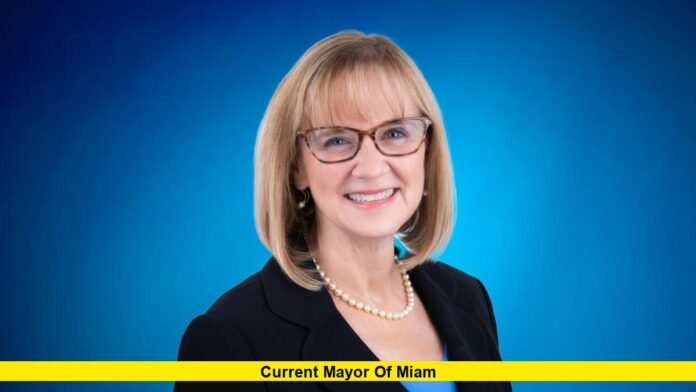

On December 9, 2025, voters in Miami turned the page on decades of political tradition. With 59.46% of the vote, Eileen Higgins defeated former city manager Emilio González to become the new mayor of Miami. In doing so, she became not only the first woman to lead the city, but also the first Democrat — and first non-Hispanic mayor since the 1990s — in nearly 30 years. The arrival of the current mayor of miami signals a dramatic shift in direction for a city at a critical crossroads.
Higgins’ win closes a long chapter of Republican control over City Hall and opens the door to a policy agenda focused on affordability, climate resilience, government transparency, and community trust. Her victory reflects both changing demographics and broad dissatisfaction with status-quo politics, and sets Miami on a path toward transformation.
A Landmark Election That Reshaped Miami’s Political Landscape
The Runoff That Ended Decades of GOP Control
The 2025 mayoral race began with a sprawling field of 13 candidates. On November 4, Higgins led the pack with 35.95% of the vote, while González captured 19.47%. Because no candidate secured a majority, the election advanced to a Dec. 9 runoff. In that head-to-head contest, Higgins surged ahead, securing 22,142 votes to González’s 15,097 — a clear and decisive margin. For the first time since 1997, a Democrat will hold Miami’s top civic office.
Breaking Barriers: First Woman, First Democrat
Higgins’ election shatters two major glass ceilings. She is the first woman ever elected mayor of Miami, and also the first Democrat to serve as mayor in nearly three decades. In a city long shaped by Republican leadership and traditionally led by Hispanic, often Cuban-heritage, figures, her ascent marks a significant shift.
The win underscores evolving political and demographic dynamics. As Miami grows more diverse and its population grapples with rising costs, climate threats, and infrastructure strains, voters appear to be embracing change — and demanding new leadership that reflects those realities.
What Made Higgins’ Message Connect
Focus on Everyday Challenges
During the runoff campaign, Higgins zeroed in on issues that resonate with daily Miami life: affordable housing, bureaucratic gridlock, climate vulnerabilities, and a perceived lack of accountability at City Hall. She proposed putting underutilized city-owned land to work building affordable or workforce housing, aiming to ease displacement and curb skyrocketing rents. She pledged to overhaul Miami’s permitting process — a notorious bottleneck for both homeowners and small businesses — to make it faster, fairer, and more transparent.
On climate and flooding — perennial concerns in a low-lying coastal city — she backed reforms to allow permeable pavements, expand park-based drainage solutions, and expedite green-space development. Her message struck a chord with residents facing rising living costs, repeated storm threats, and shrinking opportunities for long-time Miami families.
A Campaign Rooted in Civic Service and Leadership
Higgins’ background differs from that of a typical politician. She earned a degree in mechanical engineering followed by an MBA, and later spent part of her career working on infrastructure and development projects abroad. She served as Country Director for the Peace Corps in Belize, then as a foreign service officer focusing on Latin America and Africa, before entering local government. From 2018 to 2025, she represented Miami-Dade’s 5th District on the County Commission, where she built a record on housing, transit, and community resilience.
That blend of technical background, global perspective, and hands-on public service helped frame her as a pragmatic problem-solver — a contrast to traditional political figures. Voters responded positively to her promise of bringing that same problem-solving mindset to Miami’s top office.
Broad-Based Support — Local, Regional and National
Although the mayoral race is officially nonpartisan, the contest took on national significance. Supporters mobilized across local communities, labor unions, environmental groups, and national Democratic organizations. During the runoff phase, volunteers made hundreds of thousands of calls, knocking on doors and driving turnout in neighborhoods across Miami.
Meanwhile, her opponent, González, carried weighty endorsements. He had the backing of former President Donald Trump, Florida Governor Ron DeSantis, and several high-profile Republicans. Yet despite such heavyweight support, Higgins’ message of inclusive governance, affordable living, and responsive leadership resonated more strongly with the electorate.
What to Expect From Mayor Higgins’ Early Agenda
As mayor, Eileen Higgins faces high expectations. Her first months could set the tone for how Miami confronts its most urgent challenges. Here are the key areas where her leadership is likely to be felt first.
Housing Affordability and Zoning Reform
Rising housing costs have driven long-time residents out of their neighborhoods. Higgins plans to tap city-owned land to build affordable housing, potentially creating thousands of units targeted at working- and middle-class residents. She may also propose zoning reforms to promote mixed-use and higher-density housing, easing supply bottlenecks that push up prices. If successful, these efforts could transform parts of Miami’s real estate landscape and slow down displacement pressures.
Bureaucratic Overhaul and Government Transparency
One of her campaign’s core promises was to make Miami’s government more efficient. Higgins intends to rework the city’s permitting processes, cut bureaucratic red tape, and reform procurement to reduce delays and costs. She also aims to restore public trust in City Hall after years of criticism over inefficiency and corruption. A tighter, more accountable administration could mean faster infrastructure repairs, smoother licensing for small businesses, and better responsiveness to constituents.
Strengthening Climate Resilience and Flood Protections
Miami remains on the front line of climate change. Rising seas, heavier rainstorms, and recurring floods threaten homes, businesses, and entire neighborhoods. Higgins has embraced these challenges as part of her mission. Her proposals — including expanded drainage systems, green infrastructure, park-based water retention plans, and regulations supporting sustainable development — may represent a long-term shift toward climate-conscious urban planning. For many residents, this could mean improved safety and livability as the city adapts to more extreme weather events.
Inclusion, Immigrant Support, and Community Engagement
With a large immigrant population and deep cultural diversity, Miami’s communities have often felt underrepresented. Higgins has emphasized inclusion throughout her campaign and signaled a willingness to rebuild trust and connection between City Hall and immigrant neighborhoods. She supports outreach to those communities and aims to ensure that government services are equitable and accessible to all. Her leadership style promises increased engagement, community listening, and policy-making grounded in the lived experiences of Miami’s diverse population.
A New Political Identity for Miami
Higgins’ victory signals more than just a new mayor — it points to a broader shift in Miami’s political identity. The city has long been considered a stronghold of conservative leadership, often shaped by Republican, often Cuban-heritage, political figures. Now, with a progressive Democrat at the helm, Miami’s future may be defined by a different set of priorities: housing equity, climate resilience, efficient government, and inclusive community development.
This transformation could influence politics beyond the city itself. As Florida heads toward future elections, Miami may serve as a bellwether — showing how shifting demographics, rising urban costs, climate urgency, and community activism are rewriting political expectations and forging a new path forward.
What Miami Residents Are Watching For
In the coming months, residents will be tracking how effectively Mayor Higgins delivers on her promises. Will zoning reform and city-infused housing ease the housing crunch? Can permitting and bureaucracy actually speed up instead of stall? Will green infrastructure and climate measures translate into tangible flood protection and resilience? And will Hampton Street be as accessible and responsive to immigrant communities, small businesses, and long-time residents as she pledged?
Success will require navigating entrenched interests, coordinating with county and state authorities, and delivering results on tight timelines. But the appetite for change is strong — and city residents appear prepared to hold their new mayor to a high standard.
Looking Ahead — Miami’s New Chapter
The election of Eileen Higgins as mayor marks the start of a new chapter in Miami’s story. Her leadership represents a pivot toward issues many residents care about but often felt were ignored. It’s a moment full of promise — a chance to reimagine what Miami can be: more equitable, sustainable, and inclusive.
The excitement is real, but results will matter most. For a city grappling with rising costs, environmental threats, and shifting demographics, Higgins’ success could reshape Miami for decades.
If you live in Miami, now is the time to pay attention — and to stay engaged. The decisions made in the coming months could redefine life in the city for generations to come.
What changes do you want to see first? Drop your thoughts in the comments and stay tuned — Miami’s new chapter is just beginning.