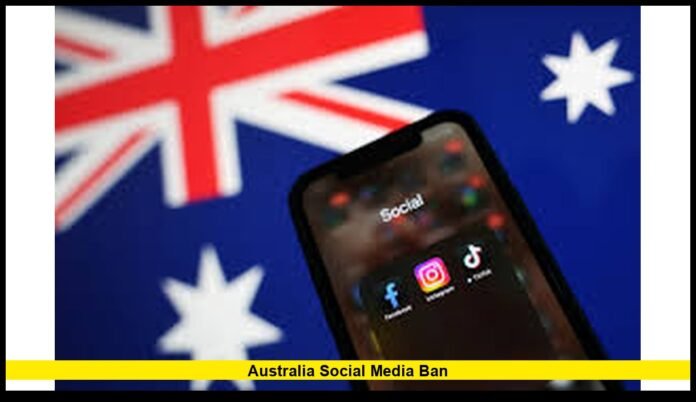

Australia social media ban officially started on December 10, 2025, when a law requiring major platforms to block users under the age of 16 took effect. Under the new rules, social networks must take “reasonable steps” to prevent under-16s from holding accounts; failure to comply can result in fines up to A$49.5 million (about US $32–33 million). Major platforms — including social media, video-sharing, livestreaming, and community apps — are now subject to the law.
What the Law Requires: The New Minimum-Age Mandate
- Platforms identified as “age-restricted social media services” must prevent new account creation by anyone under 16.
- They must also remove or lock existing accounts belonging to under-16 users.
- The burden of compliance lies squarely on the platforms — not on parents or underage users.
- If platforms fail to take adequate steps, regulators can impose heavy financial penalties.
- The law flows from an amendment to Australia’s existing online-safety framework, now extended to cover a defined minimum age for social media access.
This is not a ban of all internet use — it does not outlaw web browsing, as platforms only have to block account-based access for minors. The regulation targets account-based services, not general online access or all forms of internet use.
Platforms Impacted: Who Must Comply
The law is broad. It covers many of the globally most popular social media and content platforms used by teens and preteens. Those explicitly required to comply include:
- Facebook, Instagram, Threads (from parent company Meta)
- TikTok
- YouTube
- Snapchat
- X (formerly Twitter)
- Twitch
- Kick
These platforms must now deploy age-verification processes, lock under-16 accounts, and prevent signups from minors. Some began purging suspicious accounts days ahead of the official date. Where platforms detect likely underage users, they must act — even if the user claimed a false birth date at signup.
How Platforms Are Implementing the Ban
Major tech companies have responded quickly. Their compliance measures include:
- Age-prediction algorithms based on behavior or metadata
- Document-based verification (IDs, driver’s licenses, passports)
- Facial-analysis tools and age-estimation software
- Third-party age-verification services (for example, “selfie + ID” checks)
Some companies combine multiple methods to reduce false positives and provide appeal processes for users who believe they were flagged incorrectly. Others started notifying underage users ahead of December 10, giving them a short window to retrieve data or prepare for account closure.
Even so, some platforms warned that no system is 100% accurate. The technology may misclassify users. Platforms note that some legitimate 16-or-older users may face delays or verification requests. At the same time, some underage users may slip through if they use false IDs or alter settings.
Why Australia Passed the Law Now: Context and Rationale
The ban emerges after growing concerns about social media’s effect on mental health, safety, and well-being, especially among children and teens. Authorities cited research and reports that linked addictive platform designs, exposure to harmful content, and peer-pressure dynamics to rising rates of anxiety, depression, and other mental-health issues.
Key motivations behind the law include:
- Limiting early exposure of children to social media’s addictive mechanisms
- Reducing access to harmful or age-inappropriate content
- Encouraging safer online habits and reducing screen-time pressures on children
- Making platforms more accountable for underage usage
Government officials emphasized that the law reflects a child-protection and public-health stance. They argued that giving social networks a legal duty to block minors is more effective than expecting parents alone to police usage.
Public Response: Support, Criticism, and Global Attention
The new law triggered mixed reactions — both inside Australia and internationally:
Supporters — including many parents, educators, and child-safety advocates — say the ban provides important protection for children. They argue it removes minors from environments often designed around engagement metrics, which can encourage addictive use or exposure to harmful content. Some say it will help young people refocus on offline activities, mental health, and real-world relationships.
Critics raise concerns about privacy, freedom of expression, and the risk of normalizing mass age-verification or surveillance. Some point out that enforcing identity checks at scale may lead to misuse of personal data. Others warn that minors may simply migrate to less regulated platforms, encrypted apps, or use VPNs, undermining the law’s purpose. A few legal-rights and digital-freedom groups have signaled possible court challenges, arguing the law restricts young people’s access to news, political discussion, and community spaces.
Internationally, regulators in several countries are watching closely. Some European nations and other democracies are reportedly exploring similar age-based restrictions. For U.S. policymakers and technology observers, the Australian approach may inform future regulatory debates about youth safety online.
Practical Effects in Australia: What Families and Teens Are Facing
Since the law took effect, millions of Australians under 16 have lost access to their accounts. Some key outcomes:
- Teen users between 13 and 15 have seen their accounts locked or deleted.
- Affected users were given a chance to download data or appeal removal once they turned 16.
- Some platforms reported large volumes of verification requests and age-checks in progress.
- Younger users often complained of social isolation, difficulty staying in touch with friends, and losing access to online communities.
- Some parents expressed relief, viewing the ban as a way to shield their children from online pressures and cyberbullying.
At the same time, some teens report using workarounds — shared family accounts, older friends’ credentials, or VPN tools — which complicate enforcement. Regulators acknowledged that no method is foolproof, and oversight will require ongoing evaluation.
What This Means for the U.S. and Worldwide Tech Regulation
For U.S. readers, Australia’s social media ban offers a real-world case study in regulating online spaces for minors. Key implications:
- Feasibility test: The ban will show whether large platforms can realistically enforce age limits across millions of users worldwide.
- Privacy tradeoffs: Age-verification processes may require sensitive personal data — how this data is handled could shape future global standards.
- Youth safety versus access: Regulators must balance protecting children with preserving their right to information, social connections, and expression.
- Precedent-setting: Australia may inspire other countries or U.S. states to consider similar legislation or age-based restrictions.
Platform compliance strategies might spread globally. Even U.S. users over 16 could see new verification tools or optional age-gating features if tech companies decide to standardize protections across markets.
Oversight, Enforcement and the Road Ahead
The law includes robust oversight provisions:
- A designated online-safety regulator will monitor compliance. Platforms must report how many under-16 accounts they remove.
- Regulators may require monthly audits and transparency reports on verification methods and outcomes.
- Appeals processes must exist so mis-classified users (older than 16) can reclaim access upon verification.
- Independent reviews and evaluations have been mandated to assess the law’s effects on youth safety, mental health, social behavior, and possible unintended consequences.
- The government indicated it may refine implementation over time as data accumulates and as age-verification technology improves.
This ongoing oversight reflects awareness that the law is experimental. Officials acknowledge challenges ahead — from enforcement limitations to privacy implications and potential court challenges.
Risks, Drawbacks, and Unintended Consequences
While the law aims to protect minors, several risks and criticisms remain:
- Verification failures: Facial-recognition tools and age-prediction algorithms may mistakenly block legitimate users or let some minors slip through.
- Privacy concerns: Requiring ID documents or biometric data for age verification raises data-protection and surveillance issues.
- Pushback to unregulated spaces: Teens may shift to smaller, encrypted, or overseas platforms not covered by the law — creating potential safety gaps.
- Social isolation and access to information: Under-16s may lose access to supportive communities, educational content, and peer networks online. Critics argue this could harm social development and restrict youth expression.
- Legal and constitutional challenges: Some rights groups have filed or threatened litigation, claiming the ban restricts free speech and access to public discourse.
The outcome of these risks will likely shape how other nations approach youth social-media regulation.
What Happens Next: What to Watch For
In the coming months and years, several developments will be critical:
- Compliance reports and data from platforms showing how many under-16 accounts were removed or flagged.
- Independent academic studies measuring the ban’s impact on youth mental health, online behavior, socialization, and privacy.
- Legal rulings if challenges proceed — possibly reshaping or narrowing the law’s scope.
- Policy debates in other nations referencing Australia’s experience.
- Platform responses: whether companies refine verification tools, offer age-appropriate versions, or expand parental-control features.
Regardless of the outcomes, this law represents one of the strictest attempts yet to regulate minors’ access to social media at a national scale.
Australia’s social media ban introduces a landmark shift. For millions of young users, it signals a major change in how they connect online. For platforms, it imposes heavy obligations and legal risk. And for the world, it establishes a high-stakes precedent for balancing youth safety, privacy, and digital access.
Join the conversation below — share what you think about this bold move and whether similar rules should be considered elsewhere.