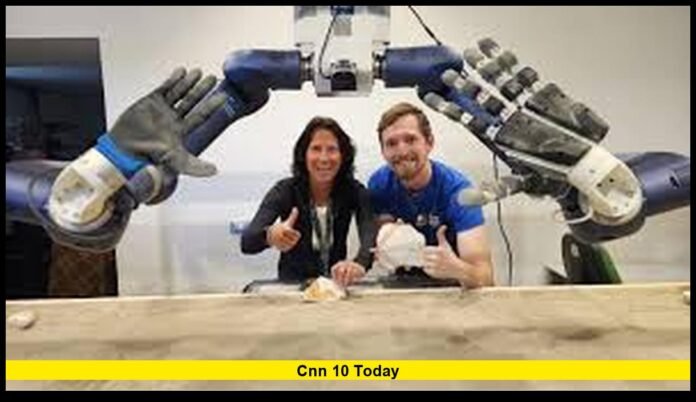

Today’s episode of cnn 10 today highlighted a remarkable technological breakthrough unfolding at one of the world’s most famous archaeological sites: the ancient city of Pompeii. With the help of advanced robotics, artificial intelligence, and high-resolution 3D imaging, teams working on-site are developing a new system to reassemble fresco fragments that have remained scattered, damaged, or buried for centuries. The update captured wide attention because it represents a major step forward in cultural preservation, using tools that were once limited to cutting-edge engineering labs but are now transforming historical restoration.
This report takes a deeper look at the technology, the challenges of rebuilding frescoes destroyed nearly 2,000 years ago, and why this work matters for museums, archaeologists, students, and the broader U.S. audience interested in science and history.
A New Approach to an Ancient Problem
Pompeii’s frescoes suffered extensive fragmentation following the eruption of Mount Vesuvius in 79 A.D., which buried the city under volcanic debris. Buildings collapsed, walls cracked apart, and the painted plaster surfaces that once decorated villas and public halls shattered into countless pieces. Additional damage occurred over later centuries due to weathering, exposure, excavation methods from earlier eras, and even wartime disturbances that shook parts of the site.
Traditional restoration requires conservators to handle thousands of fragments manually. They study pigments, edge contours, themes, and plaster layering to identify which pieces belong together. It is slow, delicate work. Some frescoes remain incomplete simply because the number of fragments is so overwhelming. The new robotics-supported system introduced in cnn 10 today aims to change that by combining computational speed with the refined judgment of trained conservators.
How the New System Works From Start to Finish
1. Detailed 3D Scanning and Digital Modeling
Every fragment enters the process through high-resolution 3D scanning. This step captures:
- The exact shape of the fragment
- The curvature of its plaster base
- The thickness and texture of pigment layers
- Micro-fracture patterns that identify which edges once connected
This is a game-changing improvement because it allows much of the early work to take place digitally, reducing physical handling of fragile pieces. The digital model becomes the basis for all later computational analysis.
2. AI Pattern Recognition and Reconstruction Mapping
Once digitized, each fragment is processed by AI tools designed to detect patterns far more quickly than a human eye. The software evaluates:
- Pigment color variations
- Brushstroke remnants and motif geometry
- Edge shapes and break profiles
- Residual decorative themes shared across adjacent wall sections
These features allow the AI to propose potential matches, including combinations that may not be obvious due to missing pieces, worn edges, or centuries of surface degradation. For fragments mixed together during excavation or collapses, the algorithm helps reassign them to their correct original contexts.
3. Robotic Testing and Precision Alignment
After the AI identifies likely matches, robotic arms take over the next phase. These machines are designed for extreme precision, using specialized grips that apply minimal pressure. They can adjust fragments by millimeters at a time, attempting multiple positions until a secure fit is found.
The robots:
- Conduct fit tests based on digital models
- Handle pieces without scratching or stressing the pigment
- Reposition fragments quickly when the AI suggests other possibilities
This system dramatically accelerates the physical assembly stage while minimizing the risks that come with repeated human handling.
4. Human Expertise at Every Step
Though highly advanced, the system does not replace conservators. Specialists analyze every proposed match and determine whether:
- Structural stability is sufficient
- Pigment alignment matches historical techniques
- The fragment fits the known style or iconography of the original room
Human oversight ensures historical integrity. The technology automates the repetitive, time-consuming parts of the job while leaving final decisions in the hands of trained professionals.
The Unique Challenges of Reassembling Pompeii’s Frescoes
Reconstruction at Pompeii is particularly complicated due to:
Fragment Mix-Ups Across Centuries
Excavations from the 18th and 19th centuries lacked today’s documentation standards. As a result, fragments from different walls or buildings sometimes ended up stored together. AI helps correct these errors by identifying matches based on material similarities rather than old catalog records.
Missing Sections
Many frescoes lost central portions or entire sequences. The system works around missing pieces by identifying clusters that still form stable partial reconstructions.
Surface Degradation
Pigment fading, mineral deposits, and weathering can obscure original colors. AI tools trained on thousands of samples help predict underlying similarities even when the surface is worn.
Irregular Shapes
Some pieces are large and curved; others are tiny slivers. Robotic manipulators can handle fragile edges with steady precision that human hands cannot maintain for hours at a time.
Together, these challenges reveal why this fusion of robotics, imaging, and human expertise is reshaping what restoration teams are capable of achieving.
Why This Innovation Matters — A Broader Perspective
Protecting Cultural Heritage With Modern Tools
The system offers a safer, faster way to preserve artifacts that may otherwise remain in storage due to the sheer difficulty of reconstruction. These technologies could eventually help restore:
- Mosaics
- Wall plaster
- Sculptural fragments
- Decorative tiles
- Painted ceramics
By reducing risk and increasing efficiency, more historical works can be returned to public view.
Creating Reliable Digital Archives
Every scan contributes to a long-term digital record. Should any physical piece suffer future damage, the digital model will remain part of the historical archive. This benefits researchers, museums, and students around the world.
Opening New Career Pathways
The story resonated strongly in cnn 10 today because it illustrates how robotics, engineering, and computer science can directly support the humanities. Students interested in STEM fields can see how their skills might contribute to archaeology, art history, or museum work.
Helping Museums Across the Globe
Once the workflow is fully refined, institutions worldwide could adopt the same tools. Many museums possess large collections of unassembled fragments from ancient sites. A faster, safer reconstruction method could help them expand their displays and preserve more materials for future study.
Real-World Trials and the Road Ahead
Early trials used replica fragments so teams could calibrate robot movement, test AI recommendations, and refine assembly strategies without risking original frescoes. These controlled conditions helped improve grip pressure, alignment sensors, and edge-matching accuracy.
Future goals for the project include:
- Handling even smaller fragments, some no bigger than a fingernail
- Improving surface recognition, enabling identification of faded pigment traces
- Integrating environmental data, such as humidity changes affecting plaster texture
- Building shared digital databases for archaeologists around the world
As tools develop further, reconstruction quality and speed are expected to increase significantly. The project is structured to be expandable so other archaeological parks, research institutions, and museums can implement similar systems without requiring custom-built hardware.
Why the Story Resonated With a U.S. Audience
American viewers and classrooms follow Pompeii closely because it offers a compelling intersection of science, disaster history, and daily life frozen in time. Today’s report demonstrates how innovations pioneered in engineering labs — including those at major U.S. universities — are shaping global preservation efforts.
Robotics and AI breakthroughs have long been associated with manufacturing, medicine, or space exploration. Seeing these tools applied to the ancient world adds a relatable, human dimension that appeals to history fans, science students, and tech-focused readers alike.
Education, STEM Inspiration, and Classroom Use
Teachers throughout the United States often use Pompeii as a teaching topic because it combines geology, Roman culture, and archaeology. The development featured in cnn 10 today gives educators a fresh, timely example of:
- Applied robotics
- Machine learning in real-world settings
- Ethical decision-making in historical conservation
- The importance of digital preservation
Students can easily connect the technology they see in modern media to the tangible task of rebuilding ancient art. For many, this may spark interest in interdisciplinary career paths that blend engineering and humanities.
A Look Toward the Future of Restoration
The progress seen so far suggests that future archaeological restoration may rely heavily on hybrid systems where:
- AI sorts and analyzes
- Robots execute precise physical tasks
- Humans provide artistic, historical, and ethical guidance
With continued improvements, the same technologies could be adapted to:
- Reconstruct collapsed sculptures
- Restore broken architectural ornaments
- Digitally rebuild lost murals
- Support preservation in areas affected by natural disasters
This broad potential makes the current trials at Pompeii an important milestone, signaling how archaeological work may evolve over the next decade.
Conclusion
The technological achievements showcased in cnn 10 today represent a powerful new chapter for historical preservation. By uniting robotics, AI, 3D scanning, and expert human knowledge, restoration teams are gaining the tools needed to bring ancient frescoes back to life with unprecedented safety and accuracy. The work taking place at Pompeii is more than a preservation effort—it is a demonstration of how modern innovation can reshape our understanding of the past.