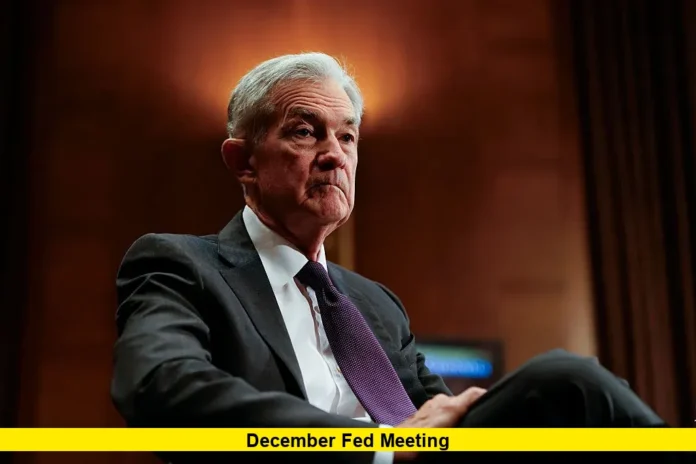

The December Fed meeting date is locked in for December 9–10, 2025, and the anticipation surrounding this final policy gathering of the year continues to build. With the economy straddling a rare intersection of cooling growth, persistent inflation, and heightened financial stress among households, this meeting is shaping up to be one of the most consequential of the decade. Analysts, business leaders, and consumers are all looking to the Federal Reserve for clearer direction at a time when clarity is in short supply.
A Critical Moment in a Volatile Economic Landscape
This year’s December meeting carries more weight than usual because the U.S. economy has entered a transition zone—slowing in some areas while remaining stubbornly overheated in others. The dual pressure points of elevated inflation and a softening labor market place the Federal Reserve in a deeply complex position, making the upcoming decision unusually difficult.
Although the Fed meets eight times annually, December sessions often set the tone for the year ahead, since policymakers typically unveil fresh projections covering interest rates, employment, inflation, and economic growth. These decisions ripple across everything from mortgage rates to stock-market sentiment to household budgets.
In 2025, the stakes are particularly high. For months, consumers have faced rising debt levels, businesses have confronted expensive borrowing conditions, and investors have navigated intense market swings. The December meeting arrives at a moment when households and companies are hungry for policy stability—or at least clarity on where monetary policy is headed next.
Why This December Meeting Is Different
A Year of Diverging Economic Signals
Throughout 2025, the U.S. economy has produced mixed signals. Inflation has cooled but not quickly enough. Job creation has slowed, but layoffs remain far from recessionary levels. Consumer spending has moderated without collapsing. Housing markets have softened, yet remain constrained by low inventory. Corporate earnings have improved, though many sectors warn of looming headwinds.
The Federal Reserve now faces the difficult task of determining how much weight to give each of these conflicting indicators.
Pressure to Cut Rates — And Pressure Not To
Some policymakers argue that high borrowing costs are starting to weigh too heavily on the economy. Others warn that inflation remains too elevated to justify easing policy. The December meeting is therefore shaping up as a test of how the Fed prioritizes its dual mandate: maximum employment and stable prices.
Rate Cut Expectations: Strong but Not Certain
Why Many Expect a 25-Basis-Point Cut
Many economists anticipate that the Fed will opt for a modest 0.25% rate cut to offer support to a softening labor market. Throughout the year, several indicators—slower hiring, rising jobless claims, and weakening wage growth—have signaled a cooling economy. For policymakers who fear that labor-market deterioration could accelerate, a small rate cut appears justified.
A quarter-point cut would also continue a gradual easing pattern the Fed has been following since early 2025. Rather than abrupt or aggressive rate cuts, the committee has favored measured steps aimed at steering the economy away from a deeper downturn.
Why a Hold Is Still on the Table
However, the counterargument is clear: inflation remains above the Fed’s 2% target. While price pressures have eased significantly from previous peaks, the progress has not been uniform. Core inflation in particular has proven stubborn. Some policymakers believe easing policy too soon could jeopardize the progress achieved so far.
This internal divide creates a genuinely uncertain policy environment heading into the December 9–10 discussions.
What Would Tip the Scales?
The Fed often emphasizes data dependency, and for this meeting, the freshest available figures on consumer prices, wage growth, job gains, and consumer spending will weigh heavily. Any surprising strength in inflation could nudge the Fed toward holding rates steady. Conversely, unexpected weakness in hiring or consumer activity could push the Fed toward easing.
This balancing act underscores why the December meeting is drawing so much scrutiny—small shifts in data could lead to big implications for the decision.
How the Fed’s Decision Will Affect Consumers
Borrowing Costs: Relief Possible, But Gradual
For everyday Americans, the Fed’s rate decision directly influences what they pay on loans. A rate cut could help:
- Credit card borrowers with variable APRs
- Homeowners with adjustable-rate mortgages
- Consumers financing vehicles or large purchases
- Small businesses reliant on short-term financing
However, any relief is likely to be gradual. Many lenders adjust slowly, and broader economic forces—such as bond yields and market sentiment—also influence interest rates in the real world.
Mortgage Rates: A Key Area to Watch
Mortgage rates have remained elevated, discouraging many potential buyers and slowing the housing market. If the Fed cuts rates, mortgage pricing could soften modestly. While a 0.25% cut may not dramatically change affordability, it could help stabilize buyer confidence and unlock demand from households waiting for lower financing costs.
Still, long-term mortgage rates depend heavily on investor expectations. If financial markets believe inflation remains a threat, mortgage rates may remain only slightly lower—or not lower at all—even after a Fed cut.
Savings Accounts and CD Yields
Lower interest rates typically mean less favorable returns for savers. Households may see yields on savings accounts, treasury bills, and CDs slip somewhat. This will weigh on retirees and others who rely on interest income.
Banks, which raised savings yields aggressively during past tightening cycles, may adjust downward quickly if they anticipate a broader easing cycle in 2026.
Consequences for Financial Markets
Stock Markets Preparing for Volatility
Equity markets generally prefer lower interest rates because they make corporate borrowing cheaper and increase future earnings potential. However, markets are also wary of what a rate cut might signal.
If the Fed cuts because it sees rising economic risks, investors may interpret the move negatively. If it cuts because it believes inflation is more controlled, markets may rally.
Either way, volatility is almost guaranteed surrounding the December meeting.
Bond Market Reaction
Long-term bonds are particularly sensitive to Fed decisions and inflation expectations. A rate cut could push yields lower, lifting bond prices. But any hint from the Fed that inflation remains resilient could push yields higher instead.
This creates a unique challenge for investors seeking safety or income—bond markets may shift sharply depending on how the Fed frames its decision.
Business Implications Heading Into 2026
Access to Capital
Businesses across sectors have faced sharply higher borrowing costs since the previous tightening cycle. Even a small cut could ease pressure on companies needing to refinance debt or invest in expansion. Sectors like manufacturing, energy, construction, and technology may benefit more directly.
Hiring and Wage Pressures
Employers have slowed hiring amid uncertainty about consumer demand. A clearer Fed outlook could help stabilize wage expectations, assisting employers in planning for 2026 staffing levels.
Consumer Spending Outlook
Lower interest rates can support consumer confidence, which is essential for economic stability. As borrowing costs ease, some households may feel more comfortable making major purchases, potentially lifting retail, automotive, travel, and hospitality sectors.
What Happens After December?
The upcoming meeting will not only determine the final rate move of 2025 but also shape market expectations for 2026. That is why analysts will pay close attention to:
- The Fed’s updated economic projections
- Any changes to expected interest-rate paths
- The tone and language used in the policy statement
- Comments made during the press conference
The December Fed meeting date marks a turning point. The decisions made—and the guidance provided—will influence how Americans borrow, spend, save, and invest throughout the coming year.
As the country waits for clarity, one point remains certain: the outcome will have lasting consequences, touching everything from family budgets to the direction of the broader economy. The Fed’s ability to balance inflation concerns with economic risks will define much of 2026’s financial environment.
Share your thoughts in the comments and stay informed as this pivotal decision unfolds.