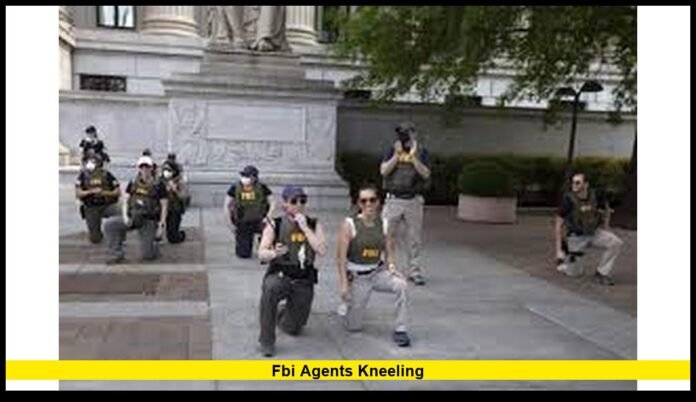

Twelve former FBI agents who were photographed FBI agents kneeling during the nationwide protests in June 2020 have filed a lawsuit on December 8, 2025. The suit seeks reinstatement, back pay, removal of termination records, and damages for what the agents describe as wrongful, politically motivated firings.
Background: The kneeling during protests
In early June 2020, the country was convulsed by massive protests following the death of George Floyd. In Washington, D.C., demonstrations swelled as Americans called for justice and police reform. During a particularly tense night, a group of federal law-enforcement officers—including agents from the FBI—responded in riot gear to control crowds.
At one point, with the crowd shouting and clashing emotions high, a subset of agents dropped to one knee. Photos and videos from that moment spread rapidly across social media and news outlets, becoming among the most enduring visual symbols of law enforcement’s presence during the protests. At the time, observers debated what the kneeling meant.
Now, more than five years later, the kneeling has returned to the spotlight—but under drastically different circumstances: through a courtroom filing. The twelve ex-agents argue that their kneeling was not a political statement. According to the lawsuit, it was a split-second tactical decision, aiming to de-escalate tension when officers faced a hostile environment and lacked full riot control equipment.
Why the lawsuit was filed — and why now
The decision to file came after what the agents call years of internal turbulence, shifting leadership, personnel reviews, and delayed disciplinary measures. While internal FBI reviews concluded shortly after the protest that the kneeling did not represent a political endorsement, the agents say the arrival of new senior leadership in 2025 triggered a reexamination of the matter. That reexamination, they claim, led to reassignments, suspensions, and ultimately outright dismissals.
The lawsuit names as defendants senior officials at the Department of Justice, the bureau’s current leadership, and the federal agency itself. The ex-agents contend the agency’s actions violated their constitutional protections and employment rights. They assert the firings were not based on any documented misconduct, but on the symbolic nature of a gesture they believe was misinterpreted.
What the agents are asking for
The demands outlined in the court filing include:
- Reinstatement to their former positions, whether supervisory or operational.
- Back pay covering all lost salary from their dismissal through the present.
- Restoration of lost benefits, including retirement contributions, health benefits, and seniority credit.
- Removal of termination records associated with the kneeling incident from their personnel files.
- Monetary damages for loss of reputation, career opportunity, emotional distress, and long-term financial harm.
The agents argue these remedies are necessary to restore their professional and personal standing after what they describe as unjust and politically motivated personnel actions.
The legal foundation: Constitutional claims and administrative law
In their complaint, the former agents assert violations of their First Amendment rights (freedom of expression) and Fifth Amendment protections (due process). They argue the kneeling constituted a protected expression under First Amendment principles, or at least a non-political, tactical act protected by law enforcement standards. The Fifth Amendment claim centers on the lack of due process before termination: the agents say they were never given a fair hearing, warnings, or a transparent disciplinary review before losing their jobs.
Moreover, the lawsuit challenges the agency’s post-2025 actions as part of an administrative reprisal unrelated to any documented performance deficiency. If the court accepts those claims, it would force federal agencies to clearly document wrongdoing before imposing career-ending discipline for on-the-ground decisions made under duress.
Timeline of events
| Date | Event |
|---|---|
| June 2020 | FBI agents photographed kneeling during protests in Washington, D.C. |
| Summer–Fall 2020 | Internal reviews conducted; agency concluded kneeling was non-political and represented a de-escalation tactic. |
| 2021–2024 | Agents continued service; no public disciplinary action tied to the kneeling incident. |
| Early 2025 | New leadership assumed control at the bureau; internal personnel shifts began affecting officers photographed kneeling. |
| Late 2025 | Several agents received suspensions or reassignments; others were terminated. |
| December 8, 2025 | Twelve former agents file lawsuit seeking reinstatement, damages, and removal of termination records. |
This timeline shows a clear gap between the original incident and the disciplinary measures, a gap the agents argue reflects changing political winds rather than legitimate performance concerns.
What kneeling meant — and why it matters
For the former agents, the kneel was never about politics. The lawsuit describes the moment as chaotic and dangerous: officers outnumbered, lacking full riot riot-control gear, confronted by an agitated crowd. Reports from the time said the kneel helped calm some demonstrators, diffused tension, and avoided immediate escalation.
By filing this lawsuit, the agents challenge how symbols and gestures made under pressure are judged after the fact. They argue that if tactical, protective, or de-escalation decisions can lead to termination decades later, federal law enforcement personnel will second-guess every split-second move. That chilling effect could reshape how agencies manage crowd control, especially during protests or civil unrest.
The case raises deeper questions about consistency and fairness in agency discipline: whether internal findings should carry weight long term, and whether subsequent leadership changes can override earlier conclusions. It could force federal employers to reconsider how they classify and respond to actions taken in unpredictable, volatile environments.
Who is involved and what’s next
The plaintiffs are twelve former FBI agents who served in Washington during the 2020 protests. Their names aren’t public in the filing, but the complaint alleges all agents faced similar treatment—reassignment, suspension, or outright firing—despite having clean records prior to the kneeling incident.
Defendants include the bureau itself, its leadership appointed in 2025, and senior Justice Department officials. The complaint demands answers: why internal reviews cleared the kneeling as appropriate at the time but later used it as grounds for termination. The agents’ attorneys also ask the court to compel the agency to produce internal communications, review documents, and records of other officer conduct during 2020 to allow comparison.
The next step will likely involve motions by the defendants—perhaps a request to dismiss the suit on procedural or jurisdictional grounds. If the suit survives early challenges, discovery would begin: subpoenas, depositions, internal records requests. That process could take months or even years. And because the suit involves federal employment law, it may ultimately reach higher courts if it survives early rounds.
Broader implications for federal law enforcement and protest response
Though the lawsuit deals with a small group of former agents, its implications could ripple far beyond these twelve individuals. If the court sides with the plaintiffs, federal agencies may be forced to:
- Reevaluate how they document and track on-field decision-making during protests or other volatile scenarios.
- Adopt clearer guidelines for what constitutes permissible tactical behavior amid crowd control.
- Implement stronger protections for agents whose split-second actions favor de-escalation over force.
- Reassess disciplinary procedures to prevent firings years after an event, especially retroactive punishments tied to symbolic gestures.
For communities, the case may renew debate about how law enforcement interprets gestures during protests. Some may view kneeling as solidarity; others might see tactical de-escalation. The suit underscores that such interpretations carry real consequences—for officers and the public alike.
What this means for civil liberties and agency accountability
At its heart, the lawsuit touches on civil liberties, administrative justice, and agency accountability. The former agents assert their constitutional rights. They claim they followed agency training and acted under extreme pressure — then paid the price later under a different administration.
The case demands transparency: internal reports, communications, and decisions must be disclosed to assess whether the firings reflected genuine misconduct or a politically charged decision. For federal employees, especially law enforcement, the outcome could determine how much autonomy and protection they have when making critical decisions during protests or civil disorder.
For lawmakers and the public, the lawsuit raises a broader question: Can agency discipline remain consistent and fair, even when political leadership and social climates shift dramatically?
What to watch next
In coming weeks, observers will focus on four developments:
- The government’s immediate response — whether to move to dismiss or engage in discovery.
- Whether internal communications from 2020–2025 will be released to support or challenge the agents’ version of events.
- How the court evaluates the constitutional and employment-law claims.
- Potential settlement discussions or broader policy changes within the FBI and federal law enforcement agencies.
As the case proceeds, it could set a precedent on how law enforcement agencies handle tactical gestures made during civil unrest. The outcome may influence training, crowd-management doctrine, and how agencies balance real-time decision-making with long-term accountability.
Share your thoughts below and let us know how you feel about this case as it moves forward.