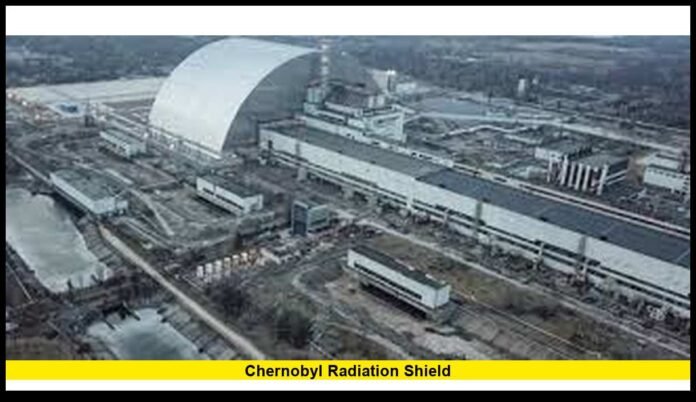

The Chernobyl radiation shield has become the center of renewed global scrutiny after nuclear safety inspectors confirmed that the protective arch over Reactor 4 can no longer guarantee its full containment function. This updated assessment comes at a critical moment, underscoring the need for rapid planning, engineering support, and long-term reinforcement at one of the world’s most carefully watched nuclear sites. The findings also add new context to earlier reporting, offering a more detailed understanding of how the shelter has changed in recent months and why experts are calling for urgent action.
For U.S. readers, the issue is not an immediate radiological threat but a significant development in nuclear safety oversight. What happens next at the site matters for global environmental monitoring, long-term nuclear engineering strategy, and the future of decommissioning efforts already decades in progress.
A New Stage of Concern for the Protective Structure
When inspectors arrived for their latest assessment, they focused on the New Safe Confinement—the enormous steel arch engineered to enclose the remains of the original 1986 sarcophagus. Their findings show that portions of the structure no longer perform at the level they were designed for. While the arch itself still stands and monitoring systems continue functioning, the protective layers that shield the reactor material from environmental exposure have weakened significantly.
This shift raises the level of urgency surrounding the facility. The arch was built to last a century and to give engineers a stable, controlled environment for dismantling debris from the original disaster. It was also designed to prevent the spread of radioactive dust, keep moisture out, and provide a secure workspace for teams managing long-term waste.
Inspectors now warn that these functions need renewed reinforcement. They highlighted areas of wear, earlier damage, and degradation in several outer sections. The structure has not experienced a full breach, but its safety margin has narrowed in ways that require direct and comprehensive repairs.
The Drone Impact and Its Lasting Effects
Part of the current concern traces back to a drone incident earlier this year. Investigators confirmed that an explosive device carried by a drone struck the northern section of the arch’s outer surface. While the internal containment barrier was not pierced, the impact ignited insulation materials and caused damage to protective layers designed to prevent weather intrusion.
The immediate emergency response included patching the affected area, removing smoldering material, and stabilizing outer panels. Those steps reduced short-term risk but did not restore the structure to its original condition. As a result, inspectors now report that moisture-prone sections and exposed insulation require in-depth repairs and new reinforcement.
For engineers, the challenge lies in balancing safety with access. Getting repair crews close to the damaged area requires careful planning because even stable radiation levels call for strict controls. Each piece of equipment must be deployed strategically, and each action must avoid disturbing the reactor remains beneath the arch.
Radiation Levels Remain Within Expected Ranges
Despite structural issues, radiation data from the site shows stable readings consistent with long-term monitoring patterns. The automated systems installed inside the arch continue to track conditions closely. On-site dosimeters remain active, and inspectors report no sudden increases in airborne particles or contamination spread.
This stability is important for several reasons. First, it affirms that the internal containment layer remains secure. Second, it means that ongoing deterioration in the outer layer has not yet resulted in harmful exposure. Third, it buys engineers a narrow but crucial window in which to design and execute repairs without additional emergency complications.
Still, inspectors emphasize the need for increased vigilance. Even normal humidity levels could accelerate corrosion if damaged areas remain unrepaired. Moisture intrusion, dust movement, and metal fatigue are all issues that become riskier when protective layers weaken. Monitoring teams have already increased their inspection intervals and upgraded airflow tracking to ensure early detection of any changes.
Global Attention and Planning for Major Repairs
The situation has drawn attention from international engineering teams, nuclear safety specialists, and environmental monitoring organizations. Repair planning is expected to involve several stages, including structural reinforcement, outer surface replacement, new insulation systems, and improved sealing techniques to reduce the risk of moisture infiltration.
Funding discussions are also underway. Projects of this scale require significant financial resources, specialized equipment, and coordinated oversight. Because the arch was designed as a long-term protective solution, repairing it is not a matter of patching visible damage. It demands a strategic redesign that protects the structure against weather, vibrations, corrosion, and future incidents.
Repair crews will likely work from scaffolding systems designed to minimize disturbance of sensitive materials. Heavy equipment will be used sparingly and only after careful modeling of load distribution across the arch. Engineers are reviewing how added weight or vibration might affect the inner layers, especially in areas where the original sarcophagus is most fragile.
How Decommissioning Work Will Be Affected
One of the key long-term goals of the New Safe Confinement is to support the safe dismantling of the original 1986 sarcophagus. Crews have been preparing specialized tools, containment canisters, and remote-operated machinery to begin dismantling unstable concrete, steel, and radioactive waste.
With the integrity of the arch reduced, some of this work will be delayed or reshaped. Safety officials will need to determine what activities can continue during repair operations and which must be paused. Engineers may have to reinforce temporary barriers before resuming high-risk tasks such as lifting large pieces of debris or cutting into old support structures.
Work inside the arch must operate under strict airflow control. Any shift in pressure or ventilation must be monitored to prevent dust displacement. Coordinating this with major repair operations will require an advanced scheduling plan that sequences each step carefully.
While these adjustments may extend the decommissioning timeline, they are considered necessary to ensure the site remains stable. Protecting workers, the environment, and long-term cleanup objectives outweighs the urgency of short-term progress.
Environmental and Public Health Considerations
For nearby communities, current assessments indicate no elevated environmental risk. The monitoring network continues to capture air, soil, and water readings, and recent data aligns with long-term baseline levels. Even so, the compromised outer layer of the arch reinforces the importance of swift, deliberate action to maintain this stability.
Officials stress that keeping moisture out of the structure is one of the highest priorities. Water intrusion could accelerate chemical reactions within the remaining reactor materials and create new safety challenges. Ensuring airtight seals and replacing damaged insulation are essential steps in preventing such scenarios.
There is also a broader environmental reason for urgency. The arch represents a global effort to contain the legacy of a catastrophic event. Its continued success is not only a matter of local safety but also an indicator of how well international nuclear partnerships can manage long-term hazards.
What Happens Next: A Multi-Step Restoration Strategy
The next phase is expected to include several coordinated actions:
1. Detailed engineering analysis
Teams will map the structural condition of every panel, support beam, and insulation layer. Laser scanning, drone surveys, and thermal imaging will help pinpoint weak points.
2. Reinforcement of damaged outer sections
This includes replacing panels, sealing joints, and installing new insulation designed to withstand extreme temperatures and moisture.
3. Upgraded corrosion protection
Engineers may apply new coatings, moisture barriers, and advanced materials designed for long-term durability.
4. Adjustment of internal access procedures
Workers entering the shelter will follow updated routes and handling protocols to reduce vibration and dust movement.
5. Continuous monitoring during repairs
Radiation data, humidity levels, and vibration readings will be tracked in real time to detect any changes that may require immediate response.
Why This Matters to U.S. Audiences
Americans have long followed developments at the Chernobyl site due to its historic significance and its role in shaping nuclear safety regulations worldwide. The recent findings highlight how even the most advanced engineering structures require ongoing maintenance and globally coordinated oversight.
The condition of the arch also matters for international disaster-response strategy, nuclear research, and emergency preparedness standards. It reinforces the importance of continuous investment in long-term containment solutions and the need for global collaboration.
At a time when energy discussions in the U.S. include renewed interest in nuclear power, developments at this site serve as a reminder of the responsibilities that come with managing nuclear materials safely.
Conclusion
The Chernobyl radiation shield remains one of the most important engineering structures in modern history. While inspectors confirm that the protective arch now requires major repairs, radiation levels remain stable and containment of core materials continues. The challenge lies in restoring the structure’s full safety capability while maintaining strict control over the environment inside the arch.
The coming months will shape the long-term future of the site. Successful repair planning, international cooperation, and precise engineering will determine how effectively the protective structure can continue fulfilling its mission for decades to come.