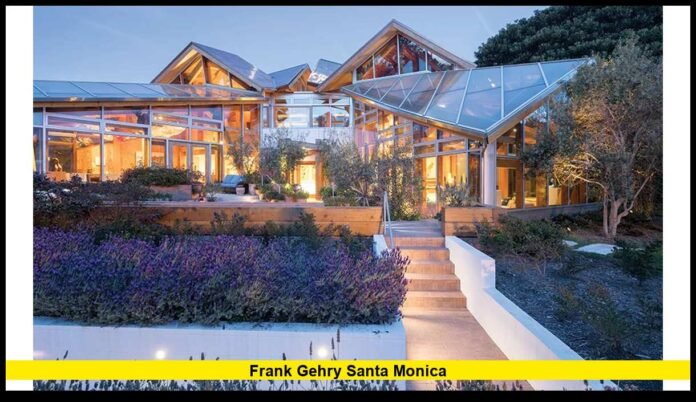

Frank Gehry Santa Monica has become a central topic of architectural discussion following the confirmed news of Gehry’s passing at his Santa Monica home in December 2025 and the continued progression of major developments tied to his work. His connection to the city spans decades, blending personal life, innovative design, and long-term planning efforts that continue shaping the coastal landscape. As new attention falls on his final years and on the future of his most prominent local project, Santa Monica stands at a meaningful point in its architectural story.
Frank Gehry lived in Santa Monica for many years. His presence there was not symbolic; it was woven into his creative life, his professional decisions, and his long-standing commitment to experimenting with form in ways that resonate with the everyday experience of a city’s residents. His remodeled home in the city helped launch an international career, and decades later, one of his final major developments—an ambitious Ocean Avenue project—continues to influence local planning discussions.
This article explores his lasting legacy, his relationship with Santa Monica, the status of the continuing project associated with his firm, and why the city remains such an integral part of the larger Gehry narrative.
A Life Closely Tied to Santa Monica
Frank Gehry’s rise to international prominence began long before his most iconic global works. Still, Santa Monica played a remarkably influential role in shaping the architect he became. His early artistic choices were often met with curiosity, admiration, and sometimes controversy, yet the city served as a stable foundation for decades of creative evolution.
Gehry’s personal home in Santa Monica became a widely discussed landmark due to its unconventional materials and fractured geometry. The project stood as a decisive break from traditional home design and signaled the arrival of a daring creative voice. The remodel was not merely a building experiment; it was a statement that everyday structures could challenge expectations.
His life in Santa Monica provided him with both professional grounding and creative freedom. The city’s combination of residential neighborhoods, cultural institutions, and oceanfront urban spaces created a dynamic environment that influenced his thinking. The mix of community feedback, local policy constraints, and design opportunity pushed him to innovate within real-world boundaries rather than operate only in theoretical space.
Gehry’s Passing and Its Immediate Significance
When Gehry died in December 2025 at age 96, public responses highlighted how deeply his work shaped modern architecture. His final residence in Santa Monica added emotional weight to the news. Community members, architectural commentators, and civic leaders reflected not just on his global achievements but on his connection to California’s coastal identity and to a city that housed some of his earliest and most personal design efforts.
His death also drew renewed interest to the projects he set in motion during his later years. While many of his most recognized works stand around the world—from Bilbao to Los Angeles—the developments that remained in progress near his home took on greater symbolic importance.
The Ocean Avenue mixed-use project, a dynamic and highly visible plan set in a high-demand coastal corridor, is one of the most notable. Its progress represents both Gehry’s lasting influence on the region and the momentum of long-term development strategies already embedded in the city’s planning documents.
The Ocean Avenue Project: A Closer Examination
The Ocean Avenue development in Santa Monica is more than a typical mixed-use plan; it is one of the final large-scale concepts shaped by Gehry’s vision. The city granted approvals for the project with a detailed development agreement that reflects a collaboration between the architectural team, local officials, community representatives, and environmental planners.
Key Components of the Project
The development includes a mix of elements designed to activate the waterfront area while adhering to local conditions:
- Residential units positioned to attract both long-term residents and people drawn to urban coastal living
- A hotel component intended to support tourism and the city’s hospitality economy
- Ground-floor commercial spaces aimed at improving walkability and street engagement
- Public improvements created to support pedestrian access and enhance the Ocean Avenue corridor
One of the most significant aspects of the development is its sustainability commitments. These include green power use, water-capture systems, reduced energy consumption standards, and other measures aligned with the city’s environmental priorities. Santa Monica’s ongoing focus on coastal resilience and climate-conscious growth is reflected in these obligations.
Height and Design Adjustments
Throughout the years of discussion, the project underwent several revisions to match neighborhood expectations and zoning requirements. Early design concepts were refined to reduce height and adjust massing, producing a form that aims to strike a balance between Gehry’s sculptural identity and the city’s guidelines for coastal development.
The overall result is a structure envisioned to complement Santa Monica’s skyline without overwhelming the surrounding streetscape. While still distinct and architecturally expressive, the project’s design acknowledges the city’s longstanding emphasis on livability and scale.
Current Status and Future Progress
The development agreement remains active, and subsequent administrative steps continue to move forward. Large-scale mixed-use construction—particularly in coastal zones—requires multiple layers of review and coordination. With those processes underway, the project remains positioned as one of Santa Monica’s most high-profile upcoming additions.
Even following Gehry’s passing, Gehry Partners continues to oversee design stewardship. Major architectural firms frequently support legacy projects through established teams and detailed planning frameworks, ensuring that the original vision and design integrity remain intact. In this case, the continued involvement of Gehry’s firm provides continuity for what is expected to become an important architectural presence along the California coastline.
Why the City Mattered So Much to Gehry
Santa Monica was central to Gehry’s story because it offered him something increasingly rare in major urban design hubs: room to experiment while still engaging with a diverse community. The city’s mixture of old neighborhoods, evolving commercial areas, cultural attractions, and established civic planning traditions created an environment where bold ideas met practical constraints.
Several factors made Santa Monica uniquely important to Gehry:
1. A Supportive Artistic Landscape
The city’s creative spirit gave Gehry space to challenge conventional design. Like many artists who thrive near the ocean, he found that proximity to cultural life and natural landscape helped spark new approaches.
2. A Place to Test New Ideas
His home remodel in Santa Monica became a defining moment in modern architecture. It demonstrated how ordinary materials could be used in extraordinary ways and served as an early proof of concept for the unconventional geometries that would later define his career.
3. A Long-Term Relationship with Local Planning
Gehry maintained decades of interaction with city planning bodies and community forums. These exchanges helped shape his understanding of how design and public policy intersect in real time.
4. A Link Between Personal Life and Professional Identity
Living and working in Santa Monica rooted Gehry in a specific geographic identity that influenced the emotional tone of his work.
The Project’s Broader Impact on Santa Monica’s Urban Future
As the Ocean Avenue development continues its progression, Santa Monica stands at a potential turning point. The project introduces new housing capacity, hospitality offerings, and public connections in an area central to the city’s economic and cultural life.
Potential Long-Term Benefits
- Increased pedestrian activity and improved corridor engagement
- Additional housing options in a high-demand location
- A new architectural attraction that reinforces Santa Monica’s identity
- Enhanced local business opportunities through curated commercial spaces
- Landscape improvements designed to enrich the coastal experience
The design’s sculptural elements also have the potential to create a recognizable landmark. While Gehry’s global works often become immediate symbols of their cities, the long-term perception of the Ocean Avenue development will depend on its integration into daily life, community acceptance, and the degree to which its design harmonizes with Santa Monica’s character.
A Legacy That Extends Beyond a Single Building
Frank Gehry’s influence in Santa Monica cannot be understood through one project alone. His design philosophy shaped the way architects think about form, texture, materiality, and the invitation for public engagement. His work consistently blurred the line between architecture as art and architecture as public experience.
The Ocean Avenue project represents the continuation of a larger legacy—a final testament to Gehry’s desire to rethink how cities function and how people experience them. With its sustainability commitments and multipurpose nature, the development stands as an example of a contemporary approach to urban design grounded in environmental mindfulness.
The Meaning of Frank Gehry Santa Monica Today
The relationship between Gehry and Santa Monica now occupies a unique place in architectural history. The keyword represents the intersection of a world-renowned creator and the city that both inspired him and served as the setting of his final chapter. It also symbolizes the ongoing conversation about how cities evolve while respecting their cultural roots.
As Santa Monica continues to champion community-driven design, Gehry’s work—both completed and forthcoming—remains a touchstone for evaluating how bold architecture can fit into a beloved coastal environment.
Closing Thoughts
Frank Gehry’s passing marks the end of an extraordinary life, yet his influence in Santa Monica continues to grow through the projects he shaped and the ideas he championed. The Ocean Avenue development stands poised to become one of the most defining features of the city’s future, reflecting a blend of innovation, sustainability, and architectural personality that carries forward the spirit of Gehry’s work.
Share your thoughts below — how do you think Gehry’s legacy will shape Santa Monica in the years ahead?