
Every December, the sounds of holiday cheer fill homes, stores, and streaming playlists across America. Among the familiar tunes that return year after year, “I Want a Hippopotamus for Christmas” stands out for its joyful humor and irresistible charm. The song, first recorded in 1953, continues to delight both children and adults more than seven decades later, proving that whimsy never goes out of style.
This lighthearted Christmas classic, performed by 10-year-old Gayla Peevey, began as a novelty hit but has grown into a cultural treasure. In 2025, it remains one of the most-streamed vintage holiday songs, finding new life through TikTok trends, streaming playlists, and countless covers from contemporary artists.
How It All Began: The Birth of a Holiday Favorite
In the fall of 1953, Columbia Records released a playful new holiday tune written by John Rox, a songwriter known for crafting catchy, humorous lyrics. The song told the story of a child asking for an unusual Christmas gift — not a toy, not a doll, but a real hippopotamus.
The performance needed to be sweet, funny, and full of childlike sincerity. Enter Gayla Peevey, a bright and talented 10-year-old from Oklahoma City. Her expressive voice and natural enthusiasm brought the song to life, instantly capturing the public’s attention.
Released just before the holiday season, the song quickly climbed the Billboard charts, reaching national recognition. It was one of the few novelty Christmas songs of the 1950s to break through the pop market and become a nationwide sensation.
Listeners fell in love with the humor, the melody, and Gayla’s personality. The tune’s playful energy contrasted beautifully with the more traditional Christmas songs of the era, giving it a unique identity that made it stand out for generations to come.
A Real Hippo for Christmas: A Story That Made Headlines
What happened next turned the song into legend. Inspired by the song’s popularity, a local Oklahoma City radio station launched a fundraising campaign called the “Gayla Peevey Hippo Fund.” The campaign encouraged listeners to help “get Gayla her hippopotamus for Christmas.”
The idea caught on immediately. Families across Oklahoma donated small amounts, and within weeks, enough money was raised to purchase an actual baby hippopotamus from the National Zoo.
The baby hippo, named Matilda, was presented to Gayla Peevey in a festive ceremony just before Christmas. Photographers captured the magical moment, and newspapers across the country covered the story.
But instead of taking Matilda home, Gayla proudly donated her to the Oklahoma City Zoo, where the hippo became a beloved resident for nearly half a century. Matilda’s arrival brought national attention to the zoo and gave the song a real-life ending that felt straight out of a Christmas movie.
Even today, the Oklahoma City Zoo celebrates this heartwarming piece of local history each December, with decorations and merchandise honoring both Gayla and Matilda.
Gayla Peevey: From Child Star to Cultural Icon
Gayla Peevey’s rise to fame was swift. After “I Want a Hippopotamus for Christmas,” she appeared on television, performed live shows, and recorded several other songs. Her bright personality and musical talent made her a household name in the 1950s.
Later, she recorded under a new stage name, Jamie Horton, releasing singles that showcased her maturing voice. While she eventually stepped away from show business, Peevey remained a beloved figure among fans of vintage pop and holiday music.
In adulthood, she pursued a successful career in advertising and raised a family in California. Despite moving away from the spotlight, she has continued to embrace her place in Christmas history.
Now in her eighties, Peevey occasionally shares stories about the song and her memories from that time. Her genuine warmth and humor have only added to her legend. She has expressed how amazed she is that the song still brings joy to so many people worldwide.
A Modern Revival: From Vinyl to Viral
Fast-forward to the digital era, and “I Want a Hippopotamus for Christmas” is more alive than ever. Each December, the song finds new fans on streaming platforms and social media.
On TikTok, users have created millions of videos set to the song — featuring kids in holiday pajamas, pets in Christmas outfits, and humorous gift unwrapping moments. The song’s lighthearted tone and bouncy rhythm make it a perfect fit for playful holiday content.
Streaming data shows just how enduring it has become. Spotify reports annual spikes in plays during December, often placing the song in the Top 25 most-streamed novelty Christmas songs in the United States.
Its reappearance on radio stations across the country has also helped bridge the generation gap, with grandparents and grandchildren singing along to the same quirky tune.
Retail stores, children’s concerts, and holiday TV specials frequently include it as part of their festive programming, proving that a simple, silly song from the 1950s can still bring smiles in 2025.
Why It Still Works: The Timeless Appeal
Part of the magic of “I Want a Hippopotamus for Christmas” lies in its simplicity. It captures the imagination of childhood — that boundless belief that anything is possible when Christmas morning arrives.
Unlike sentimental ballads or romantic Christmas tunes, this song taps into pure fun. It’s filled with innocence, optimism, and humor. The lyrics are clever but easy to remember, and the melody is cheerful enough to get stuck in anyone’s head.
Musically, it’s a perfect example of mid-century pop songwriting — short, catchy, and upbeat, designed to make listeners smile.
For adults, it’s a nostalgic reminder of childhood wonder. For kids, it’s just plain funny. That combination of nostalgia and laughter has kept it relevant for more than seven decades.
Famous Covers and Adaptations
Over the years, “I Want a Hippopotamus for Christmas” has been covered by a range of artists from different genres. Each has brought a new twist while honoring the original charm.
Some of the most popular renditions include:
- LeAnn Rimes, who recorded a country version in 2014 with polished production and bright energy.
- Kacey Musgraves, who has performed it live with her signature retro flair.
- The Jonas Brothers, who featured snippets of the song in a medley during one of their holiday tours.
- Children’s choirs and school performances across the U.S., keeping its youthful energy alive every December.
Even with these updates, Gayla Peevey’s original recording remains the definitive version. Its combination of innocence and humor continues to capture the hearts of listeners year after year.
Legacy and Cultural Impact
Few Christmas songs have achieved the same kind of enduring popularity. What started as a novelty hit has become a symbol of joyful nostalgia.
In Oklahoma, the story of Gayla Peevey and Matilda the hippo is still celebrated every year. The Oklahoma City Zoo often highlights the event as part of its holiday programming, and it remains one of the most charming stories in American Christmas folklore.
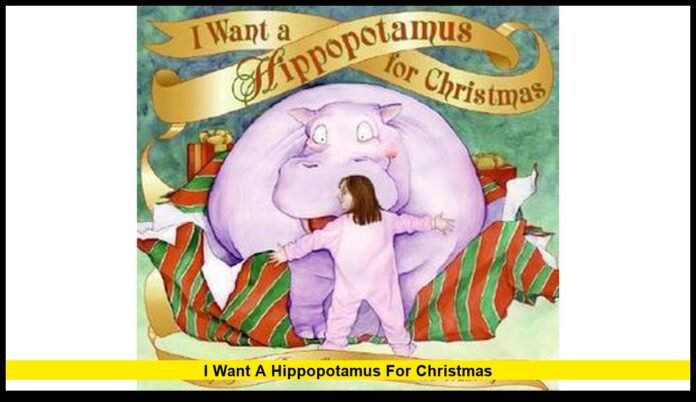
The song also continues to inspire merchandise, parodies, and even children’s book adaptations. It’s become part of the larger cultural fabric of the holidays, standing alongside classics like Rudolph the Red-Nosed Reindeer and Frosty the Snowman in the canon of playful Christmas legends.
Interesting Facts About “I Want a Hippopotamus for Christmas”
- The song was first recorded in 1953 when Gayla Peevey was 10 years old.
- The real hippo, Matilda, lived at the Oklahoma City Zoo until 1998.
- Gayla Peevey re-recorded the song in 2017 to celebrate its 65th anniversary.
- It frequently appears on the Billboard Holiday 100 Chart during December.
- The song’s royalties have helped keep Peevey’s name in the public spotlight decades after her recording career ended.
The Song in 2025: Still Spreading Cheer
Today, “I Want a Hippopotamus for Christmas” continues to play an important role in American holiday celebrations. It’s a favorite for families looking for something lighthearted and fun among the more traditional Christmas ballads.
Its resurgence in streaming and social media proves that even in a fast-paced digital world, people still crave nostalgia and laughter. The song’s message — a child’s boundless hope and imagination — feels timeless.
For Gayla Peevey, who remains grateful for her unique place in Christmas history, the song is more than just a childhood memory. It’s a lasting reminder of joy, community, and the power of a simple wish set to music.
Seven decades later, “I Want a Hippopotamus for Christmas” continues to charm the world — a delightful reminder that the best gifts of the season often come wrapped in laughter, innocence, and song.