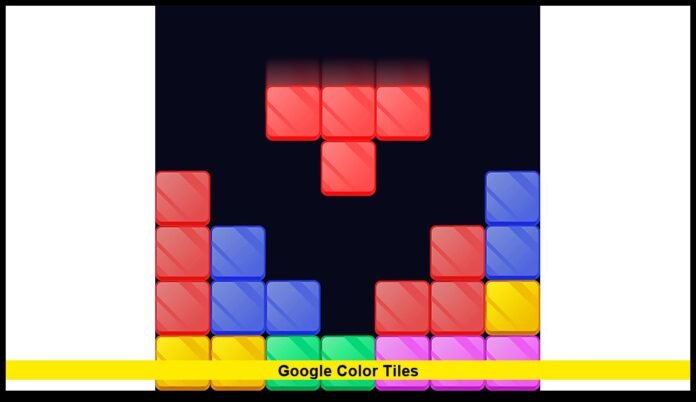

The buzz around Google Color Tiles has spread fast across the internet this holiday season. What began as a quiet addition to Google’s collection of search-based games has quickly turned into one of the most popular web puzzles of 2025. Users of all ages are spending time mixing, matching, and merging colors — all through a simple search query.
As of December 2025, Google Color Tiles stands out as one of the most visually appealing and mentally engaging games available directly through Google Search. Its combination of accessibility, design simplicity, and cognitive challenge has made it a favorite among puzzle lovers, educators, and casual players alike.
What Is Google Color Tiles?
Google Color Tiles is a grid-based color puzzle created by Google as part of its interactive search experiences. The concept is easy to grasp but surprisingly addictive — you manipulate colored tiles on a virtual board, aiming to align or merge them into specific patterns to earn points or progress through levels.
The game is instantly accessible — simply type “Google Color Tiles” into the search bar, and it appears at the top of the results. You can play it on any device, without needing to download an app or create an account.
It’s designed for quick, satisfying gameplay sessions that can last minutes or hours, depending on how long you want to keep matching colors and chasing your next high score.
How to Play Google Color Tiles
Playing Google Color Tiles is easy, but mastering it requires focus and pattern recognition.
Here’s how it works:
- Open the Game
Type “Google Color Tiles” in Google Search. The playable game panel will appear instantly in your browser. - Understand the Board
You’ll see a grid filled with colored tiles. Each tile can be moved or swapped based on the game mode. - Make Your Moves
Players slide or tap tiles to align similar colors. Successful matches earn points and clear spaces for new tiles. - Progress Through Levels
As the game continues, new shades and patterns are introduced. The grid becomes more complex, challenging your attention to detail and speed. - Aim for High Scores
The longer you play without filling the board or missing combinations, the higher your score climbs.
The gameplay feels intuitive and smooth, with fluid animations that respond to each move. It’s simple enough for kids to enjoy yet challenging enough to keep adults entertained for hours.
Why Google Created Color Tiles
Google’s interactive games often emerge as surprise features within its search ecosystem. Over the years, these games have served dual purposes: to celebrate creativity and provide small moments of enjoyment for users worldwide.
Google Color Tiles fits perfectly into this tradition. It combines cognitive challenge with aesthetic appeal, inviting users to take a short mental break while stimulating problem-solving skills.
The company has previously introduced hits like Pac-Man, Minesweeper, and Snake, all accessible through search. Color Tiles continues this trend, emphasizing creativity, accessibility, and simplicity.
It also reflects Google’s ongoing mission to make its tools both useful and enjoyable — encouraging digital wellness through stress-free, interactive play.
The Design That Makes It Addictive
One of the reasons Google Color Tiles has become so popular is its design. The interface follows Google’s minimalist aesthetic — clean lines, soft gradients, and subtle animations.
Instead of bright flashes or distracting visuals, the game relies on smooth transitions and calm color schemes that keep users engaged without overwhelming their senses.
Key design features include:
- A responsive grid that adjusts to mobile, tablet, and desktop screens
- Vibrant yet balanced colors that make patterns easy to identify
- Subtle sound effects that enhance feedback without distraction
- Fluid animations that make every move satisfying
Each level introduces slightly different color variations, encouraging continuous attention and memory recall. The harmony between simplicity and visual stimulation keeps players coming back for more.
The Cognitive Benefits of Playing Google Color Tiles
While most people play Google Color Tiles for fun, the game also provides real mental benefits. Research in cognitive science shows that visual puzzles improve pattern recognition, focus, and short-term memory.
This game specifically helps players strengthen:
- Color differentiation skills – identifying subtle variations in shade and hue.
- Spatial awareness – recognizing patterns and anticipating movements on the grid.
- Problem-solving – deciding which tiles to move for the best outcome.
- Relaxation and mindfulness – the repetitive, rhythmic gameplay provides a calming effect similar to meditation.
Educators and therapists have also recognized its potential as a gentle tool for visual learning and stress reduction.
Google’s Legacy of Search-Based Games
Google Color Tiles joins a long line of interactive mini-games that have appeared directly in Search. Over the years, these games have built a dedicated fan base and are now an expected part of Google’s culture of innovation.
Here’s a look at some of Google’s most popular interactive experiences:
| Game | Genre | Release Year | Platform |
|---|---|---|---|
| Pac-Man | Arcade | 2010 | Google Search |
| Google Snake | Classic Arcade | 2017 | Google Search |
| Solitaire | Card Puzzle | 2020 | Google Search |
| Minesweeper | Logic Puzzle | 2020 | Google Search |
| Doodle Champion Island Games | Adventure | 2021 | Google Doodle |
| Google Color Tiles | Color Puzzle | 2025 | Google Search |
Each release reinforces Google’s commitment to making its search engine not just a utility but also a destination for creativity and discovery.
Viral Popularity on Social Media
Since its release earlier in 2025, Google Color Tiles has taken social platforms by storm. Players share high scores, strategy tips, and speed-run videos under the hashtag #GoogleColorTiles, which has racked up millions of views on TikTok, YouTube Shorts, and Instagram Reels.
Many creators use the game as a “focus break” during work or study sessions, highlighting how it helps reset their minds between tasks. Educators also post classroom videos showing students using it for color coordination activities and logical reasoning exercises.
The game’s combination of soothing design and competitive scoring makes it ideal for both casual and community-driven play.
Accessibility and Cross-Device Compatibility
One of Google Color Tiles’ biggest strengths is accessibility. The game is fully optimized for all major browsers and devices, including:
- Google Chrome
- Microsoft Edge
- Safari
- Firefox
It adapts perfectly to screens of any size, from smartphones to widescreen monitors. Players can tap, click, or swipe based on their device preferences.
Additionally, Google ensures that the game aligns with accessibility standards. Players with visual impairments can adjust system-wide contrast settings, and the game automatically adapts.
This focus on inclusivity has made it a global hit — accessible to everyone, regardless of age or device type.
The Educational Value of Google Color Tiles
Beyond entertainment, Google Color Tiles has found a unique place in education. Teachers use it to teach students about color theory, logic, and decision-making.
Some art instructors use it to demonstrate how hues interact visually, while others incorporate it into lessons on digital design and pattern recognition.
In STEM programs, the game is sometimes used to introduce students to algorithms and grid-based programming concepts. By experimenting with tile positions, players unconsciously practice computational thinking — breaking problems into steps, identifying patterns, and testing outcomes.
This crossover between fun and functionality is one of the reasons the game has been embraced by schools, families, and learning platforms alike.
Why Players Love It
Fans of Google Color Tiles often describe it as “simple but satisfying.” The game provides instant gratification — no setup, no ads, and no complicated tutorials. It feels like a modern throwback to the golden era of casual games, where the focus was purely on enjoyment.
What players love most includes:
- Quick access — playable within seconds of searching.
- Relaxing interface — calming colors and fluid gameplay.
- No downloads — completely browser-based.
- Universality — suitable for all ages.
- Replay value — new patterns every round.
It’s proof that even in an era dominated by complex gaming ecosystems, simplicity still has powerful appeal.
The Future of Interactive Google Games
With the success of Google Color Tiles, it’s clear that interactive games will continue to be part of Google’s strategy for user engagement. In the coming years, we can expect more games that blend art, logic, and accessibility directly within Search.
The format aligns perfectly with modern habits — users want quick, fun experiences without downloads or sign-ins. Google’s ecosystem allows these games to reach billions of people instantly.
For now, Color Tiles represents the perfect balance between creativity and relaxation, proving that even in a fast-paced digital world, small moments of play still matter.
Final Thoughts
Google Color Tiles is more than just another casual game — it’s a reminder of how design simplicity, accessibility, and creativity can come together to create something universally enjoyable.
Whether you’re looking to challenge your mind, relax between meetings, or add a little color to your day, this game offers the perfect digital break. And best of all, it’s right there in your browser, ready whenever you are.
Have you tried Google Color Tiles yet? Share your highest score or best strategy in the comments below!