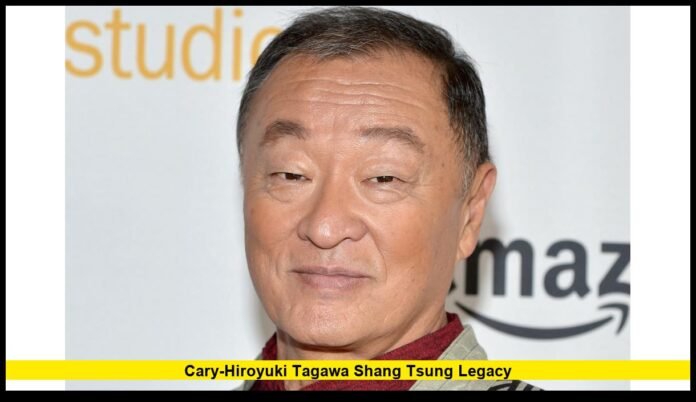

Few names in film and gaming history command the same respect as Cary-Hiroyuki Tagawa Shang Tsung. The Japanese-American actor, martial artist, and producer created one of the most enduring villains in pop culture—Mortal Kombat’s soul-stealing sorcerer. Nearly three decades after his unforgettable debut, Tagawa’s influence continues to shape modern entertainment, from the big screen to the digital world of gaming.
A Star Forged in Discipline and Dedication
Cary-Hiroyuki Tagawa’s story begins in Tokyo, Japan, where he was born into a Japanese-American family with deep roots in both cultures. His father served in the U.S. Army, leading the family to relocate frequently during Tagawa’s childhood. This exposure to diverse environments helped him develop adaptability—a quality that later defined his acting.
From an early age, Tagawa was fascinated by martial arts and philosophy. His practice of judo, karate, and aikido became the foundation of his approach to life and performance. Unlike many actors who approach their craft purely through emotion, Tagawa viewed acting as a discipline, requiring balance, focus, and awareness—the same qualities that define martial artists.
When he entered Hollywood in the 1980s, Asian actors faced limited opportunities and stereotyped roles. Yet Tagawa’s calm authority, physical skill, and charisma allowed him to rise above the typecasting that plagued many of his peers. His breakout performances in The Last Emperor (1987) and Rising Sun (1993) revealed his range and screen presence, setting the stage for the role that would make him immortal.
The Birth of an Icon: Shang Tsung in 1995
When the first Mortal Kombat movie premiered in 1995, audiences were introduced to a world of fantasy martial arts unlike anything seen before. Among its cast of fighters, one figure stood out—the cunning, commanding sorcerer Shang Tsung, played by Cary-Hiroyuki Tagawa.
Tagawa brought an extraordinary level of control and intensity to the role. His piercing gaze, deliberate movements, and resonant voice turned what could have been a one-dimensional villain into a captivating presence. His delivery of the line “Your soul is mine!” became instantly iconic, solidifying Shang Tsung as one of cinema’s most memorable antagonists.
What set Tagawa apart was his ability to balance theatricality with subtle menace. He didn’t rely solely on special effects or fight choreography—his power came from presence. Every gesture and word carried weight. Viewers believed Shang Tsung was dangerous not only because of his supernatural abilities but because of his intelligence and authority.
The performance transcended the movie itself, influencing how future generations of actors approached video game adaptations. Even critics who dismissed other aspects of the film acknowledged Tagawa’s charisma and mastery of his craft.
A Role Reborn: Returning as Shang Tsung in Mortal Kombat 11
More than two decades after the original movie, Cary-Hiroyuki Tagawa returned to the role of Shang Tsung in 2019 for Mortal Kombat 11. This time, technology allowed him to become the character in a new way—through motion capture and voice acting.
Tagawa’s likeness was digitally recreated with stunning realism. Every smirk, glare, and movement mirrored the original performance, creating a bridge between generations of fans. His reappearance was met with widespread excitement, as it marked the return of the “true” Shang Tsung to the franchise.
Players praised Tagawa’s renewed portrayal for bringing a sense of authenticity and nostalgia to the modern game. His performance wasn’t just a cameo—it was a centerpiece of Mortal Kombat 11: Aftermath, where he served as the central manipulator in the game’s storyline. The experience proved that even decades later, Tagawa’s ability to command attention was unmatched.
In 2025, his version of Shang Tsung continues to influence the character’s digital evolution. The latest Mortal Kombat titles and animated features still draw inspiration from his design and demeanor. For fans, Cary-Hiroyuki Tagawa isn’t just an actor who played Shang Tsung—he is Shang Tsung.
Building a Career Beyond Mortal Kombat
Although the sorcerer role made him world-famous, Tagawa’s filmography is far more diverse. Over four decades, he has appeared in dozens of Hollywood productions, each showcasing a different side of his talent.
In Memoirs of a Geisha (2005), he brought quiet dignity to a supporting role in a film celebrated for its visual elegance. In Planet of the Apes (2001), he joined an ensemble cast in one of cinema’s most famous science fiction franchises. On television, his recurring roles in Hawaii Five-0, Revenge, and The Man in the High Castle showed his adaptability in both drama and action.
Tagawa’s gift lies in his ability to blend strength with serenity. Even when playing villains, his performances carry depth and empathy. He often portrays characters guided by discipline and conviction, traits drawn from his real-life philosophy rooted in martial arts and mindfulness.
A Symbol of Representation and Respect
Cary-Hiroyuki Tagawa has long been an advocate for authentic Asian representation in Hollywood. Entering the industry at a time when roles for Asian actors were scarce and often caricatured, he stood firm in his belief that dignity and authenticity were nonnegotiable.
He once explained that he chose roles based on what they allowed him to communicate about honor and humanity. Whether portraying a villain or a hero, he sought to bring truth to his characters rather than stereotypes. This approach helped open doors for future Asian-American actors, proving that diversity in casting can enhance storytelling rather than limit it.
Today, his influence is visible in the increasing number of Asian actors leading Hollywood films, from action blockbusters to dramas. Many cite Tagawa as a pioneer who proved that discipline, talent, and authenticity could overcome systemic barriers.
The Actor as a Philosopher and Teacher
Beyond acting, Tagawa has spent years studying and teaching martial arts philosophy. His perspective combines spirituality, meditation, and physical discipline into what he describes as a way of living with intention.
He has spoken publicly about how his practice of mindfulness helps him approach every role with clarity and focus. For Tagawa, acting isn’t just performance—it’s energy exchange. He believes an actor’s state of mind influences how an audience perceives emotion, truth, and power on screen.
In recent years, Tagawa has been involved in educational projects and independent films that explore themes of peace, unity, and cultural respect. His work often bridges Eastern and Western ideas, reflecting his own multicultural background.
A Life Celebrated in 2025
As of 2025, Cary-Hiroyuki Tagawa remains an active presence in entertainment and public life. Now in his seventies, he continues to attend conventions and meet fans who grew up watching his movies. His panels often attract standing-room-only crowds eager to hear his reflections on film, discipline, and personal growth.
He has recently participated in several streaming documentaries highlighting his career and his influence on martial arts cinema. These projects emphasize his unique ability to merge philosophy with performance, creating roles that resonate long after the credits roll.
Tagawa also maintains a close relationship with the gaming community. Developers and voice actors frequently credit him as an inspiration, recognizing how his portrayal of Shang Tsung elevated the entire Mortal Kombat franchise.
Why Shang Tsung Endures
Decades after his debut, Shang Tsung remains one of the most recognizable villains in popular culture. His combination of intelligence, sorcery, and cunning makes him timeless, but it’s Tagawa’s embodiment that keeps the character relevant.
In the age of visual effects and CGI, few actors can match the authenticity Tagawa brought to the screen. His facial expressions and deliberate movements gave the illusion of true supernatural power. Fans still quote his lines, imitate his gestures, and share memes that celebrate his performance nearly 30 years later.
When Mortal Kombat 11 reintroduced him, longtime viewers felt a sense of reunion—proof that the legend of Shang Tsung, and the man behind him, would never fade.
Legacy of a Living Legend
Cary-Hiroyuki Tagawa’s legacy is more than a collection of roles; it’s a philosophy of excellence. His body of work demonstrates how discipline and self-awareness can elevate acting into an art form.
From martial arts epics to digital performances, Tagawa has redefined what it means to embody power on screen. He has taught audiences that villains can have wisdom, that strength comes from stillness, and that respect for one’s craft transcends culture and language.
As new generations of actors enter Hollywood, many look to Tagawa’s career as proof that timeless characters are born from authenticity, not technology. His continued relevance in 2025 stands as a testament to a lifetime of purpose-driven work.
Cary-Hiroyuki Tagawa’s portrayal of Shang Tsung remains one of cinema’s greatest examples of transformation. What’s your favorite performance from his incredible career? Share your thoughts below and join the conversation!