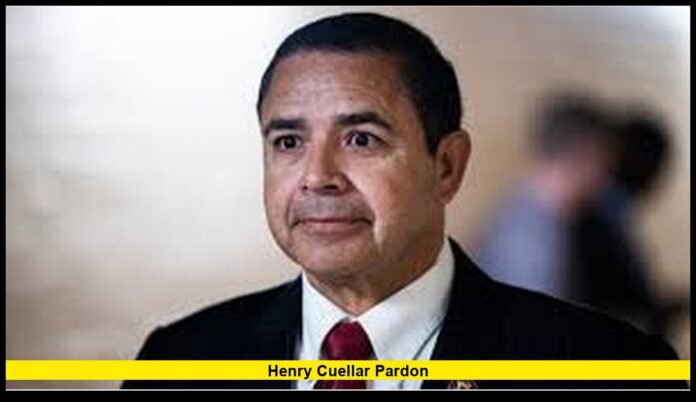

President Donald Trump has issued a full and unconditional pardon to U.S. Rep. Henry Cuellar of Texas and his wife, Imelda Cuellar, putting an abrupt end to a federal criminal case that had threatened the longtime congressman’s political future. The pardon clears all federal charges related to accusations of bribery, money laundering, and conspiracy — a dramatic turn after a high-profile investigation by the Justice Department.
What the Pardon Covers
The pardon wipes clean a sweeping indictment filed in 2024 that alleged the Cuellars accepted nearly $600,000 in illicit payments. Prosecutors claimed the funds came from an oil-and-gas firm tied to a foreign government and a bank based in Mexico. According to the case, the money was funneled through a series of shell companies and family-owned entities, then laundered under the guise of consulting contracts. The indictment claimed that Rep. Cuellar used his official position to benefit those foreign business interests. With the pardon, all such federal charges are dismissed, and no further prosecution on those grounds can proceed.
Though the public record still contains the indictment and related court filings, the pardon effectively restores Cuellar’s legal standing as though the indictment had never led to a conviction.
Origins of the Case
The legal saga began in 2022, when federal authorities raided Cuellar’s home and congressional office as part of an investigation into alleged foreign-influence schemes. The investigation culminated in a 2024 indictment charging both Henry and Imelda Cuellar with multiple counts of bribery, money laundering, and conspiracy.
According to prosecutors, the accused payments originated between 2014 and 2021. They alleged that the money — close to $600,000 — was laundered through shell companies and consulting contracts that, in reality, involved little to no legitimate work. Two of Cuellar’s political advisers had already pleaded guilty in connection with the case, admitting to laundering more than $200,000 in bribes from a Mexican bank. The indictment further stated that Cuellar had promised to influence U.S. foreign policy in favor of an Azerbaijan-backed energy firm — including using his congressional position to deliver favorable speeches and push supportive legislation.
Cuellar, however, always maintained his innocence, arguing that his actions aligned with congressional norms and genuine policymaking — not bribery.
At the time of the pardon, a federal judge had postponed the trial — initially scheduled for September 2025 — to April 2026. Two of the original charges had already been dropped. The pardon halts all prosecution efforts ahead of that trial.
Political and Legal Significance
This particular clemency stands out for several reasons. First, it involves a Democratic congressman pardoned by a Republican president — a rare occurrence that highlights how the pardon power can transcend partisan lines. Second, the case dealt with alleged foreign influence, international money laundering, and deep scrutiny of congressional ethical norms, putting it at the heart of broader debates about corruption, accountability, and the boundaries of executive clemency.
President Trump announced the pardon on social media, denouncing what he described as a “weaponized justice system,” and suggesting the prosecution was driven by political motives — particularly Rep. Cuellar’s vocal criticism of the Biden administration’s border and immigration policies. Trump framed the pardon as a corrective act, one meant to stand against what he claimed was unfair targeting of political opponents.
Such a pardon also fits a pattern: throughout 2025, the president has used his clemency powers broadly, including granting executive clemency or pardons to individuals involved in politically charged or high-profile corruption cases.
Reaction from Cuellar, Colleagues, and Critics
In the wake of the pardon, Rep. Cuellar expressed gratitude to the president and said the decision gave his family a chance to move forward. He affirmed that he would continue his work representing his South Texas district and confirmed that he would run for reelection as a Democrat.
Democratic leaders and government-ethics watchdogs responded with concern. Many argued that pardoning a member of Congress accused of corruption — particularly involving foreign entities — could undermine public trust in democratic institutions and weaken efforts to deter unethical behavior. Some warned that such clemency could set a precedent, raising questions about accountability when elected officials face serious allegations.
Meanwhile, some Republican voices welcomed the pardon, praising it as acknowledgement that the case may have lacked merit or reflected prosecutorial overreach. Yet others within the party expressed unease, arguing that pardons in corruption cases should be rare and that granting them may erode the credibility of anti-corruption enforcement.
Legal experts also weighed in, warning that while pardons are constitutionally permitted, they complicate efforts at long-term deterrence. If elected officials perceive clemency as a safety net, the threat of prosecution may lose its power to prevent corrupt practices.
What the Pardon Does — and Doesn’t — Accomplish
✓ What It Does
- Ends the federal criminal prosecution against Henry and Imelda Cuellar.
- Prevents any conviction or sentencing for the dismissed charges.
- Removes immediate legal risk for Cuellar and clears his path to continue serving in Congress and pursue reelection.
✗ What It Doesn’t Do
- Erase public records of the indictment, the investigation, or the filings. These remain part of the historical and legal record.
- Shield Cuellar from administrative or congressional oversight. Committees — such as ethics panels — can still review his conduct independently.
- Affect potential state-level investigations or separate civil actions; a federal pardon does not automatically nullify proceedings under state or local jurisdiction.
Thus, the pardon restores legal innocence at the federal-criminal level, but it does not erase scrutiny or remove all political and reputational consequences.
Broader Implications for Justice, Oversight, and Public Trust
The pardon of Cuellar — a sitting member of Congress — brings renewed focus to the tension between executive clemency powers and the need for strong enforcement of public-office integrity. Critics argue the move could weaken the deterrent effect of federal corruption statutes. If powerful politicians believe pardons are a possible outcome, the risk calculus changes.
On the other hand, supporters of clemency contend that pardons serve as a check on overzealous prosecution or politically motivated indictments. They see the decision as protection for due process and an affirmation that no public figure should be subjected to what they view as unfair targeting.
This pardon may prompt calls for reforms — either to tighten oversight and ethics enforcement or to clarify limits of executive clemency in public corruption cases. Additionally, it could influence how future administrations assess and deploy pardon powers, especially when political and legal controversies intersect.
What Comes Next: Key Watch Points
- Congressional Oversight: Ethics committees — including possibly the House Ethics Committee — may review Cuellar’s conduct and financial disclosures. Whether they take any action remains to be seen.
- State or Civil Investigations: If any state authorities or civil litigants pursue allegations related to the former indictment, those processes could proceed independently of the federal pardon.
- Cuellar’s Reelection Campaign: With the legal cloud cleared, Cuellar is running for reelection. Voter response in his district — especially among those concerned with corruption and integrity — could affect his political future.
- Precedents for Future Pardons: This pardon could influence how both supporters and critics view clemency in cases involving elected officials. Its impact may shape debates over legal accountability, ethics, and balancing executive power against judicial and congressional enforcement.
- Public Confidence in Governance: Ultimately, the pardon tests public trust — whether citizens believe the justice system treats all individuals equally, regardless of status.
Final Thoughts
The full pardon of Rep. Henry Cuellar and his wife marks a major turning point in one of the most consequential corruption cases in recent congressional history. While it resolves the criminal legal element, it also raises deep questions about accountability, oversight, and the boundaries of executive clemency. Cuellar may have a clean slate in the courts — but whether he retains a clean reputation in the eyes of his constituents and the broader public remains unsettled.