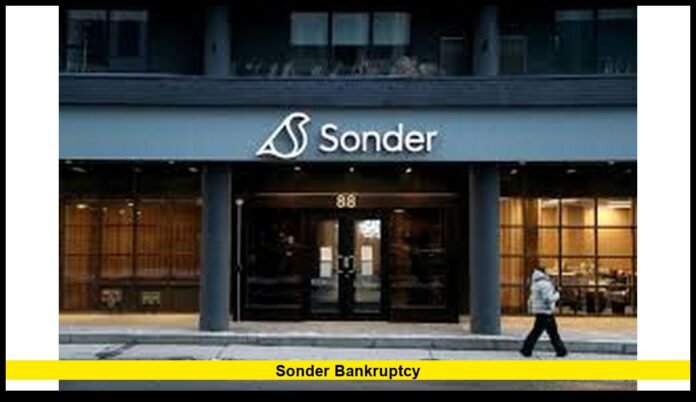

The Collapse of Sonder bankruptcy
The headline that reverberated across the travel world in November 2025 was “Sonder bankruptcy.” The sprawling short-term rental and apartment-hotel operator Sonder Holdings, Inc. filed for Chapter 7 liquidation, after its major licensing agreement with Marriott International was abruptly terminated. The fallout was immediate: operations shut down, bookings canceled, and guests left scrambling for last-minute accommodations. The end came within days, marking a dramatic fall for a company once considered a rising star in hospitality.
Origins: From Startup Disruptor to Major Hospitality Player
Sonder began in 2014 as a bold attempt to merge the convenience of hotels with the flexibility of short-term rentals. By leasing and refurbishing apartments and hotel units, the company offered travelers fully managed, tech-enabled stays. Unlike traditional hotels, Sonder targeted guests who wanted the space and comfort of an apartment combined with the predictability and service of a hotel.
Over time, Sonder expanded rapidly. By mid-2020s it managed thousands of units across dozens of cities worldwide. It offered online check-ins, app-based support, and outsourced maintenance. The business attracted investors, and in 2021 the company went public via a SPAC with a valuation hovering around $2.2 billion.
Despite that promising start, financial troubles mounted beneath the surface. High lease obligations, maintenance costs, and ambitious growth targets strained the company’s cash flow. Earnings reports showed losses, and the long-term viability of Sonder’s model attracted growing concern among industry watchers.
The Marriott Deal: A Lifeline That Quickly Unraveled
In August 2024, Sonder landed what seemed like a lifeline: a long-term licensing agreement with Marriott International. Under this deal, thousands of Sonder units would join Marriott’s distribution network and become available to members of Marriott Bonvoy. The arrangement offered Sonder a much-needed liquidity boost and promised expanded booking visibility.
For a moment, the partnership looked like a turning point. Analysts speculated that the alliance could stabilize Sonder’s finances and give Marriott a foothold in the growing apartment-style hospitality segment. In public announcements, both companies painted the deal as a significant win.
But things began to sour behind the scenes. According to internal filings, the integration of Sonder’s systems and booking infrastructure with Marriott’s platform encountered major delays and cost overruns. The technical and operational friction disrupted expected revenue flows. Meanwhile, lease and fixed costs continued to mount. Within a year, the deal that was supposed to save Sonder turned into its final undoing.
The Collapse: From Termination to Bankruptcy in Days
On November 9, 2025, Marriott officially terminated the licensing agreement with Sonder, citing a default. Overnight, Sonder lost its major distribution channel. Soon after, the company announced it would cease all U.S. operations and begin Chapter 7 liquidation.
Sonder filed voluntary bankruptcy in the U.S. Bankruptcy Court for the District of Delaware. In filings, the company revealed staggering liabilities: under one 2021 note and warrant agreement, more than $200 million was outstanding; in a separate 2025 loan tied to Marriott, some $5.3 million remained unpaid. The financial strain, coupled with the collapsed partnership, left Sonder with little option but liquidation.
In the same filing, it became clear that Sonder expected delisting from the stock exchange, spelling the end of its public-company status. With no buyer or buyer financing in sight, the winding down of operations began immediately.
Immediate Fallout: Guests, Employees, and Owners in Limbo
The shutdown had far-reaching and chaotic consequences:
- Guests were abruptly displaced — Men, women, and families found themselves locked out of their booked apartments, some asked to vacate within hours. Many were mid-stay when the shutdown hit.
- Refunds and deposit returns became uncertain — Bookings made through Marriott platforms were suddenly invalid. Marriott advised those guests to seek refunds via their credit-card issuers, placing the burden on customers rather than the company.
- Thousands of employees lost jobs overnight — Cleaners, maintenance staff, front-desk support, and corporate employees all faced immediate layoffs with minimal warning.
- Landlords and property owners faced unpaid rent and vacant units — Since Sonder leased many of its units long-term, those underlying landlords were now left with empty properties and uncertain compensation.
- Properties fell into limbo — Some former Sonder units are now being eyed by other hospitality operators or apartment-hotels, but the transition could be slow and messy.
Cities that hosted Sonder properties — including major U.S. urban markets — saw sudden gaps in apartment-hotel supply. Guests left stranded, landlords unpaid and properties unused. The ripple effects exposed the risks associated with large-scale master-lease hospitality models.
Why Sonder bankruptcy Happened: Business Model Flaws + Bad Timing
Analyzing the failure reveals several structural and strategic miscalculations:
Heavy Real-Estate Commitments and Lease Obligations
Sonder’s core model depended upon long-term leases. That meant fixed monthly payments regardless of occupancy. When demand fluctuated — especially during off-peak periods — those lease payments weighed heavily on cash flow.
Integration and Booking System Failures with Marriott
The deal with Marriott should have reduced distribution friction and increased bookings. Instead, technical delays, cost overruns, and slower-than-expected adoption undermined potential gains. The failure to seamlessly integrate systems dealt a harsh blow to revenue projections.
Lack of Cash Cushion and Liquidity Issues
Sonder’s public filings revealed mounting debt obligations and loan repayments. The company had taken on significant notes and warrants — and as of late 2025, still owed tens and hundreds of millions. With shrinking cash reserves and uncertain revenue, the firm lacked a buffer against shocks.
Overreliance on a Single Big Partner Without a Plan B
When the Marriott deal unraveled, Sonder lacked fallback options. The business had grown dependent on that partnership for distribution, bookings, and cash flow. Once lost, operations collapsed quickly.
Rapid Expansion with Limited Margin for Error
Sonder grew fast, targeting major cities and large numbers of units. That expansion may have looked impressive on paper, but left little margin for error once macroeconomic conditions shifted or the signature deal failed.
In retrospect, the fall of Sonder underscores the dangers of combining asset-heavy real estate commitments with a tech-forward brand identity. Without robust unit economics, even high-growth hospitality ventures remain fragile.
What Happens Next? For Properties, Travelers, and the Industry
Former Properties — Who might take them over?
Several operators in the “aparthotel” and short-term rental space are reportedly evaluating acquisition or takeover of shuttered Sonder units. A handful of properties may reopen under new management over the coming months. But the process will likely be uneven. Lease renegotiations, maintenance overhauls, and rebranding may require time.
Travelers — What to Do If You Had a Booking
If you had an upcoming stay with Sonder, you should:
- Contact your credit-card issuer to request a chargeback or refund.
- Secure alternative lodging immediately, especially if you’re already en route or mid-travel.
- Save all documentation — booking confirmations, payment records, communications — in case you need to support a refund claim.
Landlords and Property Owners — Expect Uncertain Outcomes
Landlords who leased units to Sonder may recover some funds through the bankruptcy process, but amounts and timing remain uncertain. Some properties may remain vacant until new operators are found. Others may be permanently repurposed or sold.
The Hospitality Industry — Lessons Learned
The collapse highlights the risks inherent in asset-heavy, tech-branded hospitality models. Operators that layer sleek user experiences over high fixed costs may struggle when demand softens or partnerships fail. The industry may see increased caution among investors and operators when backing ambitious apartment-hotel concepts.
There may be renewed focus on flexibility: shorter lease terms, variable-cost models, and diversified distribution channels. The Sonder bankruptcy could mark a turning point in how alternative lodging companies structure their growth strategies.
FAQ
1. What exactly triggered the Sonder bankruptcy?
The bankruptcy was triggered after series of events: the termination of its licensing agreement by Marriott due to default, massive debt obligations, cash-flow shortfalls, and failure to secure alternate financing.
2. Are any Sonder properties still open?
As of now, nearly all U.S. operations are shut. Some properties are being evaluated for takeover by other operators, but reopening is uncertain and will depend on lease transfers, maintenance, and market demand.
3. What should affected guests do if their stay was canceled?
Guests should contact their credit-card issuer promptly to request a refund or chargeback. It’s also wise to secure alternate lodging immediately. Keep all booking and payment records.
4. Will employees or landlords receive compensation?
Employees and landlords are listed as creditors in the Chapter 7 liquidation process. Whether and when they receive compensation depends on the bankruptcy outcome, asset liquidation, and creditor priority — and recovery could take many months or more.
5. Could Sonder or a similar company re-emerge under a new name?
Given that this is a full Chapter 7 liquidation — with assets being sold and operations shut down — it is unlikely that Sonder will return. A similar business model might reappear under a different name, but it would likely require a fundamentally different structure and financial backing.
6. What broader lessons does the Sonder collapse teach the travel and hospitality industry?
The collapse highlights the dangers of combining heavy real-estate commitments with ambitious growth. It shows that even with strong branding and high valuations, sustainability demands realistic cost structures, flexible leases, and diversified channels for bookings and revenue.
Disclaimer
This article is for informational purposes only and reflects publicly available facts about the Sonder bankruptcy as of the date of writing. It is not legal, financial, or professional advice. Travelers, property owners, employees, or other affected parties should consult qualified professionals for guidance on their individual situations. Outcomes may shift as the liquidation and legal processes progress.