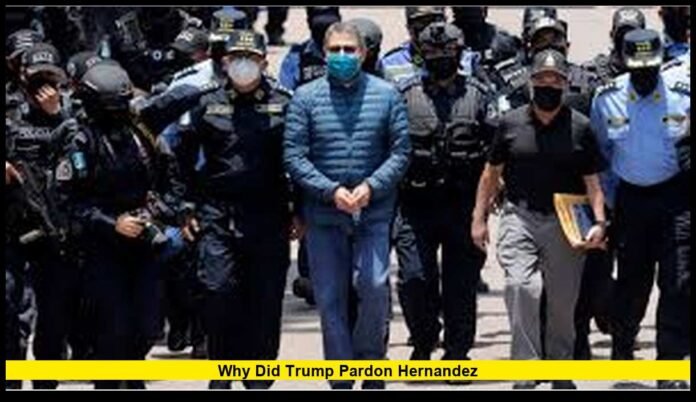

why did trump pardon hernandez has sparked widespread global attention after former U.S. President Donald Trump announced a full pardon for Juan Orlando Hernández, the former Honduran president convicted in U.S. court of drug-trafficking and weapons charges. The decision has stirred political shockwaves in Honduras, reignited debate in Washington, and raised serious questions about the future of anti-drug and anti-corruption efforts across the Americas.
Below is a detailed, up-to-date breakdown of the facts, reactions, and consequences surrounding this landmark pardon — based only on verified information as of today.
What Happened: The Pardon Announcement
- On November 28, 2025, Trump publicly announced he would grant a “full and complete” pardon to Hernández. The former Honduran leader was serving a 45-year prison sentence in the United States — after being convicted in 2024 on charges of conspiring to traffic cocaine into the U.S. and participating in a weapons conspiracy.
- In his announcement, Trump claimed that Hernández had been “treated very harshly and unfairly,” citing individuals he described as respected advisers. He also tied the pardon to a broader political context: just days before Honduras’s presidential election, Trump publicly endorsed conservative candidate Nasry Asfura. He warned that U.S. aid to Honduras might be reevaluated if Asfura failed to win.
The pardon marks an extraordinary use of U.S. executive clemency powers — granting relief to a high-profile foreign national convicted of serious drug crimes in U.S. federal court.
Why the Timing Matters: Election and Regional Stakes
This pardon comes at a deeply consequential moment for Honduras:
- Hondurans head to the polls this week to elect a new president, members of Congress, and local officials. The political climate is already tense, marked by mistrust, allegations of vote tampering, and violence during the campaign period.
- By intervening publicly and aligning with Asfura, Trump instantly shifted the domestic election narrative. Many voters now view the decision through the lens of foreign interference and questions about sovereignty.
- For decades, U.S. courts had held Hernández accountable for trafficking hundreds of tons of cocaine into the United States, using bribes and influence to protect shipments. The pardon undercuts that conviction and may signal a reversal in U.S. policy toward drug-linked corruption in Central America.
Because of the election’s fragile legitimacy, this act risks deepening existing political divides and undermining confidence in both domestic institutions and external allies.
Who Is Juan Orlando Hernández — Charges, Conviction, and Background
Juan Orlando Hernández served as president of Honduras from 2014 to 2022. He once held strong ties to U.S. anti-drug and counter-narcotics efforts. However:
- After he left office, U.S. authorities moved ahead with extradition and criminal charges. In 2022 he surrendered to U.S. custody and was extradited.
- During the trial, prosecutors presented evidence that Hernández had accepted millions in bribes in exchange for protecting narcotics trafficking operations, including shipments of cocaine destined for the U.S. Some of those shipments purportedly involved as much as 400 tons over many years.
- A U.S. jury found him guilty on multiple counts of drug trafficking and weapons conspiracy in 2024. In June of that year, the court sentenced him to 45 years in federal prison — one of the longest sentences ever handed down to a former head of state.
The verdict was widely seen as a rare instance of accountability at the highest levels for government-linked corruption and narcotics trafficking in Latin America — until the pardon reversed that judicial decision.
What Trump and His Supporters Say — Motives for Clemency
According to statements by Trump and his allies, several factors drove the decision:
- They argue Hernández was “treated unfairly,” suggesting the trial or sentencing was excessively harsh or politically motivated.
- Trump framed the pardon as part of a broader strategy to support conservative, pro-U.S. leadership in Central America — presenting it as necessary for regional stability and alignment with U.S. interests.
- The clemency aligns with Trump’s asserted priority on strong law-and-order and anti-socialist rhetoric in Latin America. Granting the pardon while endorsing Asfura suggests a belief that political alignment matters for regional geopolitics and U.S. foreign aid.
In essence, the pardon is being cast by supporters not just as an act of mercy, but as a strategic political move with broad diplomatic implications.
Domestic and International Backlash — Critics Respond
The reaction to the pardon has been swift and widespread:
- In Honduras, opposition leaders, civil-society organizations, and anti-corruption activists decried the move. Many interpret it as interference in the domestic electoral process and an effort to revive the political influence of networks tied to corruption and narcotics trafficking.
- U.S.-based lawmakers voiced strong objections. Some members of Congress — including those concerned with immigration, drug enforcement, and national security — urged Trump not to follow through, arguing the decision undermines justice, emboldens criminals, and damages U.S. credibility abroad.
- Human rights groups and anti-corruption organizations warned the pardon weakens efforts to hold powerful individuals accountable. They argue it sets a dangerous precedent, risking impunity for political elites involved in serious transnational crime.
- International observers and regional governments watching the Honduran election expressed alarm, warning that the pardon could erode trust in democratic institutions and revive corrupt networks under the guise of politics.
The widespread denunciation underscores the weighty consequences of this decision for institutional trust, rule of law, and regional stability.
Legal Reality: What a U.S. Presidential Pardon Does — and Does Not Do
U.S. constitutional law grants the president broad authority to issue pardons for federal offenses. That means:
- Legally, Trump had the power to pardon Hernández for the crimes for which he was convicted.
- A pardon wipes out the federal penalties and restores the individual’s legal status to what it was before conviction. It does not erase the factual record, testimony, or documented evidence that led to the conviction.
- The pardon does not guarantee immunity from future prosecution, particularly for separate offenses or investigations. It only applies to the charges covered.
Still, because pardons are rare for foreign heads of state convicted of drug trafficking by U.S. courts, the action remains politically and symbolically potent — and highly controversial.
Diplomatic and Regional Implications
The clemency moves ripple beyond U.S.–Honduras bilateral relations:
- It sends a signal to other governments in Central and Latin America: a U.S. pardon may follow even the toughest narcotics-trafficking convictions if political alignment shifts. This may embolden leaders with questionable human rights or corruption records to gamble on favorable shifts in U.S. politics.
- It complicates regional cooperation on drug enforcement. Countries collaborating with the U.S. on anti-narcotics operations may question whether cooperation ensures long-term accountability.
- It raises doubts among democratic and anti-corruption advocates about the U.S. commitment to human rights and transparent governance. The pardon could erode the moral legitimacy of international cooperation frameworks aimed at fighting transnational crime.
- It may influence election dynamics in Honduras and elsewhere — sending a clear message that U.S. political support can shape local outcomes, thereby affecting how voters view foreign intervention and national sovereignty.
The long-term impact could extend well beyond one country or one election.
What Happens Next: Elections, Governance, and Accountability
With Honduras heading to elections under a cloud of controversy, the fallout from the pardon will unfold on several fronts:
- Voters must decide whether to reward political continuity or reject perceived interference and corruption. The pardon may mobilize both supporters and critics — heightening electoral volatility.
- U.S. lawmakers may respond with policy proposals or hearings aiming to limit future pardons in cases with international or foreign-policy implications.
- Advocacy groups and international institutions may push for renewed transparency, oversight, and strengthened frameworks to monitor political corruption and transnational crime.
- The outcome of the election will influence U.S.–Honduras relations for years — affecting aid, cooperation, and regional strategy depending on who wins.
At stake are questions not only of justice and accountability, but of how power, politics, and foreign influence intersect in fragile democracies.