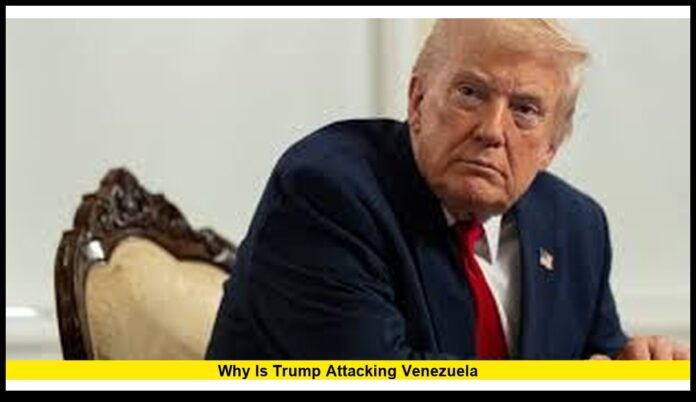

why is trump attacking venezuela has become a question on many minds as a sharp escalation in U.S. pressure against Caracas unfolds. Over the past week, President Donald J. Trump ordered the airspace above and surrounding Venezuela to be considered “closed in its entirety,” igniting a wave of diplomatic fury, airline cancellations, and intensified military posturing across the Caribbean. For U.S. readers, the dramatic turn raises urgent questions: what prompted this move, what are the risks, and how might this affect ordinary people in Venezuela — and global stability.
This article breaks down what has happened so far, why it matters, and what to watch. It uses only confirmed, recent developments and refrains from speculation. Everything here is current as of today.
The Trigger: Airspace Shutdown Order
On November 29, 2025, Trump used his social-media platform to declare that the airspace above and around Venezuela should be treated as fully closed. He addressed his message to “airlines, pilots, drug dealers, and human traffickers,” but offered no formal legal order, timetable, or enforcement mechanism. The declaration appeared to bypass established international norms governing sovereign airspace — a fact many around the world noticed.
The Wave of Immediate Fallout:
- International airlines responded quickly. Many flights to and from Venezuela were suspended or canceled.
- Six major foreign carriers lost their Venezuelan operating rights, after the government in Caracas revoked their permits following suspensions.
- Venezuelan government officials condemned the declaration as a “colonialist threat” to national sovereignty and a violation of international law.
- Uncertainty gripped airports and travel corridors: citizens abroad scrambled to evacuate, migrants feared deportation flights would be canceled, and supply-chain disruptions emerged.
In effect, the airspace order marked a sharp escalation of U.S.–Venezuela tensions — not just in words, but in concrete action affecting travel, commerce, and diplomacy.
Underlying U.S. Strategy: Drugs, Sanctions, and Pressure
Why is this confrontation unfolding now? Multiple overlapping strategies seem to align under the current U.S. administration’s goals:
1. Crackdown on Drug Trafficking Efforts
Since at least September, U.S. forces have conducted repeated strikes on vessels in the Caribbean and eastern Pacific that the U.S. claims were transporting illicit narcotics. Reports indicate well over 80 people have died in these operations. The administration argues it’s targeting drug-trafficking networks tied to Venezuela’s ruling class — efforts it says have contributed significantly to the flow of fentanyl and other narcotics to the United States.
In recent weeks, President Trump has pledged to extend operations beyond sea strikes. He said the U.S. will “very soon” begin targeting suspected traffickers on land. The airspace announcement appears tied to these broader enforcement plans — a prelude to further action intended to disrupt trafficking routes before they reach U.S. shores.
2. Economic Isolation Through Sanctions and Trade Pressure
Earlier in 2025, the administration signed an executive order placing a 25% tariff on all goods imported into the U.S. from countries that purchase Venezuelan oil. This economic pressure aims to reduce revenue streams feeding the Venezuelan government. Combined with threats to its airspace and potential military action, the strategy seeks to squeeze Caracas financially and diplomatically.
By choking access to international flights, disrupting supply chains, and freezing external revenue, the U.S. appears to aim for a form of strategic isolation. In effect, this goes beyond sanctions — it targets the scaffolding that supports both governance and illicit trade inside Venezuela.
3. Political Leverage Over the Maduro Regime
The U.S. government recently designated a major Venezuelan network — widely believed to be connected to the regime — as a foreign terrorist organization. This gives the U.S. broad legal tools to sanction, freeze assets, and target individuals linked to the network. By combining legal designations, economic measures, and now airspace constraints, Washington seems to be building maximum pressure. The implicit goal: to destabilize or significantly constrain the regime’s operations.
The airspace order can be seen as leverage — a show of strength signaling that the U.S. is willing to escalate beyond sanctions and financial measures, potentially paving the way for more direct intervention.
How Venezuela Has Responded — Outrage, Retaliation, and Military Posturing
Venezuela’s response has been swift and staunch:
- The government rejected Trump’s order as a “hostile, unilateral and arbitrary act.” Officials called it a “colonialist threat” and declared they would not submit to foreign directives about their sovereign airspace.
- The civil aviation authority revoked landing and overflight rights of six international airlines. These airlines had suspended service following warnings from U.S. authorities.
- Caracas reaffirmed its sovereignty, denouncing attempts to limit its airspace and calling for support from international partners.
- Meanwhile, internal security measures increased. The military reportedly put certain units on heightened alert, citing potential threats to national security.
This backlash has had direct consequences for Venezuelans: disrupted flights have blocked travel for citizens and migrants, delayed repatriation flights, and complicated delivery of humanitarian aid and supplies during an already difficult economic period.
Military Buildup: What’s Happening Around Venezuela
Reports from 2025 show a major U.S. military deployment across the Caribbean — one of the largest in decades. Key aspects of the buildup:
- The U.S. Navy’s most advanced aircraft carrier joined a strike group in the Caribbean along with multiple warships, a nuclear submarine, and support vessels. F-35 jets and amphibious assault ships reportedly stand ready nearby.
- Since September, at least 21 alleged drug trafficking vessels have been struck — with more than 80 fatalities reported by U.S. authorities. These operations mark a shift from traditional interdiction to active use of force.
- U.S. officials say additional strikes, potentially including land-based operations inside Venezuela, are under consideration — a shift that President Trump explicitly referenced when he told military personnel that land-based operations would “start very soon.”
Some international observers warn that such operations could provoke retaliation or destabilize the region. Venezuelan military analysts say the capacity of Venezuela’s armed forces has eroded over time. Still, militia mobilization and instability remain serious concerns in the event of escalation.
Impact on Civilians: Short-Term Chaos, Long-Term Risk
For ordinary Venezuelans, the recent developments carry heavy consequences:
- Travel restrictions and airline cancellations disrupt family connections, migration pathways, and emergency evacuations. Venezuelans abroad or in transit may now lack safe return routes.
- Supply chain disruptions risk shortages of food, medicine, and essential goods — particularly in remote or rural areas already hard-hit by inflation and economic collapse.
- The revoked airline licenses and canceled international routes limit external trade, investment, and humanitarian aid, intensifying the economic strain on everyday life.
- Heightened military tension could lead to further destabilization, which may amplify internal unrest or migration.
The ripple effects of this pressure campaign stretch beyond political elites — they may reshape social conditions across Venezuela for months or years to come.
Global and Diplomatic Fallout: Allies, Airspace Norms, and International Law
Trump’s unilateral airspace declaration has drawn immediate international attention and criticism. Key points of contention:
- Sovereign Airspace: Declaring another country’s airspace closed without international consensus or UN Security Council mandate challenges norms of national sovereignty and airspace governance.
- Aviation Industry Impact: Many international airlines have already canceled flights or suspended operations to Venezuela. The chaos disrupts global travel routes and threatens to isolate Venezuela further from the international community.
- Regional Stability: Neighboring countries watching the unrest worry about spillover effects — refugee flows, security volatility, and disruption of regional trade.
- Legal and Human Rights Concerns: The use of military force, strikes on vessels, and possible land operations raise serious legal questions under both U.S. and international law. Human rights groups and foreign governments have reportedly expressed alarm, warning against unilateral military interventions.
In short, the move risks diplomatic isolation for the U.S., especially if allies view the airspace announcement as overreach — and it could fracture long-standing norms that underlie global aviation and national sovereignty.
What This Means for U.S. Policy and International Relations
For the United States, the current strategy signals a dramatic shift. Key implications:
- The U.S. appears willing to mix counter-narcotics operations with geopolitical leverage — using drug trafficking concerns to justify deep pressure on Venezuela’s regime.
- Military force, once a contingency option, seems to be becoming central to policy. The buildup around Venezuela, combined with airspace closure and legal designations, suggests readiness for more direct action.
- Diplomacy may be secondary. While U.S. officials have not ruled out talks — and there are reports of possible communication channels with Venezuelan authorities — the overall tone emphasizes confrontation, not negotiation.
- Domestic and global reactions could constrain future U.S. moves. Domestic opposition in Congress, allied concern abroad, and human rights scrutiny may force careful calibration or even reversal if international backlash grows.
This represents one of the most forceful stances by a U.S. administration toward a Latin American government in decades. Its success or failure could reshape U.S.–Latin America relations for years.
Why the Timing Matters: Drugs, Elections, and International Influence
Several contextual factors explain why now:
- Rising drug trafficking to the U.S. — especially opioids and fentanyl — has fueled domestic pressure to act more aggressively against supply networks.
- 2025 is a pivotal year globally: shifts in energy markets, migration crises, and regional instability make Latin America a strategic focus for Washington. Venezuela — rich in oil and natural resources — sits at a geopolitical crossroads.
- Domestically, this pressure campaign plays into a narrative of toughness and national security that the U.S. administration emphasizes. For many voters, decisive action against narcotics trafficking resonates strongly.
- Diplomatic isolation coupled with economic sanctions and militarized pressure offers leverage against Maduro’s regime while signaling to allies and adversaries alike that the U.S. is willing to defend its interests proactively.
In this light, the current escalation becomes not just about drugs — but about influence, power projection, and U.S. foreign policy direction.
Where Things Could Go From Here — What to Monitor Next
As developments unfold, several flashpoints deserve close attention:
- Whether the U.S. moves from maritime strikes to actual land operations inside Venezuela. Any such action would represent a major escalation.
- International reaction: How allies in Europe, Latin America, and beyond respond — whether through sanctions, diplomatic pressure, or calls for restraint.
- Humanitarian distress: If supply chain disruptions deepen, shortages of food or medicine could worsen, fueling refugee flows or internal social unrest.
- Flight and travel impact: Continued cancellation of flights, restrictions on airspace, and visa/travel disruptions will affect both Venezuelans abroad and international travelers.
- Long-term regional ripple effects: Political instability might trigger migrations, cross-border conflicts, and pressure on neighboring countries.
These factors will shape not only Venezuela’s future — but also the broader balance of power in the region.
FAQ
Q: Is the airspace order legally binding on airlines worldwide?
A: No. While the U.S. president called for the airspace to be considered closed, the United States lacks unilateral authority to enforce a global no-fly rule over another sovereign nation. Airlines may avoid the region voluntarily due to safety warnings, but international aviation law requires consent from the country concerned. Venezuela has rejected the U.S. order outright.
Q: Has the U.S. conducted any military strikes inside Venezuelan territory?
A: As of today, all confirmed U.S. actions have targeted vessels in the Caribbean or eastern Pacific alleged to be involved in drug trafficking. The U.S. has not publicly confirmed any strikes inside Venezuela’s territory. However, officials have warned that land-based operations could begin soon.
Q: Could this escalate to a larger U.S.-Venezuela conflict?
A: The risk exists. The combination of airspace closure, naval buildup, threat of land strikes, and legal designations escalates the scope considerably. If diplomacy fails, further military actions — at sea or potentially inland — could provoke retaliation and destabilize the region.
Disclaimer
This article is based solely on verified information available as of the date of publication. Political situations can evolve quickly, and new developments may emerge after this article is posted. The content provided here is for general informational purposes only and should not be interpreted as legal, political, or professional advice. Readers are encouraged to stay informed and follow ongoing updates from credible public sources.