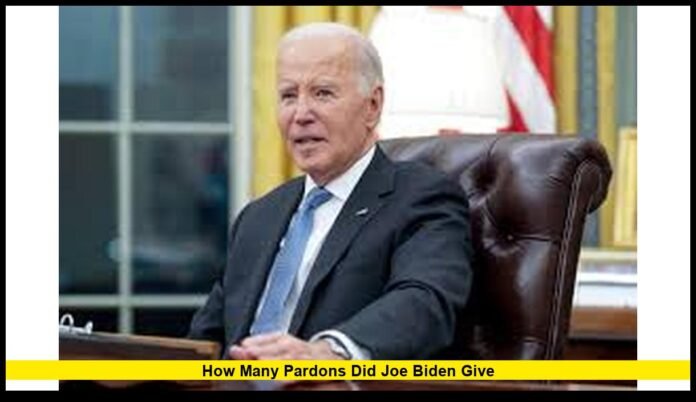

How many pardons did Joe Biden give remains one of the most searched questions as the nation reflects on his presidency and his approach to criminal justice. By the end of his term, Biden issued 80 pardons and thousands of commutations, placing him among the most active presidents in modern history when it comes to reducing federal sentences. Those numbers highlight a presidency sharply focused on sentencing fairness, rehabilitation, and relief for individuals impacted by outdated drug laws.
While the number of pardons was modest compared with some past presidents, Biden’s total volume of clemency actions—driven by large-scale commutations—became a defining part of his criminal-justice legacy. Understanding those actions offers insight into how he used presidential authority, who benefited most, and how his decisions shaped national debate around justice reform.
What a presidential pardon means and why Biden used them carefully
A presidential pardon is one of the strongest tools available to the executive branch. It forgives a federal conviction entirely and restores civil rights often lost because of that conviction. Those rights can include the ability to serve on a jury, apply for certain federal jobs, or hold specific professional licenses. In many cases, a pardon clears obstacles in employment, housing, or travel that have lingered long after a sentence was served.
Biden granted 80 pardons, focusing primarily on people with older, low-level, nonviolent convictions. Many had completed their sentences decades earlier but continued to face challenges tied to their record. The administration framed pardons as a way to remove lingering consequences, especially for individuals who had stable employment, strong community ties, and long histories of rehabilitation.
Rather than issuing broad waves of pardons, Biden applied them selectively. Each case represented a person with a unique story—someone who had demonstrated stability and shown that their past no longer defined their present. This targeted approach explains why the total number remained relatively low compared with the far larger number of commutations.
Why thousands received commutations under Biden’s presidency
Although pardons restore rights, commutations reduce or end an existing sentence without erasing the conviction. Biden relied heavily on commutations, granting them to thousands of individuals, many of whom were serving long sentences for nonviolent drug offenses.
Several key factors shaped this approach:
- Older sentencing laws from past decades imposed lengthy mandatory minimums that many now consider disproportionate.
- Individuals on home confinement during the pandemic demonstrated successful reintegration.
- Rehabilitation records played a major role—strong educational and behavioral progress made many candidates suitable for relief.
- Humanitarian concerns applied to older individuals or those with serious medical needs.
The sheer number of commutations reflected an effort to correct systemic issues in federal sentencing rather than granting relief only one person at a time. Biden’s philosophy centered on the idea that clemency should not be reserved exclusively for rare, symbolic gestures but should also operate as a practical tool for justice.
How Biden’s clemency decisions compare historically
Every president uses the clemency power differently, and Biden’s approach stands out in several ways:
1. High number of commutations
Few modern presidents issued as many sentence reductions. The volume signaled a strong focus on immediate change for people currently incarcerated under harsh sentencing structures.
2. More targeted pardons
While some presidents issued large numbers of pardons, Biden’s number—80—remained modest. These pardons focused on rehabilitation and public reintegration rather than sweeping forgiveness.
3. Large coordinated actions
Biden often issued commutations in large groups, sometimes numbering in the thousands. This differs from administrations that announce clemency more slowly or sporadically.
4. Criminal-justice reform emphasis
His clemency actions aligned closely with national movements calling for fairness, rehabilitation, and reevaluation of older drug policies.
Taken together, the numbers demonstrate a presidency committed to revisiting past sentencing decisions while still maintaining a structured, cautious approach to pardons.
Who benefited most from Biden’s clemency strategy
While each recipient’s story is different, most clemency actions fell into several well-defined categories.
People with nonviolent drug convictions
Many individuals were sentenced under federal drug laws from the 1980s and 1990s that produced severe penalties for offenses that today might yield significantly shorter sentences. Biden’s commutations focused heavily on such cases.
Individuals placed on home confinement
Thousands were moved to home confinement during the pandemic due to emergency authority. Many worked, supported families, and followed all supervision requirements. Biden granted relief to many of these individuals so they would not be required to return to federal prison.
Older or medically vulnerable individuals
Some clemency decisions took into account age, health conditions, or humanitarian considerations, especially in cases involving long sentences.
Individuals with strong rehabilitation records
Education, training, counseling programs, and consistent positive behavior influenced decisions. Many recipients had transformed their lives during incarceration.
These groups reflect a consistent focus on fairness, public safety, and the potential for successful reentry.
Impact on families, communities, and the justice system
The results of Biden’s clemency actions extend far beyond numbers. They affected families, communities, and national conversations.
Family reunification
For siblings, parents, and children, clemency meant restored relationships and stability. Many people returned home after years away, giving families a chance to rebuild their lives together.
Community reintegration
Many who received clemency returned to work, secured stable housing, and engaged in community programs. Their reentry experiences helped support arguments that individuals with strong rehabilitation records pose limited public-safety risk.
Economic and social impact
Individuals who reenter society contribute economically through employment, reduced reliance on public services, and community involvement.
Policy and legal reflection
Biden’s actions prompted broader evaluation of whether older federal sentencing laws continue to serve national goals. Many lawmakers and reform advocates renewed calls for legislative reforms that address sentencing disparities more systematically.
Why Americans are examining Biden’s clemency record now
Public interest in how many pardons Joe Biden gave reflects broader national questions:
- Should clemency play a larger role in reforming outdated sentencing practices?
- How should future presidents balance pardons with commutations?
- What protections should exist for individuals who have already demonstrated rehabilitation?
- Should the federal clemency process be restructured to increase transparency and reduce lengthy backlogs?
Biden’s numbers feed into these conversations, showing how executive action can influence justice reform even without major legislative changes.
What this means for future administrations
The next president inherits a clemency system shaped significantly by Biden’s actions. Several possibilities emerge:
- Future leaders may adopt large-scale commutations as a normal tool for addressing sentencing issues.
- Pardons may be used more sparingly, focusing on symbolic or long-term rehabilitation cases.
- Calls for reform—such as clemency review boards, improved reentry support, or new sentencing laws—may gain momentum.
- Public expectations for clemency may shift, especially among communities impacted by federal drug laws.
Whether future presidents follow Biden’s model or chart a new course remains to be seen, but his numbers ensure the debate continues.
Final Thoughts
Understanding how many pardons Joe Biden gave offers a window into a presidency that used clemency both as a tool for fairness and a statement of national values. With 80 pardons and thousands of commutations, his approach reshaped the federal landscape and placed rehabilitation and justice reform at the center of his criminal-justice agenda.
Share your thoughts below — your voice helps shape the national conversation on clemency, justice, and second chances.