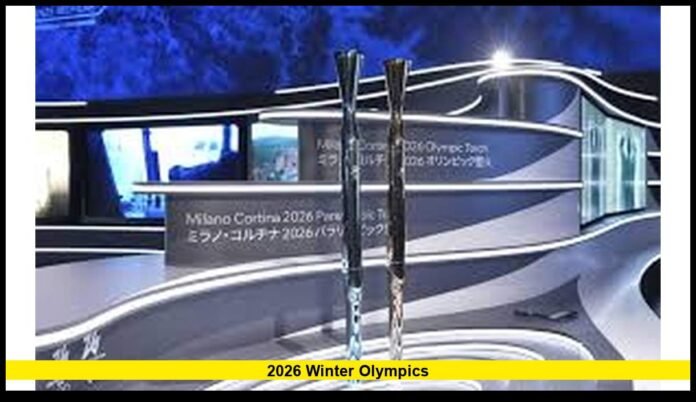

The 2026 Winter Olympics are shaping up to be one of the most ambitious and globally watched Winter Games in decades. With venues stretching across northern Italy and a fresh mix of sports and formats, the event promises a blend of tradition and innovation that should captivate fans around the world.
Where & When — A Unique Host Setup
The Games are taking place from February 6 to February 22, 2026, officially branded as the 2026 Winter Olympics — the XXV Olympic Winter Games. For the first time in Winter Olympics history, the event is formally co-hosted by two primary cities: Milan and Cortina d’Ampezzo. Rather than concentrating the Games in a single metropolitan hub, organizers designed a multi-city model that stretches across northern Italy, creating one of the most geographically expansive Winter Olympics ever staged.
Milan functions as the metropolitan anchor of the Games and the center for indoor, ice-based competition. Events such as figure skating, ice hockey, speed skating, and short-track speed skating are being staged in and around the city’s modernized venues. As Italy’s financial and fashion capital, Milan provides large-scale infrastructure, transportation networks, hospitality capacity, and international connectivity — making it the operational heart of the Games.
In contrast, Cortina d’Ampezzo — set against the dramatic peaks of the Dolomites — serves as the mountain epicenter. Alongside nearby Alpine clusters including Valtellina and Livigno, the region is hosting alpine skiing, ski mountaineering, snowboarding, freestyle skiing, sliding sports such as bobsled, skeleton, and luge, as well as cross-country skiing and Nordic events. Cortina previously hosted the Winter Games in 1956, and its return in 2026 reinforces its legacy as one of Europe’s most iconic winter sport destinations.
This wide geographic footprint reflects a strategic shift in Olympic planning. Instead of constructing an entirely new Olympic city from scratch, organizers opted to leverage existing world-class venues spread across multiple Italian regions. The approach reduces large-scale permanent construction, limits long-term environmental impact, and capitalizes on facilities that already host international competitions. By distributing events between urban and alpine environments, Milano Cortina 2026 blends modern city energy with classic mountain sport tradition — redefining how a Winter Olympics can be organized in the 21st century.
Fresh Disciplines and Format Upgrades
The 2026 Winter Olympics feature one of the most progressive program expansions in recent history. The Games now include 16 disciplines and 116 medal events — the highest medal count ever staged at a Winter Olympics. This expansion reflects the International Olympic Committee’s broader effort to modernize the winter sports landscape while increasing gender balance and competitive diversity.
One of the most anticipated additions is ski mountaineering, officially making its Olympic debut in 2026. The discipline combines endurance-based uphill skiing (using climbing skins), technical transitions, and fast-paced alpine descents. Athletes compete in sprint and mixed-relay formats, delivering short, explosive races that are highly spectator-friendly. Unlike traditional alpine skiing, ski mountaineering emphasizes both vertical ascent and downhill control, bringing a rugged, backcountry element to the Olympic program — particularly fitting for the Alpine terrain surrounding Cortina d’Ampezzo.
Another historic development comes in cross-country skiing. For the first time in Olympic history, men and women are competing over identical distances across all cross-country events. Each gender contests six events, staged at the Nordic venue in Val di Fiemme. Historically, women raced shorter distances than men, but the 2026 reforms eliminate that gap entirely, reinforcing a commitment to equality in format, prestige, and athletic demand.
Several new medal events further expand opportunities across winter disciplines. These include women’s dual moguls, adding head-to-head intensity to freestyle skiing; women’s doubles luge, broadening representation in sliding sports; women’s large-hill ski jump, increasing parity in ski jumping; and mixed-team skeleton, introducing a strategic team format to the sliding program.
Collectively, these updates widen the competitive field while reflecting a modern Olympic vision centered on inclusivity, balance, and innovation. Milano Cortina 2026 blends tradition with forward-looking reforms, delivering a Winter Games program that better represents the evolution of global winter sport.
Torch Relay & Olympic Flame — A Journey Through Culture and History
Long before medals are awarded, the Olympic spirit begins with the ceremonial lighting of the flame — a tradition that connects the modern Winter Games to their ancient origins. For the 2026 Winter Olympics, the torch relay represents both heritage and national celebration, unfolding across two countries in a sweeping symbolic journey.
The Olympic flame is traditionally ignited in Olympia, the birthplace of the ancient Olympic Games. Using a parabolic mirror to harness the sun’s rays, the flame is lit in a ritual ceremony that honors centuries-old Greek customs. From there, it travels across Greece before being officially handed over to the Italian organizing committee — marking the transition from ancient history to contemporary global sport.
Beginning in December and continuing through early February, the flame embarks on a remarkable 12,000-kilometer journey across Italy. The relay passes through all 110 Italian provinces, more than 60 major cities, and hundreds of towns and communities. Along the way, it visits some of the country’s most iconic landmarks, including the Colosseum in Rome and the Grand Canal in Venice. Each stop transforms into a local celebration, blending sport with regional culture, music, and civic pride.
More than 10,000 torchbearers take part in carrying the flame — a diverse group that includes athletes, community leaders, volunteers, and everyday citizens. Their participation symbolizes unity, perseverance, and shared national identity.
The relay culminates at San Siro Stadium in Milan, where the flame arrives just in time for the Opening Ceremony on February 6. The lighting of the Olympic cauldron officially signals the start of the Games, completing what organizers describe as the “Greatest Journey.”
By bridging ancient ritual with modern spectacle, the torch relay binds together history, geography, and human connection — creating a powerful prelude to the Winter Olympics and a moment many fans eagerly anticipate following.
What Athletes and Fans Should Know: Venue & Event Logistics
The 2026 Winter Olympics are uniquely expansive, stretching across multiple regions of northern Italy. Rather than being concentrated in a single host city, events are organized into distinct clusters centered around Milan and Cortina d’Ampezzo, with additional venues in Livigno, Bormio, Val di Fiemme, Valtellina, and surrounding Alpine valleys. This distributed model creates a visually stunning and culturally rich Olympic experience — but it also requires thoughtful planning for athletes, officials, and spectators.
For fans, travel logistics are an important consideration. Moving between ice-based events in Milan and alpine competitions in the Dolomites can involve several hours of travel by train or road, depending on weather and mountain conditions. Visitors planning to attend events in multiple clusters should account for transit times, accommodation availability, and regional transportation schedules. Italy’s rail network and upgraded road infrastructure are central to keeping the Games connected, but distances between venues are greater than in many past Winter Olympics.
Athletes, meanwhile, are housed in different Olympic Village clusters aligned with their competition sites. This structure minimizes daily travel for competitors but reinforces the decentralized nature of the Games. Teams competing in mountain events remain based near their venues, while ice-sport athletes stay closer to Milan’s arena complexes.
A defining feature of Milano Cortina 2026 is its reliance on existing and refurbished facilities rather than large-scale new construction. Many venues have long hosted international competitions and were upgraded specifically for Olympic standards. This approach reduces financial strain and environmental disruption while highlighting authentic Italian settings — from modern urban arenas to historic alpine resorts.
The result is a Winter Olympics that prioritizes regional character over a single mega-complex. Instead of one concentrated Olympic park, the Games unfold across scenic mountain landscapes and vibrant city centers, offering a blend of tradition, sustainability, and local identity that sets 2026 apart from previous
What Makes the 2026 Games Stand Out
Taken together, several features set this edition apart from past Winter Olympics:
- A dual-city hosting model. Having Milan and Cortina d’Ampezzo co-host means mixing urban sophistication with alpine charm — a unique dynamic not seen before at the Winter Games.
- Record number of events with much broader sport variety. With 16 disciplines and 116 medal events, there’s more chance than ever for athletes from diverse backgrounds to shine.
- New sports and updated formats. Ski mountaineering’s debut and equal-distance cross-country skiing reflect a forward-looking Olympic vision. More mixed-gender events and expanded women’s events deepen inclusivity.
- Cultural and geographic immersion. The torch relay, rural valleys, Alpine villages, historic cities and modern arenas make this Games as much about Italy itself as about sport.
For veteran Olympic fans and first-time viewers alike, this could be one of the most memorable Winter Games yet.
What U.S. Fans Should Watch & Do
If you’re following from the United States, here’s what to keep an eye on:
- Monitor which U.S. athletes qualify across the full breadth of sports — from traditional strongholds like alpine skiing and figure skating to newer additions like ski mountaineering.
- Track the torch relay as it winds its way through Italy — a visual spectacle that blends sports with culture, history, and architecture.
- Watch for live coverage and medal sessions across various time zones. Ice events staged in Milan may align more closely with U.S. primetime, while mountain events may air in early morning hours.
- Appreciate the international flair — the Games won’t just celebrate winter sports, but also Italian art, heritage sites, Alps landscapes, and cultural diversity.
We’re gearing up for a Winter Olympic Games that’s as much about Italy’s soul as it is about athletic excellence. Whether you follow for the new sports, the torch relay, or just the competitive thrill — this edition offers something for every fan.
Let me know which event you’re most excited to follow — and stay tuned for more updates!