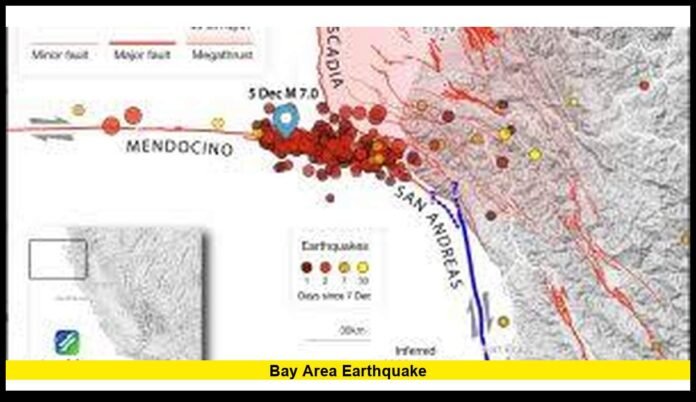

The bay area earthquake that struck early Wednesday morning delivered a sharp reminder of the region’s constant seismic activity. Centered a few miles east of Gilroy, the tremor rippled through communities across Northern California shortly after sunrise. With a magnitude of 4.0 and several smaller aftershocks recorded in the minutes that followed, the event drew widespread attention from residents who felt the quick but noticeable shaking. While no major injuries or significant destruction were reported, the early-morning jolt triggered safety inspections, spurred thousands of resident reports online, and reinforced ongoing conversations about emergency readiness in one of the country’s most earthquake-prone regions.
A Clear Timeline of the Morning Shaking
The morning began like any other for residents preparing for work, school, or holiday travel. That changed around 6:16 a.m., when a sudden jolt rippled through southern Santa Clara County. The main quake lasted only a few seconds, but its sharp motion was strong enough to wake people in Gilroy and Morgan Hill. Many described the shaking as quick and forceful—enough to rattle windows, move overhead lights, and startle pets.
Within a few minutes, smaller aftershocks followed. Though lighter and shorter, they added to the sense of alertness many residents felt as they checked on family members and scanned for any immediate damage around their homes.
These early reports were consistent across the South Bay, where the shaking traveled efficiently through local fault lines. Farther north, from Palo Alto to San Francisco, the motion felt more like a light roll. Some residents didn’t notice it at all, while others said they felt a subtle vibration.
What made this event stand out was the timing—striking just as people were waking up or starting their morning routines—which amplified the attention it received.
The Epicenter and What Made This Quake Noticeable
The quake occurred along one of the Bay Area’s active fault segments. While small and moderate earthquakes occur frequently in California, not all are widely felt. This one was noticeable for several reasons:
- Shallow depth: A shallow earthquake sends stronger motion directly to the surface.
- Location: The epicenter sat between populated communities, increasing the number of households that felt the shaking.
- Quiet recent activity: The region has regular low-magnitude tremors, but few had been strong enough recently to get the public’s attention, making this event feel more significant.
Even at magnitude 4.0, the quake was strong enough to be felt across a wide radius, especially in neighborhoods with softer soil, which can amplify seismic waves.
Community Experiences and Immediate Reactions
As soon as the shaking stopped, residents across the Bay Area took to social platforms to share their experiences. Many said they woke abruptly to the sound of household items rattling. Others reported feeling a single, quick jolt, followed by stillness. In Gilroy and Morgan Hill, the shaking felt strongest, with several residents describing it as enough to briefly shake beds or shift small objects on shelves.
In the South Bay, office workers and commuters paused their routines to check for updates. Several schools confirmed that they felt the tremor but reported no structural issues or disruptions to morning operations.
Emergency dispatch centers received a surge in calls—not for injuries or damage, but from residents seeking confirmation that the shaking they felt was indeed an earthquake. Such spikes in public inquiries are typical during regional tremors, especially when they hit at widely shared times like early morning.
Aftershocks and Ongoing Seismic Activity
Shortly after the initial event, sensors recorded several smaller aftershocks near the same location. These ranged in magnitude but were weaker and shorter than the main tremor. While many residents did not feel these smaller quakes, they were still part of a natural sequence that follows moderate seismic events.
Aftershocks serve as a reminder that initial quakes may be followed by additional movement, though most secondary vibrations diminish in strength. The Bay Area frequently experiences clusters of small earthquakes, and this morning’s activity fits within the region’s long-established seismic pattern.
Impact on Transportation and Daily Routines
Even though the shaking startled thousands, the bay area earthquake caused minimal disruptions to travel or public services. Transit agencies carried out standard inspection procedures, checking tracks, bridges, and tunnels for any signs of stress. These inspections are part of long-standing protocols designed to ensure safe operations following measurable seismic events.
Major freeway corridors remained open. Some motorists who were driving at the time of the quake reported feeling a brief vibration but described it as similar to hitting a rough patch of pavement.
Airports in San Jose, Oakland, and San Francisco continued operating without interruption. No flight delays were attributed to the quake, though staff at each airport checked runways, terminals, and support systems as a precaution.
Businesses in the South Bay opened as scheduled. Some employees noted seeing picture frames slightly askew or a few items knocked over, but damage remained minor and isolated.
Structural and Utility Checks Across the Region
Local agencies performed visual assessments on essential infrastructure. Engineers walked bridges, inspected road surfaces, and reviewed public buildings. These early assessments help ensure that hairline cracks, shifted support components, or loosened tiles are identified quickly.
Utility providers also reviewed reports from customers. A few residents called about brief power flickers, especially in areas closest to the epicenter, but there were no large-scale power outages. Customers were reminded to report any unusual gas smells or visible water leaks—standard guidance after any noticeable tremor.
Homeowners took their own steps as well. Many checked attics, garages, and crawl spaces for signs of movement. Others evaluated tall furniture or items that might topple in future shaking. Small preventive measures like anchoring bookshelves or securing wall hangings received renewed attention in the aftermath of the event.
Why the Bay Area Experiences Frequent Quakes
California sits atop a complex and active network of faults, and the Bay Area is one of the most studied seismic regions in the world. Quakes of this magnitude occur regularly as tectonic plates shift and release built-up stress.
The South Bay, in particular, lies near faults known for producing frequent, small-to-moderate earthquakes. These events can relieve pressure in certain segments but also highlight the long-term need for preparedness in surrounding communities.
The region’s geology—including sediment basins, fractured bedrock, and varying soil types—affects how different neighborhoods feel the same earthquake. This explains why some areas felt sharp jolts while others experienced only a faint vibration.
What This Event Means for Preparedness
While the mid-week earthquake caused limited disruption, it acted as a strong reminder of the importance of earthquake readiness. Preparedness measures do not require major investments. Many involve simple steps that households can take today:
- Keep shoes, flashlights, and batteries near beds.
- Store a three-day supply of non-perishable food and water.
- Secure heavy furniture to walls.
- Create a communication plan with family members.
- Identify safe spots in each room: under sturdy tables or against interior walls.
- Know how to shut off gas and water at home if needed.
Schools and workplaces often conduct annual drills, but after a widely felt earthquake, many organizations review their emergency plans to ensure they are up to date.
Local Government and Agency Messaging
Following the morning’s shaking, city and county officials encouraged residents to remain aware of updates throughout the day. Emergency communication alerts were active, and public agencies reminded people that minor aftershocks could continue for hours or days.
Government offices also used the opportunity to highlight existing resources, such as emergency kits, safety checklists, and regional alert systems. Many residents took advantage of these reminders, signing up for notifications or reviewing their family’s emergency supplies.
Agencies emphasized that staying informed and prepared is the most effective way to handle future earthquakes—regardless of size.
Community Conversation and Public Response
Across the Bay Area, the earthquake became a topic of conversation in workplaces, classrooms, and community centers. People compared their experiences—who felt it strongly, who slept through it, and how pets reacted. The shared moment offered both a brief sense of unease and a renewed appreciation for the need to stay ready.
Many residents described the quake as a “wake-up call,” not because of severe damage, but because it reminded them that a moderate tremor can strike at any time. Conversations about emergency kits, evacuation plans, and home safety resurfaced across households.
These community responses play an important role in overall readiness. When people talk openly about preparation, neighborhoods become more resilient.
Why This Morning’s Quake Matters
Although the main tremor was moderate, it demonstrated once again how interconnected the region is when it comes to seismic activity. A quake centered near Gilroy can be felt in San Jose, Palo Alto, and even parts of San Francisco—all within seconds.
This interconnectedness highlights the need for ongoing investment in infrastructure, community awareness, and updated building standards. As cities grow and populations rise, these measures ensure that the region remains safe and adaptable during seismic events.
The bay area earthquake also reinforced the value of modern alert systems, which continue to improve response times and give residents critical seconds to brace, take cover, or pause hazardous activities.
What to Expect Moving Forward
Experts anticipate small aftershocks in the coming days, though these are expected to be weaker. Residents should continue to report any structural issues they observe and update their personal safety plans if needed.
Public agencies will continue monitoring seismic activity and sharing updates when necessary. For now, routine activity has returned across the region, but the conversation around preparedness remains active and relevant.
If you felt the shaking, share your experience below and let others know how your community responded—your voice helps keep the region informed and connected.