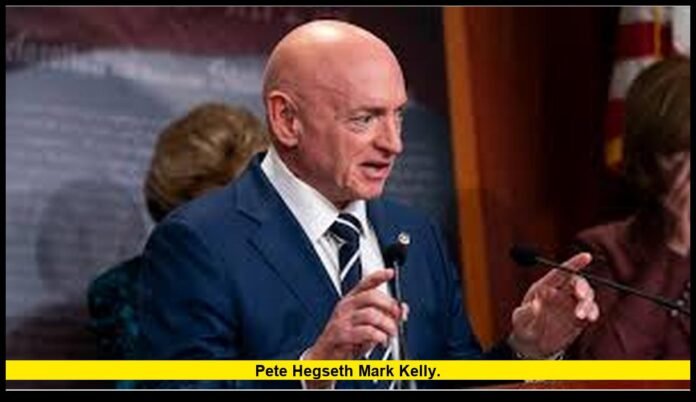

The pete hegseth mark kelly conflict has escalated into one of the most widely discussed political and military stories of the season, drawing national attention as the Pentagon continues its review involving Senator Mark Kelly. The ongoing dispute has brought sharp commentary from Defense Secretary Pete Hegseth, direct rebuttals from Kelly, and fierce debate across political circles. As new developments unfold, Americans are closely watching how this clash may influence military standards, political norms, and the relationship between civilian leaders and retired officers.
This detailed report explores every major update surrounding this situation—from the origins of the dispute to the legal questions now being examined—based entirely on verified information available as of today.
How the Dispute Began
The public clash began when Senator Mark Kelly appeared in a video urging military members to refuse unlawful orders. Kelly is a retired Navy captain, and although he now serves in the U.S. Senate, he remains subject to military regulations applicable to retired officers. After the video circulated widely, Defense Department officials stated they had received concerns and initiated a formal review into Kelly’s actions.
The review comes at a moment of heightened national sensitivity around civil-military relations, and the involvement of a cabinet-level official like Pete Hegseth immediately elevated the matter into a spotlight story.
Hegseth’s Sharp Reaction and Public Messaging
Pete Hegseth responded quickly and forcefully. As Defense Secretary, his position gives additional weight to his statements, and his criticism of Kelly was direct. He argued that the video had the potential to sow confusion within military ranks by suggesting service members might face imminent unlawful orders. Hegseth said the message risked undermining confidence in the chain of command, which he views as essential to maintaining discipline and readiness.
In addition to rejecting the message itself, Hegseth used public appearances and official press interactions to question Kelly’s professionalism. At one point, he highlighted an image of Kelly in uniform and criticized how his medals were displayed, suggesting the arrangement was incorrect. Although some viewed that comparison as a minor issue, others saw it as part of a broader attempt to challenge Kelly’s credibility and military judgment.
Hegseth’s approach quickly became a political flashpoint, and the dispute expanded beyond the original video into a national conversation about military expectations and political speech.
Kelly Stands Firm and Addresses the Accusations
Mark Kelly responded with clarity and defiance. He said he would not be intimidated by political attacks and emphasized that his message about refusing unlawful orders was grounded in basic military principles taught throughout his own service. He reiterated that service members take an oath to the Constitution, not to any individual officeholder, and that refusing an unlawful order is not only a right but an obligation.
Kelly also addressed public reactions to the Pentagon’s review, saying he had dedicated his life to the country through both military service and public office, and that he would continue speaking out in defense of constitutional norms. He firmly rejected accusations that he was attempting to influence troops for political purposes and insisted his comments were rooted in longstanding military ethics.
Why the Pentagon Review Matters
The review underway is unusual and carries implications that extend far beyond the two men involved. Because Kelly is a retired Navy captain, regulations allow the Defense Department to consider whether he remains bound to certain military codes of conduct. Under specific statutes, retired officers can be recalled to active duty under certain circumstances to face military proceedings.
This possibility immediately drew attention from legal observers. Recall actions have been extremely rare in modern times, and the idea of recalling a sitting senator is largely unprecedented. The Pentagon review will determine whether Kelly’s actions meet the threshold for any form of administrative or disciplinary process.
While the review does not automatically imply wrongdoing, it signals the seriousness of the concerns raised within the Defense Department. The outcome—whether administrative action, no action, or a more formal proceeding—could reshape how future cases involving retired officers in public life are handled.
Political Reactions Across the Spectrum
The pete hegseth mark kelly situation quickly grew beyond a simple dispute. Political leaders and commentators across the country voiced their opinions about the implications of both the video and the Pentagon’s response.
Several Republican lawmakers aligned themselves with Hegseth, arguing that his strong stance was necessary to safeguard military cohesion. They suggested that Kelly’s messaging, whatever its intent, was dangerous because it encouraged debate among active-duty members about hypothetical scenarios instead of reinforcing trust in leadership.
On the other hand, many Democrats defended Kelly, calling the Pentagon review politically motivated and expressing concern that the process could be used to silence or intimidate elected officials who previously served in uniform. They argued that Kelly’s message was consistent with military law and that his critics were overstating the video’s implications.
Public opinion has been mixed as well, with discussions arising on social media, news platforms, and talk forums. Supporters of Kelly note his decorated military background and view his comments as straightforward guidance. Supporters of Hegseth emphasize the importance of protecting military discipline and preventing political messages from entering the ranks.
Constitutional and Military Law Questions
The confrontation has revived larger questions about the boundaries between military discipline and political expression. Legal experts have noted that the case raises several important considerations:
- Can a retired officer serving in an elected office still face military disciplinary action?
- How should the military treat speech from retired officers who now hold political influence?
- Does recalling a senator to face military proceedings create constitutional conflicts?
- What precedent could this set for future retired officers in public positions?
These questions go beyond Kelly and Hegseth and speak to broader institutional norms. The Pentagon review may provide clarity, or it may create an even more complex debate depending on its outcome.
The Timeline: What Comes Next
Because the Pentagon has not provided a strict public deadline for the review, the next steps remain open. However, based on typical processes, several developments are expected:
- Completion of the factual review
Investigators will gather statements, review the video, and examine whether the conduct meets thresholds for action. - Decision on whether further steps are warranted
If a violation is found, officials will evaluate whether administrative action or recall for more formal proceedings should be recommended. - Public response from Kelly and Hegseth
Both are likely to continue addressing the situation directly, as each sees larger issues at stake. - Possible congressional involvement
Lawmakers may seek hearings or public briefings if the situation leads to more intense disputes. - Public reaction
As updates emerge, the conflict will likely continue shaping discussions about military leadership and political speech.
Because the process involves a sitting senator, observers anticipate that any action will receive widespread attention.
Impact on Civil-Military Relations
Beyond individual personalities, the pete hegseth mark kelly situation highlights an ongoing national tension: the need to balance military professionalism with the rights of public figures who previously served in uniform. In modern politics, many leaders come from military backgrounds, and the intersection of military ethics with political messaging has grown increasingly complex.
This dispute underscores how quickly military issues can become politicized and how sensitive institutions remain to questions about the chain of command, discipline, and political influence. The handling of this case could shape expectations for future leaders who transition from military service to public office.
Final Thoughts
The conflict between Pete Hegseth and Mark Kelly continues to unfold with significant legal, political, and institutional implications. With the Pentagon actively reviewing Kelly’s actions and both men openly defending their positions, the country is watching closely for the next major update.
As this story develops, feel free to share your thoughts on where this dispute is headed and what it might mean for civil-military relations in the months ahead.