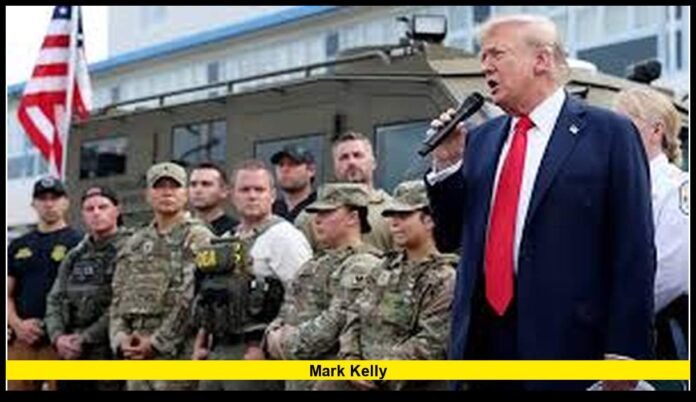

Senator Mark Kelly is at the center of intense scrutiny after a video surfaced in which he and other lawmakers addressed U.S. service members about refusing orders that may be illegal. The Pentagon has now opened an unprecedented investigation into Kelly’s involvement, setting off a multi-layered debate about retired military officers in Congress, the nature of lawful orders, and the boundaries of civil-military discourse.
Background & Military Credentials
Mark Kelly served in the U.S. Navy as a fighter pilot before becoming an astronaut. After retiring at the rank of Captain, he entered politics and currently serves as a U.S. Senator. His military experience gives weight to his remarks about service-member obligations.
Because of his background, Kelly’s transition from uniform to elected office helps frame why the Pentagon’s review is so remarkable. A retired officer turned senator is rarely subject to this sort of defense-department investigation.
The Video and What It Said
- A short video released last week featured Kelly alongside other former military or intelligence officials-turned-lawmakers.
- In it, they directly addressed U.S. military and intelligence personnel, reminding them that they have a duty to uphold the Constitution and that service members may refuse orders that are clearly unlawful.
- They did not identify specific orders or actions alleged to be illegal but spoke generally about constitutional duty and rights.
- The video message spread rapidly via social media and was framed by its authors as an ethical reminder rather than a call to insubordination.
Why the Pentagon Responded
The Department of Defense (DoD) stepped in because it interpreted the message as potentially affecting “loyalty, morale or good order and discipline of the armed forces.” According to the DoD’s statement:
- The video raised questions about whether Kelly’s and the others’ remarks crossed a line from protected speech into unlawful advocacy.
- Federal statute allows the defense secretary to recall retired service members for investigation or court-martial if their conduct undercuts military discipline.
- The decision to open a formal review of Kelly is rare, particularly given his current role in Congress rather than active duty.
Legal and Constitutional Stakes
Retired Military Status
Even though Kelly is no longer on active duty, retirees remain subject to certain military laws and can be recalled if the secretary of defense deems the cause serious.
Lawful vs. Unlawful Orders
Service members are trained that they must refuse orders that are manifestly illegal. But a key point is that many orders are presumed lawful unless proven otherwise. The video’s general nature (no specific orders cited) raises complex questions about how its message intersects with the concept of obeying lawful command.
Civil-Military Relations
When elected officials who served in the military speak directly to the force and suggest refusal of orders, it treads into sensitive territory. The military’s institutional neutrality relies on clear civilian leadership and unambiguous chain of command. Kelly’s remarks test the boundaries of that relationship.
Political Fallout and Reactions
The fallout has been swift and polarizing.
- Prominent political figures and commentators accused Kelly and the co-speakers of encouraging insubordination.
- Former President Donald Trump called the message “seditious behavior” and said it was “punishable by death,” escalating demands for disciplinary or legislative action.
- Kelly and the others defended their remarks, saying the intent was to remind troops of their constitutional duties and not to undermine command structures.
Veterans organizations and legal experts have weighed in with varying views. Some say the message was a valid reaffirmation of duty; others warn it risks injecting political messaging into military operations.
What the Investigation Could Mean
Depending on findings, several outcomes are possible:
| Scenario | Likelihood | Impact |
|---|---|---|
| No action | Moderate | Would signal that the message, though controversial, fell within protected speech. |
| Administrative reprimand | Low-Moderate | Would serve as a warning to retired officers about political speech aimed at the military. |
| Recall to active duty / court-martial | Rare but now possible | Would dramatically escalate the stakes and set a strong precedent. |
| Legislative changes | Possible | Could result in tighter rules around retired officers entering politics or addressing troops. |
For Kelly personally the recall-to-duty scenario would be extraordinary and would carry major political implications. However, the very existence of the review marks a significant moment.
Why This Matters for the U.S. Military and Public
- Military Discipline and Readiness
Messages to troops carry weight. If service members receive what they perceive as contradictory signals about orders and legality, that can introduce uncertainty into an institution that relies on clear direction. - Role of Retired Officers in Politics
Kelly’s case spotlights how retired military leaders transition into civilian roles and how their past service may still carry legal and symbolic responsibilities. - Free Speech vs. Institutional Boundaries
The balance between elected officials speaking freely and maintaining the military’s apolitical status is delicate. This situation forces a re-examination of where that line lies. - Public Trust and Civilian Oversight
When the military’s impartiality and chain of command are questioned publicly, it can affect public confidence in both the armed forces and civilian leadership.
Kelly’s Position & Public Messaging
Kelly has stated that his remarks were part of a broader conversation about service members’ constitutional responsibilities. He emphasized that:
- The video did not single out specific illegal orders or claim they currently exist—rather, it reminded troops of core principles.
- His message was based on his own service and belief in protecting the oaths taken by military members.
Despite the investigation, Kelly has stood by the message and defended his right to speak as a veteran and lawmaker. His offices describe the investigation as politically charged and argue that the focus should be on constitutional duty rather than partisan optics.
What to Watch Moving Forward
- Investigation Timeline: The Pentagon has not announced when the review will conclude. Allies of Kelly and defense-department watchers expect substantive updates in the coming weeks.
- Possible Legal Ramifications: If the review finds the conduct meets the threshold for recall or discipline, it could open the door to court-martial or administrative action decades after Kelly’s retirement.
- Congressional Response: Capitol Hill is already discussing possible legislation to clarify the rights and limits of retired service members who hold political office.
- Operational Impact: While no direct impact on missions is reported, the broader debate could influence how officers and enlisted members interpret guidance about orders and oversight.
Contextual Notes That Heighten the Stakes
- This moment comes amid heightened political polarization and concern about civil-military lines being blurred.
- The absence of any specific illegal order cited in the video complicates the legal narrative and leaves more to interpretation than fact.
- The reaction from the military leadership underscores the seriousness with which these kinds of public statements are treated—even when voiced by respected veterans turned lawmakers.
In the weeks ahead the investigation into Senator Mark Kelly will serve as a test case for how the U.S. handles messaging to its armed forces, the role of veterans in public life, and the boundaries of lawful speech.
We’d love to hear your take — leave a comment below and stay tuned for further developments.