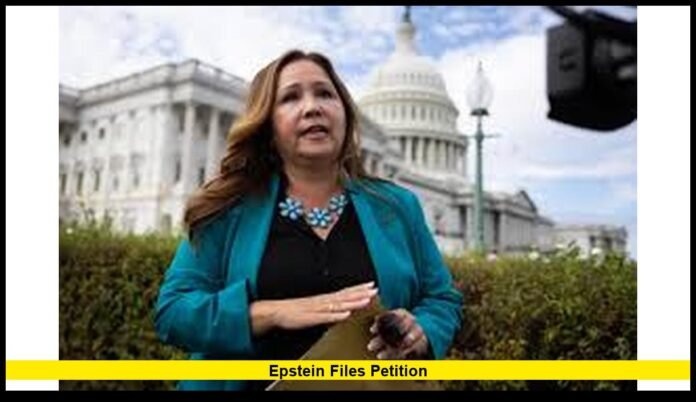

The Epstein files petition is getting its 218th signature, marking a historic moment in the ongoing push within Congress to release long-withheld documents related to Jeffrey Epstein’s criminal network. This milestone represents a turning point for lawmakers who have fought for months to bring transparency to one of the most controversial cases in modern U.S. history.
What the Petition Means
A discharge petition in the U.S. House of Representatives allows members to force a vote on a bill, even when House leadership resists. Once the petition gains 218 signatures — a majority of all House members — it guarantees that the measure will be brought to the floor for a vote.
In this case, the Epstein files petition seeks to compel the Department of Justice and related federal agencies to release extensive records connected to Jeffrey Epstein’s criminal activities, associates, and investigations. These files are believed to contain critical details about Epstein’s financial dealings, his social network, and the extent of his illegal operations.
The 218th signature — provided by newly elected Arizona Congresswoman Adelita Grijalva — marks the moment the petition officially crossed the threshold, despite procedural delays that temporarily stalled her swearing-in. With her signature secured, the petition is now set to move forward to the next phase in the House.
Key Figures Behind the Effort
The bipartisan push for this petition has been led by Representative Thomas Massie (R-Ky.) and Representative Ro Khanna (D-Calif.). Both lawmakers have emphasized that the American public deserves full transparency regarding Epstein’s connections, and that releasing the documents will help restore public confidence in government accountability.
Grijalva’s decision to become the decisive 218th signer drew national attention, as it symbolized the unity of lawmakers across political lines demanding disclosure. Despite procedural hurdles — including delays from House Speaker Mike Johnson during an ongoing government funding standoff — the petition ultimately achieved its goal.
Timeline of the Epstein Files Petition
- September 2025: The House Oversight Committee released over 30,000 pages of documents from the Department of Justice related to Epstein’s activities.
- Late September 2025: Momentum built in the House as the discharge petition approached 200 signatures, gaining traction among both Republican and Democratic members.
- October 2025: Grijalva won her special election but could not immediately sign the petition due to congressional procedural delays.
- November 2025: As of mid-November, the Epstein files petition reached its 218th signature, signaling that a House vote on the release of Epstein records is now inevitable.
What Happens Next
After the petition secures 218 signatures, several key steps follow:
- Ripening Period: A waiting period of seven legislative days must pass before the petition can be formally brought to the House floor.
- Scheduling the Vote: The Speaker of the House must schedule a floor vote within two legislative days after the ripening period ends.
- Vote and Next Steps: If the bill passes the House, it will move to the Senate for consideration and then to the President’s desk for potential approval.
While the process can still face political roadblocks, this petition’s progress reflects strong bipartisan demand for accountability and transparency.
Why the Petition Matters
The Epstein files petition has become a symbol of governmental transparency and justice for victims of Epstein’s crimes. For survivors and their families, this step represents a long-awaited opportunity to uncover details that may explain how such an extensive network operated with apparent impunity for so long.
Key reasons the petition is significant include:
- Justice for Victims: Advocates say the release of these files could reveal more about who enabled or benefited from Epstein’s crimes.
- Public Transparency: Many Americans have demanded access to unredacted documents to understand the scope of Epstein’s connections to influential figures.
- Political Accountability: The petition demonstrates that lawmakers are willing to challenge leadership and institutional resistance in pursuit of truth.
Beyond the legal aspects, the issue carries deep cultural and political implications, exposing how power and privilege can shield wrongdoing — and how bipartisan efforts can sometimes overcome that barrier.
Controversy and Criticism
Despite its growing support, the Epstein files petition has not been without criticism. Some lawmakers argue that a full release of documents could compromise the privacy of victims or interfere with ongoing investigations. Others contend that redacted releases — not full disclosure — would be more appropriate to protect sensitive information.
House leadership has also expressed concern that the petition duplicates existing oversight work already being handled by committees. However, backers of the petition counter that those committees have been too slow and too selective in releasing information, making a forced floor vote the only path forward.
Another source of tension has been the delay surrounding Adelita Grijalva’s swearing-in. Some critics have accused leadership of intentionally postponing her certification to delay the petition’s success. Regardless of the political maneuvering, her addition officially brings the total to 218, ending months of speculation.
The Broader Impact
The Epstein files petition underscores a broader national debate about transparency in government, especially in cases involving high-profile figures and criminal misconduct. Many Americans believe the Epstein investigation remains one of the most incomplete and secretive cases in modern justice history.
By pushing the petition forward, lawmakers hope to restore some trust in the government’s willingness to reveal uncomfortable truths — even when those truths implicate the powerful.
This petition may also set a precedent for future cases involving classified or sealed investigations. The fact that members of Congress are using a discharge petition — one of the most rarely used tools in the legislative process — reflects how extraordinary the Epstein case remains.
What to Watch Going Forward
Several key events are expected in the coming weeks:
- The formal certification of the 218th signature and publication of the petition’s final version.
- Scheduling of the official floor vote, potentially in early December.
- Possible responses from the Senate and the Department of Justice once the House acts.
- Any additional document releases from the Oversight Committee in anticipation of the vote.
As developments unfold, both the public and media will closely watch how quickly leadership moves to act — and whether transparency truly follows the petition’s success.
The Epstein files petition reaching its 218th signature is more than a procedural victory. It is a test of how much truth Congress is willing to expose about one of America’s darkest criminal networks. Whether this milestone leads to full disclosure or renewed political battles, the nation is watching closely.
Stay tuned for updates and share your thoughts below — your voice matters in this historic moment.