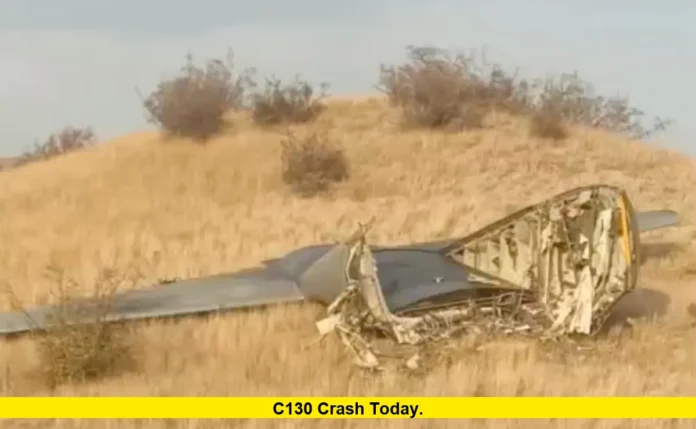

In a devastating incident, a C130 crash today has claimed multiple lives after a Turkish military cargo plane went down near the Azerbaijan-Georgia border. The crash occurred on November 11, 2025, when the aircraft, carrying 20 personnel, lost contact with radar while en route from Azerbaijan to Turkey. The tragedy has prompted immediate response efforts from both Turkish and Georgian authorities as investigations begin into what caused the fatal accident.
Latest Developments
Early reports confirm that the C130 Hercules transport aircraft, operated by the Turkish Air Force, departed from Ganja International Airport in Azerbaijan and was bound for a Turkish military base when it disappeared from radar shortly after entering Georgian airspace. The crash site was later located in the Kakheti region of Georgia, near the municipality of Sighnaghi, a few miles from the Azerbaijan-Georgia border.
Eyewitnesses in nearby villages described hearing a loud explosion followed by visible smoke rising from the mountainside. Videos circulating online appeared to show the aircraft spiraling downward before impact, suggesting a possible in-flight structural failure.
Emergency teams from both nations arrived at the crash site within hours. The Georgian Interior Ministry confirmed that joint search and rescue operations are underway. So far, the full extent of casualties has not been officially released, but initial reports indicate no survivors have been located.
Details About the Aircraft
The downed plane is identified as a Lockheed C-130 Hercules, one of the most widely used military transport aircraft worldwide. Known for its reliability and long service history, the C130 has been in use for decades by air forces around the world, including NATO members.
The aircraft involved in today’s crash had reportedly been part of Turkey’s transport fleet for several years and was used for military logistics and humanitarian missions. Aviation experts note that while the C130 model is robust, the age and operational conditions of older aircraft can pose maintenance challenges.
What Happened Before the Crash
Preliminary flight data suggests the C130 took off from Ganja around mid-morning local time, maintaining normal communication until entering Georgian airspace. Within minutes, the aircraft reportedly lost altitude abruptly before disappearing from radar screens.
Local residents described seeing the plane trailing smoke before it broke apart mid-air, followed by a large explosion upon impact. Rescue teams were dispatched immediately after Georgian authorities confirmed a possible crash in the region.
Officials have emphasized that no distress call was received before the incident, which makes the cause even more puzzling.
Response from Authorities
The Turkish Ministry of National Defense confirmed the loss of contact with the aircraft and later verified the crash location. A statement expressed deep sorrow, referring to the victims as “martyrs” and offering condolences to their families.
Turkish President Recep Tayyip Erdoğan also issued a public message, mourning the loss of the military personnel and assuring that all necessary measures will be taken to uncover the cause of the tragedy. The Georgian government has pledged full cooperation with Turkish authorities, deploying additional personnel to assist in the ongoing investigation and recovery operation.
Rescue teams, supported by drones and helicopters, are currently searching the difficult mountainous terrain to recover remains and flight recorders. Both governments are coordinating closely to handle the aftermath and repatriation process.
Possible Causes Under Review
Investigators have not yet determined the official cause of the crash, but several possible factors are being examined, including:
- Mechanical failure: Early video footage appears to show the aircraft losing structural integrity mid-air, possibly indicating a major mechanical malfunction.
- Weather conditions: Authorities are assessing whether weather played any role, although skies were reportedly clear during the flight.
- Human error or fatigue: Routine checks of flight logs and crew history are underway to rule out pilot-related issues.
- Aircraft age: The C130 model in question has served for several decades, raising questions about maintenance schedules and part fatigue.
Experts note that while the C130 Hercules is a highly durable aircraft, older fleets require meticulous upkeep. A full technical investigation will be conducted, including the recovery and analysis of the plane’s black boxes.
Global Reactions
News of the crash has drawn condolences from across the world, especially from NATO allies and regional partners. The U.S. Department of Defense extended its sympathy to the Turkish military, acknowledging the C130 as a long-serving symbol of allied cooperation.
Aviation and defense analysts have emphasized that this tragedy underscores the continuing need for fleet modernization among allied nations that operate older transport aircraft. The Turkish Air Force, which has recently been upgrading parts of its fleet, may now accelerate efforts to replace or overhaul its remaining C130 units.
Timeline of Events
| Time (Local) | Event |
|---|---|
| 10:15 AM | C130 departs Ganja International Airport, Azerbaijan |
| 10:40 AM | Enters Georgian airspace |
| 10:45 AM | Radar contact lost near Sighnaghi region |
| 11:10 AM | Residents report explosion and smoke |
| 12:00 PM | Rescue teams reach crash site |
| 3:00 PM | Turkish Ministry confirms crash |
| Evening | Search and recovery operation continues overnight |
Investigation and Next Steps
Both Turkish and Georgian authorities have launched a joint investigation into the C130 crash. Specialists from the Turkish Air Force and the Directorate General of Civil Aviation are on-site to examine debris, review flight logs, and recover the aircraft’s black boxes.
Initial findings will likely take several days, but early technical reports are expected to focus on possible structural or engine-related issues. A full investigation report will be shared publicly once confirmed by both nations’ aviation boards.
Military aviation safety analysts believe that lessons from this tragedy could lead to new maintenance checks and procedural reforms within regional air forces that rely on older aircraft models.
A Nation in Mourning
Flags across Turkish military installations have been lowered to half-staff in honor of the fallen personnel. The Turkish public has expressed overwhelming grief and solidarity on social media, with tributes pouring in from citizens, veterans, and government officials.
Funeral arrangements are expected once identification and repatriation processes are completed. The Turkish Air Force has also announced plans for an internal memorial ceremony to honor the victims.
Final Thoughts
The C130 crash today near the Azerbaijan-Georgia border stands as a heartbreaking reminder of the risks faced by service members in military aviation. As investigations continue, both nations remain united in their efforts to uncover the truth and prevent future tragedies of this scale.
Our thoughts are with the families and all those affected — share your views and stay updated as this story develops.