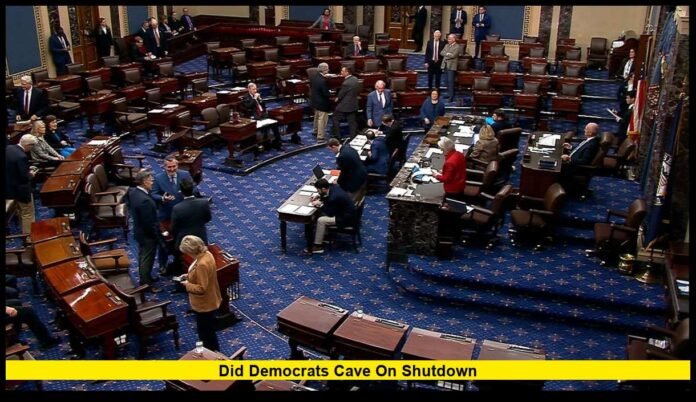

The question “did Democrats cave on shutdown” is at the center of national debate following the Senate’s key vote to advance a temporary government funding bill. On November 9, 2025, the U.S. Senate voted 60–40 to move forward with legislation that could finally reopen the government after more than 40 days of shutdown. The move came after eight Senate Democrats broke ranks and joined Republicans, prompting accusations that the party had surrendered its leverage in ongoing budget negotiations.
The Senate Vote and What It Means
The Senate’s 60–40 vote on November 9 was a major turning point. The continuing resolution, set to fund the government through January 30, 2026, also included three full-year appropriations bills. However, it left out a key Democratic demand: an immediate extension of the Affordable Care Act (ACA) subsidies that help millions of Americans afford health insurance.
Democrats had initially refused to pass any temporary measure that didn’t include the subsidy extensions. But after weeks of a prolonged shutdown, rising political pressure, and mounting public frustration, eight moderate Democrats sided with Republicans to move the bill forward.
While the resolution could restore government operations and paychecks for federal workers, it also left Democrats without a firm commitment on health care funding — a core issue they had vowed to defend.
Did Democrats Cave on Shutdown?
To answer the question directly — yes, Democrats appear to have caved on their key demand, though the decision came with complex motivations.
1. Yielding Political Leverage
Democrats entered the shutdown determined to secure health subsidy extensions within the initial funding package. Their decision to pass a clean resolution without that provision effectively gave up their strongest bargaining chip. By separating the ACA vote from the immediate funding bill, they accepted a promise of a later debate rather than a guaranteed policy win.
2. Internal Party Frustration
The vote has caused deep fractures within the Democratic Party. Progressive members criticized their colleagues for what they called a “surrender,” while moderates defended the move as a “practical compromise.” The tension reflects a broader divide between those who want to prioritize policy principles and those who focus on immediate governance stability.
3. Political Pressure and Public Fatigue
After six weeks of a partial government shutdown, public patience had worn thin. Thousands of federal employees were furloughed or working without pay, and essential programs like food assistance faced delays. The mounting social and economic impact created immense pressure on both parties to act. For Democrats, that pressure became politically unsustainable — especially with voters blaming both sides.
4. Reframing the Narrative
Democratic leaders argue they did not “cave,” but instead chose a strategic step to reopen the government while continuing to fight for health subsidies in a separate December vote. Supporters of this view say the party avoided deeper harm to federal workers and maintained the moral high ground by putting governance first.
Timeline of Key Events
| Date | Event |
|---|---|
| October 1, 2025 | Government shutdown begins after Congress fails to pass funding legislation. |
| October 15, 2025 | Democratic leaders demand ACA subsidy extensions as part of any deal. |
| Early November 2025 | Moderate Democrats signal willingness to accept a temporary resolution. |
| November 9, 2025 | Senate passes a 60–40 procedural vote with eight Democrats joining Republicans. |
| November 10, 2025 | Debate erupts within the party; shutdown expected to end once the bill is signed. |
Why This Vote Matters
1. Economic Impact
The 40-day shutdown has already slowed economic growth, disrupted services, and delayed payments for millions of Americans. Ending it could stabilize markets and restore public confidence, but the long-term effects will linger.
2. Political Implications
The perception that Democrats caved on shutdown negotiations could shape voter sentiment heading into the 2026 midterms. The party risks alienating progressive voters who expected stronger resistance, even as moderates argue they prevented further economic harm.
3. Legislative Precedent
This episode may redefine how Democrats use their leverage in future budget fights. Once a party yields on a major demand, it often weakens its bargaining power in future negotiations. The outcome could influence how leaders handle issues like climate funding, border policy, and tax reform in the months ahead.
Reaction from Across the Political Spectrum
- Progressive Wing: Furious. Many view the vote as a betrayal of Democratic promises and an unnecessary capitulation to Republican pressure. They argue that without securing health subsidies now, Democrats gave up leverage they might never regain.
- Moderates and Centrists: Relieved. They see the vote as a pragmatic move to restore government services and focus on future battles once the shutdown ends.
- Republicans: Triumphant. GOP leaders framed the outcome as proof that their strategy worked — that Democrats would eventually buckle under public pressure.
- Public Response: Mixed. While many Americans are eager to see the shutdown end, some blame both parties for allowing political brinkmanship to harm everyday citizens.
Looking Ahead
Several questions remain unresolved:
- Will the funding bill pass final Senate approval and reach the President’s desk this week?
- Can Democrats successfully push for ACA subsidy extensions in December, or will the issue fade from priority lists?
- Will the internal rift between progressives and moderates widen before the 2026 midterms?
What’s clear is that the decision has redefined Democratic strategy. Ending the shutdown without winning key policy concessions may bring short-term stability — but it also sparks long-term questions about the party’s negotiating strength and leadership direction.
Conclusion
The answer to “did Democrats cave on shutdown” depends on perspective. From a policy standpoint, they yielded on their primary demand for ACA subsidies. From a governance standpoint, they prioritized reopening the government and restoring stability. Either way, the decision reshaped Washington’s political balance — and it will influence how both parties approach future negotiations.
The shutdown may be nearing its end, but the political fallout for Democrats is only beginning.