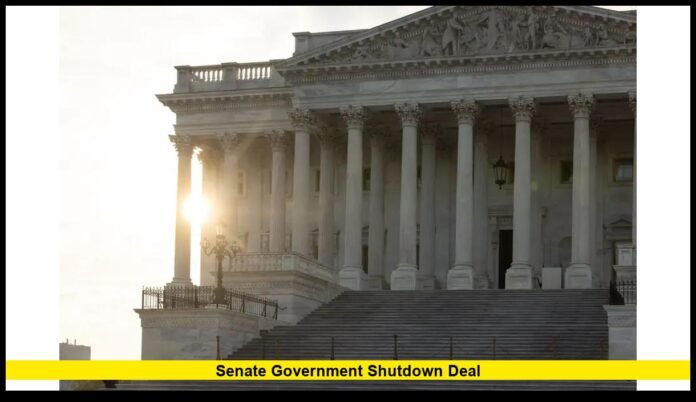

A crucial senate government shutdown deal is now in motion as the U.S. Senate advanced a bipartisan funding measure on November 9, 2025, signaling a potential end to the record-setting federal shutdown.
What Happened in the Senate
On Sunday night, the Senate voted 60-40 in favor of advancing a bill that would reopen the federal government until January 30, 2026, and package three full-year appropriations bills. Eight Democrats broke rank to join Republicans in supporting the deal, including moderates such as Angus King of Maine.
The deal does not immediately extend the health care tax credits under the Affordable Care Act (ACA) that many Democrats demanded. Instead, it promises a separate vote in December.
Why This Deal Matters
The shutdown began on October 1, 2025—making it the longest in U.S. history. Federal operations have been severely disrupted, with hundreds of thousands of government workers furloughed and major programs like the Supplemental Nutrition Assistance Program (SNAP) facing benefit cuts and delays. Thousands of flights have also been affected due to reduced staffing at airports.
The Senate government shutdown deal represents the most significant bipartisan movement yet to restore funding and federal services after weeks of political stalemate.
Key Elements of the Deal
| Item | Description |
|---|---|
| Funding Extension | Government funding will continue through January 30, 2026. |
| Appropriations | Includes full-year bills for military construction/veterans affairs, the legislative branch, and the Department of Agriculture. |
| Health Care Tax Credits | No immediate extension of ACA premium subsidies; a separate vote is planned for December. |
| Federal Worker Rehiring and Back Pay | The deal would reverse mass layoffs and provide back pay for affected employees. |
Political Fallout and Reactions
The proposed deal has split the Democratic Party. Senate Minority Leader Chuck Schumer and other Democratic leaders opposed it because it excludes immediate health-care protections they were pushing for.
Republicans, on the other hand, have argued that reopening the government first is essential and that policy debates on health care should follow once operations resume. GOP leaders, including Senate Majority Whip John Thune, emphasized the importance of focusing on restoring federal services.
Federal worker unions and food-aid advocates have strongly supported the agreement, urging Congress to end the shutdown immediately due to the financial strain on public employees and the disruptions to essential services.
Impact of the Shutdown
The 2025 shutdown has had far-reaching consequences:
- Federal workers: Nearly 800,000 employees were furloughed or working without pay for over a month.
- Public services: National parks closed, passport processing stalled, and IRS refunds delayed.
- Economic costs: Analysts estimate billions in lost productivity and delayed business transactions.
- Families on SNAP: Many low-income families have struggled to access food benefits, prompting increased demand on local food banks.
The Senate government shutdown deal is seen as a step toward reversing these damages and restoring economic stability before the critical holiday season.
What Comes Next
The Senate must now pass the amended bill in full before sending it to the House of Representatives. The House will then decide whether to approve the measure or request additional changes. If approved, it will go to the President for final signature.
While the vote signals strong bipartisan progress, there are still hurdles ahead. Some House Democrats may resist passing the deal unless it includes provisions to immediately extend ACA premium subsidies. Even after the government reopens, debates over funding priorities will continue into December, particularly concerning healthcare and defense budgets.
Key upcoming milestones include:
- Final Senate Passage: Expected within the next 48 hours.
- House Vote: Could take place as early as midweek.
- Presidential Signature: Likely by the end of the week if both chambers agree.
- Follow-up Negotiations: A December vote will address unresolved healthcare subsidies.
Economic and Public Outlook
The prolonged shutdown has affected not only government employees but also the broader U.S. economy. Small businesses reliant on federal contracts have suffered losses, and tourism in areas dependent on federal park access has plummeted. Consumer confidence has dipped slightly, though economists predict a rebound once government operations resume.
Wall Street reacted cautiously to news of the Senate deal, with markets showing minor fluctuations but an overall positive response to signs of bipartisan cooperation.
Public sentiment, however, remains divided. Many Americans blame political gridlock in Washington for the crisis, while others see the emerging deal as proof that collaboration is still possible in an increasingly polarized Congress.
Long-Term Implications
If the Senate government shutdown deal passes, it will mark a turning point in the 2025 funding crisis. However, it may also set the tone for future budget negotiations. The deal could serve as a model for temporary bipartisan solutions or highlight deeper ideological divides that continue to challenge long-term governance.
For lawmakers, the pressure is high: failing to maintain government funding past January 2026 could risk another shutdown early next year. As such, leaders in both parties are working to solidify frameworks for sustained, balanced budgeting.
Bottom Line
The Senate has taken a major step toward resolving the historic government shutdown with a bipartisan deal designed to reopen federal operations, restore employee pay, and restart key services. Yet the work isn’t done—final passage, House approval, and future votes on healthcare funding will determine whether this moment of progress can truly bring stability back to Washington.
We’d like to hear from you: What aspects of the Senate government shutdown deal matter most to you—federal worker pay, health-care subsidies, SNAP benefits, or air travel disruptions? Share your thoughts in the comments and stay tuned for ongoing updates.