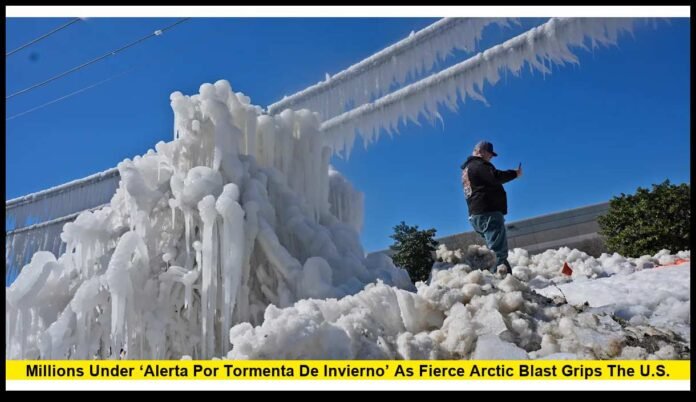

A sweeping alerta por tormenta de invierno has been issued for large parts of the United States as an intense Arctic front plunges southward, unleashing blizzard conditions, icy winds, and bitter cold across the Midwest, Great Lakes, and Northeast. As of Monday morning, the National Weather Service (NWS) confirmed that more than 60 million Americans are under some form of winter storm warning, watch, or advisory — marking one of the most widespread early-November cold events in recent memory.
A Powerful System Takes Shape Over the Plains
The winter storm began forming late Sunday over the northern Plains, fueled by frigid Arctic air meeting moist Gulf moisture. By early Monday, heavy snow had already blanketed parts of Montana, the Dakotas, and Minnesota, creating whiteout conditions and hazardous travel.
The NWS office in Minneapolis-St. Paul reported snowfall rates of 1 to 2 inches per hour, with drifts piling up as wind gusts exceeded 40 mph.
Interstates I-94 and I-35 were closed intermittently overnight due to accidents and low visibility.
Emergency crews have urged drivers to stay home, warning that blowing snow could make even short trips dangerous.
Meteorologist Sarah Jamison of the Weather Prediction Center said, “This is a classic early-season Arctic front. It’s powerful, fast-moving, and affecting a huge swath of the country all at once.”
Major Midwest Cities Brace for Disruptions
As the alerta por tormenta de invierno stretches eastward, major cities like Chicago, Detroit, and Milwaukee are preparing for heavy snow and freezing rain.
Forecasters expect 6 to 12 inches of snow in metro areas, with localized amounts higher near the Great Lakes due to lake-effect enhancement.
Chicago’s Department of Streets and Sanitation has deployed more than 280 snowplows and salt spreaders, while airlines at O’Hare International Airport are canceling and rescheduling flights to minimize chaos.
Public schools across Illinois and Wisconsin are considering e-learning days if conditions worsen.
Detroit and Cleveland are expecting similar impacts. Strong winds of up to 50 mph may lead to scattered power outages and downed branches. Energy crews are already stationed throughout the region to respond quickly to outages.
Northeast Awaits First Significant Snowfall of the Season
By late Tuesday, the same system will move into the Appalachians, New York, and New England, spreading snow, sleet, and freezing rain across much of the region.
New York City and Boston will likely see their first measurable snow of the season, while inland areas such as Syracuse, Albany, and Burlington could experience up to 10 inches.
The NWS in Albany has issued a Winter Storm Warning effective through Wednesday morning, citing hazardous travel and dangerously low wind chills.
Wind gusts could exceed 45 mph, dropping “feels-like” temperatures to below zero overnight.
Residents in Vermont, New Hampshire, and Maine are being urged to prepare now, as the combination of wet snow and strong winds could cause tree damage and power outages. Utility companies across the region have pre-staged extra crews in anticipation.
Power Outages and Travel Woes Mount Nationwide
Across the Midwest and Northeast, power companies are warning customers to prepare for potential outages. Heavy, wet snow is notorious for bringing down power lines, and freezing rain in the storm’s southern edge adds another layer of concern.
In Michigan alone, Consumers Energy and DTE Energy have mobilized hundreds of additional line workers and tree removal teams.
Emergency shelters have opened in multiple counties to accommodate residents without heat or electricity.
Air travel is being heavily disrupted.
By midday Monday, more than 800 flights had been delayed or canceled nationwide, primarily from Chicago, Detroit, and Minneapolis.
Amtrak has suspended some long-distance routes across the Great Lakes corridor, and Greyhound has issued travel advisories for passengers heading north and east.
Southern States Feel the Chill
While snow remains confined to northern states, the cold air behind this system is plunging deep into the central and southern U.S.
Cities like Dallas, Little Rock, Nashville, and Atlanta are experiencing an early taste of winter, with daytime highs running 20 degrees below normal and widespread frost warnings overnight.
In parts of Texas and the Deep South, residents are being told to wrap exposed pipes and protect outdoor plants from the freeze.
Local shelters are expanding capacity to help the homeless population find warmth as the cold lingers through midweek.
Meteorologists say this is the first of several Arctic blasts expected this month — an early signal that winter could be colder and stormier than usual across much of the country.
Safety Measures: What to Do During an ‘Alerta por Tormenta de Invierno’
With millions under a winter storm alert, officials are reminding Americans to take basic precautions.
Here are key safety steps recommended by the NWS and FEMA:
- Stay Informed: Keep up with local forecasts through the NWS, weather apps, or NOAA Weather Radio.
- Limit Travel: If you must drive, carry a full tank of gas, blankets, and emergency supplies.
- Prepare for Power Loss: Have flashlights, batteries, non-perishable food, and extra blankets ready.
- Protect Pets and People: Bring animals indoors and check on elderly neighbors.
- Prevent Carbon Monoxide Poisoning: Never run a car or generator inside an enclosed space.
- Dress in Layers: Frostbite can develop quickly in below-zero wind chills. Cover exposed skin and wear insulated gloves and hats.
Officials emphasize that many storm-related injuries occur after the snow ends — especially from slips, falls, and overexertion while shoveling.
Economic and Infrastructure Challenges Ahead
The storm’s timing — arriving just before the busy holiday shipping season — is creating headaches for logistics and retail companies.
Shipping carriers such as UPS and FedEx are rerouting trucks and air cargo away from high-impact zones.
Even Amazon has warned customers in affected states that some deliveries may experience 24- to 48-hour delays.
Energy prices are also reacting to the Arctic blast. Natural gas futures rose nearly 3% on Monday morning, reflecting higher heating demand across the Midwest and Northeast.
State officials estimate that storm response and cleanup could cost tens of millions of dollars, particularly in Michigan, Wisconsin, and upstate New York.
Public works departments are already facing budget pressure, as early-season storms can stretch resources before winter has fully begun.
Government and Emergency Declarations
Governors in Minnesota, Michigan, and Wisconsin have activated emergency protocols, allowing National Guard units to assist with road rescues and shelter operations.
In Michigan, Governor Gretchen Whitmer emphasized readiness:
“Our crews are working around the clock to keep roads open and residents safe. We urge everyone to stay off the roads unless absolutely necessary.”
Local emergency operations centers in major cities — including Chicago, Detroit, and Cleveland — are coordinating with hospitals, power companies, and social services to ensure continuous coverage during the storm.
Another Arctic Front Looms on the Horizon
Meteorologists warn that this storm may not be the last. A new disturbance is forecast to form over the Rocky Mountains later this week, potentially bringing another round of snow to the central U.S. by the weekend.
The Climate Prediction Center reports that the jet stream pattern currently steering cold air southward will persist for at least two more weeks, raising the likelihood of additional alertas por tormenta de invierno before Thanksgiving.
Long-range forecasts show below-average temperatures across much of the northern half of the country well into late November.
Communities Rally Together
Despite the chaos, communities across the Midwest and Northeast are stepping up.
In Minneapolis, local churches and nonprofits are distributing hot meals and blankets.
In Cleveland, volunteers are checking in on seniors and clearing driveways.
Across social media, neighborhood groups are sharing real-time updates on road conditions, shelter availability, and school closures.
For many Americans, this early storm serves as a powerful reminder of both winter’s dangers and the strength of community support during extreme weather.
Looking Ahead: Staying Prepared for What’s Next
Experts say this week’s alerta por tormenta de invierno could set the tone for the coming season. With colder-than-normal temperatures forecast into December, it’s a good time for households to restock emergency kits, test heating systems, and plan for possible severe weather events.
Snow and ice may cause inconvenience, but preparation can turn a dangerous situation into a manageable one.
For now, all eyes remain on the radar as the storm continues to sweep east, reminding Americans that winter has arrived early — and with full force.
As this powerful alerta por tormenta de invierno continues to grip the nation, share your experiences or tips in the comments — and stay informed as the next wave of winter weather approaches.