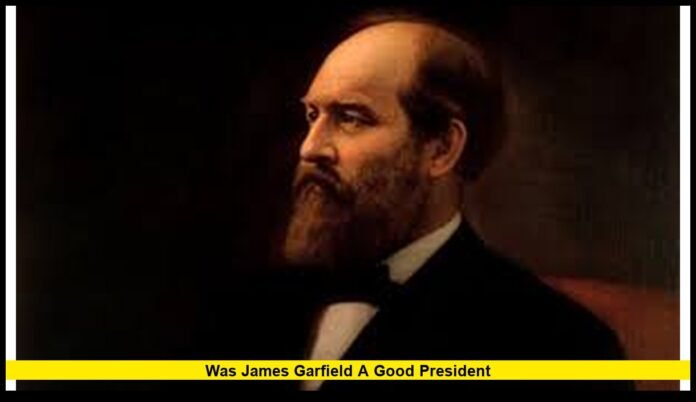

WASHINGTON, D.C. — Many Americans still ask, was James Garfield a good president? Though his presidency lasted only a few months, Garfield’s leadership left an impression far greater than his short time in office. His fight against corruption, his support for education, and his belief in equal opportunity continue to earn him respect among historians and political scholars in 2025.
As the 20th President of the United States, James Abram Garfield’s story is both inspiring and tragic. From humble beginnings in Ohio to his shocking assassination in 1881, Garfield’s presidency stands as a powerful reminder of how vision and integrity can shape history — even in a short span of time.
Who Was James Garfield?
Born on November 19, 1831, in Orange Township, Ohio, James Garfield was raised in poverty by his widowed mother. He worked various jobs as a teenager — including on the Ohio Canal — before pursuing education at Williams College in Massachusetts. His rise from a struggling farm boy to college graduate and then president made him a symbol of the American Dream.
Before entering politics, Garfield served as a Union general during the Civil War, earning recognition for his leadership and dedication to the Union cause. After the war, he served in the U.S. House of Representatives for nine consecutive terms, where he developed a reputation for honesty, intelligence, and reform-minded leadership.
When he was elected president in 1880, Garfield became the first former teacher to hold the nation’s highest office — and one of the few presidents who had worked his way up from true poverty.
Garfield’s Vision for America
When considering was James Garfield a good president, historians often point to his ideas and principles. Garfield came into office during the Gilded Age, a time of rapid industrial growth, political corruption, and economic inequality.
He believed that government should serve the people — not wealthy elites or political insiders. Garfield focused on key priorities that reflected his values:
- Civil Service Reform: He wanted to end the corrupt “spoils system,” where government jobs were given as political rewards.
- Public Education: Garfield strongly supported expanding education for all citizens, including freed African Americans and working-class families.
- Fiscal Responsibility: He believed in reducing the federal debt and maintaining a stable economy based on the gold standard.
- National Unity: Garfield sought to heal divisions between the North and South after the Civil War through fairness and reconciliation.
His presidency promised progress, accountability, and moral leadership — values Americans were desperate for after years of scandals in Washington.
Civil Service Reform: Garfield’s Defining Battle
If one issue defines Garfield’s presidency, it’s his fight against corruption in government. The spoils system dominated American politics in the late 1800s. Politicians rewarded their supporters with government jobs, regardless of qualification or merit.
Garfield saw this as one of the greatest threats to democracy. He wanted to replace political favoritism with a fair, merit-based hiring system.
Shortly after taking office, Garfield confronted Senator Roscoe Conkling of New York, a powerful leader of the Republican Party’s “Stalwart” faction. Conkling demanded control over key federal appointments in New York — but Garfield refused.
This public confrontation shocked Washington. It showed that Garfield was willing to challenge his own party to defend what was right.
His stand against corruption inspired the public and paved the way for the Pendleton Civil Service Reform Act of 1883, passed after his death. This law established the foundation for the modern professional civil service — a system still in place today.
Though Garfield never saw it enacted, historians widely agree that his courage and leadership made it possible.
Garfield’s Economic Policies and Vision for Growth
While Garfield’s presidency was short, he had clear economic goals aimed at strengthening the U.S. economy and ensuring fairness for all Americans.
He supported reducing the national debt, stabilizing currency through the gold standard, and revising tariffs to protect American industries while keeping prices fair for consumers.
Garfield also promoted innovation and modernization. He believed the government should support technological progress, particularly in industries like railroads, communication, and agriculture.
His administration began early efforts to modernize the U.S. Navy and expand international trade with Latin America, showing a forward-looking approach to both defense and diplomacy.
Although his assassination cut these plans short, historians credit Garfield with setting a tone of responsible governance and economic modernization that continued under future presidents.
Education: Garfield’s Lifelong Passion
Perhaps no issue was closer to Garfield’s heart than education. Having worked his way out of poverty through study and hard work, he believed education was the foundation of freedom and progress.
He once said, “Next in importance to freedom and justice is popular education, without which neither can be maintained.”
As president, Garfield spoke about improving public schools and supporting higher education. He believed educated citizens were essential to a strong democracy.
He also advocated for educational opportunities for African Americans during the post-Reconstruction period. Garfield supported funding for Black colleges and schools in the South, continuing the vision of equality first promoted during the Civil War.
Even though he served for only a few months, his commitment to education inspired many Americans — especially those who had once been excluded from opportunity.
Foreign Policy: A Global Vision Cut Short
While Garfield’s foreign policy was still developing, his administration aimed to expand America’s trade and diplomatic influence.
He envisioned stronger partnerships with Central and South American nations, hoping to boost trade and political cooperation. He also supported naval modernization, believing that a modern fleet was necessary for national security and global commerce.
Garfield’s Secretary of State, James G. Blaine, began planning the First Pan-American Conference, an idea that would later lead to the Organization of American States (OAS) decades later.
Garfield’s global outlook suggested a president prepared to guide the United States into a new era of influence — one focused not only on power but also on partnership.
The Assassination That Changed American Politics
Garfield’s presidency came to a sudden and tragic end on July 2, 1881, when he was shot at the Baltimore and Potomac Railroad Station in Washington, D.C., by Charles J. Guiteau, a mentally unstable man who believed he was owed a government position.
Garfield lingered for nearly three months, suffering from infections caused by unsanitary medical treatment. He died on September 19, 1881, in Elberon, New Jersey.
His death devastated the nation. Americans mourned not just a leader, but the promise of what his presidency could have been.
The assassination also strengthened public demand for reform. Two years later, President Chester A. Arthur signed the Pendleton Civil Service Act into law — a direct tribute to Garfield’s ideals.
Was James Garfield a Good President? The Historians’ Verdict
When modern historians are asked was James Garfield a good president, most answer with a resounding yes — given the time he had.
In the C-SPAN Presidential Historians Survey (2021), Garfield ranked 23rd out of 44 presidents, a significant improvement from earlier decades when he was often overlooked due to his short tenure.
Scholars today praise Garfield’s moral integrity, intellectual depth, and vision for reform. Many argue that, had he lived, he could have become one of the most transformative presidents of the late 19th century.
His presidency represented a turning point — a moment when honesty, education, and fairness began to replace corruption and favoritism in Washington.
Garfield’s Legacy in Modern America
Today, Garfield’s impact lives on in ways many Americans might not realize. The professional, nonpartisan civil service that operates across federal agencies traces its roots to Garfield’s reform agenda.
The James A. Garfield National Historic Site in Mentor, Ohio, preserves his home and speeches, offering insight into his life and ideals. Visitors learn about a man who believed deeply in the power of education, democracy, and integrity in leadership.
Garfield’s story continues to inspire new generations who see in him a reminder that even a short presidency can make a lasting difference.
Final Thoughts: A Short Presidency, a Lasting Impact
So, was James Garfield a good president? Absolutely — though his presidency was brief, his moral strength and reformist spirit set an example that shaped future generations of leaders.
He stood for honesty in politics, fairness in opportunity, and education for all. His courage to challenge corruption in his own party proved that true leadership isn’t about power — it’s about principle.
Garfield’s presidency may have been cut short, but his vision lives on in the foundation of America’s modern government.
What do you think — was James Garfield one of America’s most underrated presidents? Share your thoughts below and stay connected for more insights on U.S. presidential history.
DISCLAIMER: This article is based on verified historical research and expert consensus as of November 2025.