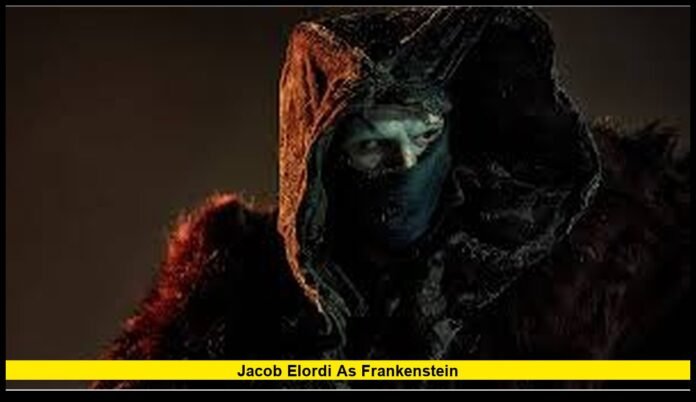

Hollywood’s rising star Jacob Elordi has officially cemented his place among the industry’s most daring actors with his electrifying performance as Frankenstein’s Creature in Guillermo del Toro’s 2025 adaptation of Frankenstein. Known for his breakout roles in Euphoria and Saltburn, Elordi now steps into uncharted territory, bringing a deeply human and haunting touch to one of literature’s most iconic figures.
The casting of Jacob Elordi as Frankenstein has generated immense buzz among both critics and fans, and for good reason — it represents not only a bold artistic leap for the actor but also a reimagining of Mary Shelley’s legendary monster for a new generation. With del Toro’s signature blend of beauty, tragedy, and gothic atmosphere, Frankenstein is shaping up to be one of the most emotionally powerful films of the decade.
A Dream Project Brought to Life
Guillermo del Toro has been developing Frankenstein for over a decade. The Academy Award–winning director behind The Shape of Water and Pan’s Labyrinth has long expressed a deep fascination with Mary Shelley’s story — not as a tale of horror, but as a reflection on the fragility of humanity and the pain of being misunderstood.
When it was finally announced that Jacob Elordi would take on the role of the Creature, fans were intrigued by the unexpected choice. Known for his modern roles as troubled young men, Elordi seemed far from the classic “monster” archetype — yet del Toro saw something more.
According to the director, Elordi’s unique combination of physical presence and emotional vulnerability made him the perfect embodiment of the Creature. “The monster is not a villain,” del Toro said in a recent interview. “He’s a reflection of our loneliness, our longing, and our desire to belong. Jacob understood that immediately.”
The Making of a Monster: Jacob Elordi’s Transformation
Becoming Frankenstein’s Creature was no small feat. Jacob Elordi underwent one of the most demanding transformations of his career, both physically and psychologically.
The actor spent months preparing for the role, studying movement, anatomy, and expression to capture the Creature’s unnatural yet poetic existence. Elordi worked with movement coaches to craft a distinctive physicality — one that conveyed strength and power but also a sense of vulnerability and grace.
The makeup and prosthetics process was grueling, requiring up to ten hours a day in the chair to achieve the Creature’s haunting, scarred appearance. The final result is unlike any previous cinematic version: pale, elongated features, hollow eyes, and a posture that evokes both fragility and menace.
Despite the physical toll, Elordi embraced the challenge. “I wanted to disappear completely into him,” he reportedly said. “This isn’t a monster — it’s a soul trapped in a body it never chose.”
A Humanized Monster: The Emotional Depth of Elordi’s Performance
One of the most striking aspects of Frankenstein is how deeply emotional the story feels. Rather than portraying the Creature as a brute, del Toro and Elordi present him as a tragic figure — one capable of love, grief, and moral reflection.
The film explores his evolution from childlike innocence to anguished self-awareness. Early scenes show the Creature discovering the world with curiosity, only to be met with cruelty and rejection. As the story unfolds, Jacob’s performance transitions from soft-spoken wonder to visceral rage and despair.
Through subtle gestures and facial expressions, Elordi captures the profound loneliness of a being who longs to be loved but is condemned to eternal isolation. It’s a portrayal that strips away horror clichés and replaces them with humanity and heartbreak.
The Vision Behind Guillermo del Toro’s Frankenstein
Guillermo del Toro’s Frankenstein is not a remake of the classic Universal monster films — it’s a faithful yet reimagined interpretation of Mary Shelley’s 1818 novel.
Del Toro’s vision blends gothic aesthetics with emotional storytelling. Set against stunning, decaying backdrops, the film immerses audiences in a world that feels both dreamlike and deeply real.
In his hands, Frankenstein’s Creature becomes a metaphor for creation, empathy, and the eternal conflict between parent and child. The director’s meticulous attention to visual detail — from candlelit laboratories to mist-covered graveyards — gives the film a painterly quality that has already been praised by early viewers.
“Monsters are the most human characters in my films,” del Toro once said, and Frankenstein is his ultimate statement on that theme.
An All-Star Cast Supporting a Bold Vision
While Jacob Elordi carries much of the film’s emotional weight, Frankenstein boasts a powerhouse supporting cast that brings balance and tension to the story.
- Oscar Isaac plays Dr. Victor Frankenstein, the ambitious scientist whose obsession with conquering death drives him to create life — and ultimately destroys him. Isaac’s performance reportedly delivers a chilling counterpoint to Elordi’s empathy, portraying Victor as both genius and villain.
- Mia Goth stars as Elizabeth, Victor’s wife, whose love and loss become key emotional anchors in the story.
- Christoph Waltz and Charles Dance round out the ensemble, portraying characters who shape the philosophical core of del Toro’s world — mentors, antagonists, and moral voices intertwined in the tragedy.
This ensemble cast elevates Frankenstein beyond the realm of typical horror, grounding it in human emotion and moral conflict.
The Venice Premiere: A Standing Ovation
The film’s world premiere at the 2025 Venice Film Festival was a defining moment. As the credits rolled, the audience erupted in applause, giving Frankenstein a 13-minute standing ovation — the longest of the event.
Jacob Elordi, visibly moved, was brought to tears as the crowd celebrated both his performance and del Toro’s artistry. Critics described the film as “a masterpiece of emotion and atmosphere”, calling Elordi’s portrayal “career-defining.”
The reaction has fueled speculation that the film will be a major contender during the upcoming awards season, with Elordi already being mentioned as a potential Best Actor nominee.
A New Era for Jacob Elordi
For Jacob Elordi, this role marks a turning point in his career. The Australian actor, who first gained fame for his roles in The Kissing Booth and Euphoria, has steadily evolved into one of Hollywood’s most respected talents.
After proving his range in Saltburn (2023) and Priscilla (2023), his portrayal of the Creature in Frankenstein solidifies his position as a serious actor capable of profound transformation.
By choosing a role that requires vulnerability, restraint, and physical intensity, Elordi has distanced himself from the romantic or youthful roles that defined his early career. His performance demonstrates maturity, artistic courage, and a willingness to take creative risks — qualities that have already earned praise from filmmakers and fans alike.
Themes That Resonate Today
Del Toro’s Frankenstein speaks to contemporary audiences in surprising ways. Its themes — alienation, creation, and the longing for acceptance — feel more relevant than ever in an age defined by technology and disconnection.
Through Elordi’s Creature, viewers confront questions about what it means to be human.
- What happens when we play god?
- How far should science go in defying nature?
- And who decides what makes a person “worthy” of love or existence?
These questions make the story timeless — and in Elordi’s hands, profoundly moving. His Creature becomes a mirror for our collective fears and desires, a reminder that compassion remains the most radical act of all.
A Visual and Emotional Masterpiece
The film’s aesthetic design is classic del Toro — rich, immersive, and meticulously detailed. Every frame feels like a gothic painting come to life. The Creature’s world is dark yet breathtakingly beautiful, filled with contrasts between light and shadow, life and decay.
Composer Alexandre Desplat’s haunting score adds another emotional layer, weaving melancholic strings and thunderous crescendos that echo the Creature’s turmoil.
Cinematographer Dan Laustsen, a longtime del Toro collaborator, captures the story with sweeping camera movements and deep contrasts that heighten the emotional impact. Combined with Elordi’s nuanced performance, the result is a film that transcends horror and enters the realm of cinematic poetry.
Critical Praise and Awards Buzz
Following its Venice debut, critics have described Elordi’s performance as a revelation. Early reviews highlight his ability to convey a full emotional spectrum — from innocence to fury — without relying on heavy dialogue.
Industry insiders predict Frankenstein will be a major contender in the 2026 Academy Awards, with strong chances in categories including Best Picture, Best Director, Best Actor (Elordi), and Best Cinematography.
Beyond the awards circuit, audiences have embraced the film as a return to emotional storytelling — the kind of deeply human cinema that del Toro has built his reputation on.
Where to Watch Frankenstein
For U.S. audiences, Frankenstein had a limited theatrical release beginning October 17, 2025, before premiering globally on Netflix on November 7, 2025. The streaming platform plans to promote the film heavily through behind-the-scenes features, cast interviews, and exclusive commentary from Guillermo del Toro.
Viewers can expect an immersive experience — both visually stunning and emotionally resonant — that invites repeat viewings to fully appreciate its layers.
Final Thoughts
With Frankenstein, Jacob Elordi has achieved something few young actors ever do: he’s redefined an age-old character while elevating his own artistic identity. His portrayal of the Creature is tender, terrifying, and transformative — a performance that captures the very essence of what it means to be human.
Under Guillermo del Toro’s visionary direction, Frankenstein becomes more than a monster movie. It’s a profound meditation on love, loss, and the eternal search for belonging.
Jacob Elordi as Frankenstein isn’t just a casting success — it’s a career milestone that will be remembered as the moment he ascended into the ranks of true cinematic artistry.
What did you think of Jacob Elordi’s haunting performance as the Creature? Share your thoughts in the comments and stay tuned for more updates on his remarkable journey.