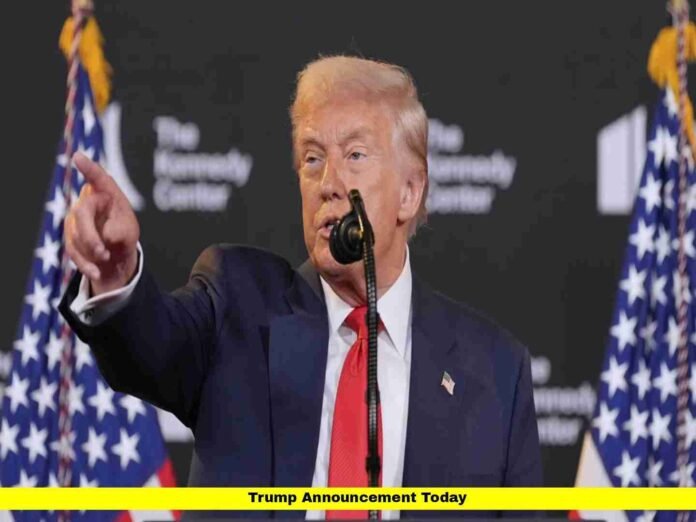

Donald Trump made headlines across the nation with his Trump announcement today, unveiling a sweeping initiative that targets high drug prices and expands access to life-saving medications. Speaking from the Oval Office, Trump revealed a deal involving leading pharmaceutical companies Eli Lilly and Novo Nordisk to make popular weight-loss and diabetes medications more affordable for Americans. The move has already stirred major discussion across the healthcare and political landscape.
What Trump Announced Today
In today’s announcement, Trump introduced an agreement that will make GLP-1 medications — such as Wegovy and Zepbound — available at a significantly reduced price through a new platform called TrumpRx. Under the deal, these medications will start at $149 per month, a sharp drop from current market rates that can exceed $1,000 per month.
Trump emphasized that this plan is designed to reduce the cost burden on ordinary Americans struggling with obesity and diabetes. He said this initiative “marks a new era of affordable medicines,” connecting it to his campaign focus on healthcare reform and U.S. economic revival. The announcement also mentioned that Medicare and Medicaid participants would have copays capped at around $50, widening access for low-income citizens.
Key Features of the TrumpRx Deal
The details shared during Trump’s announcement highlighted several impactful features. Starting in early 2026, select medications will be available through the TrumpRx program. Trump stated that the companies have pledged to manufacture a large portion of these drugs in the United States, reinforcing his long-standing emphasis on domestic production.
The program also expands Medicare eligibility for these drugs, allowing patients suffering from severe obesity to qualify even if they don’t have diabetes. Previously, coverage was limited to those with specific diagnoses. Additionally, private insurance providers will likely benefit from reduced wholesale costs, potentially lowering premiums and out-of-pocket expenses for millions.
By linking healthcare affordability to American manufacturing, Trump positioned the deal as both an economic and public health milestone — a combination rarely seen in pharmaceutical policy.
Impact on American Patients
For patients across the country, the Trump announcement today could signal real financial relief. The cost of GLP-1 medications has been a major barrier, preventing many from accessing treatments that can help manage chronic conditions like diabetes and obesity. With prices dropping to as low as $149, patients who once paid thousands annually may finally see an affordable path forward.
This initiative also represents a shift in public health policy, as it expands coverage for obesity treatment — a condition that affects nearly 42% of U.S. adults according to the CDC. Making such treatments more accessible could help reduce related diseases like heart disease and stroke.
Moreover, the capped copay system ensures that lower-income patients won’t face insurmountable financial hurdles. For many Americans, this could mean the difference between consistent treatment and going without medication altogether.
Economic and Industrial Implications
Beyond healthcare, the Trump announcement carries significant economic implications. By requiring that a portion of these drugs be produced in the United States, Trump aims to boost domestic manufacturing and reduce dependency on foreign supply chains.
This aligns with his broader economic agenda of revitalizing American industry. Trump mentioned that pharmaceutical facilities could expand across multiple states, generating thousands of new manufacturing and logistics jobs.
The deal also sends a strong message to global pharmaceutical markets — the U.S. government is serious about lowering drug prices while increasing domestic capacity. If successful, this model could become a precedent for future agreements between policymakers and drug manufacturers.
Political Strategy Behind the Announcement
The timing of this Trump announcement today has raised questions about its political intent. With the next presidential race on the horizon, Trump is positioning himself as a reformer addressing one of America’s most pressing issues — healthcare costs.
By focusing on drug affordability, Trump appeals to middle-class voters and working families who have been hit hardest by high medical expenses. His focus on domestic manufacturing also strengthens his appeal among industrial workers and small business owners who have long supported his “America First” message.
This strategic combination of healthcare and economic policy showcases Trump’s ability to link personal financial issues with national strength — a hallmark of his campaign style.
How the Pharmaceutical Industry Is Responding
Initial reactions from the pharmaceutical industry to the Trump announcement today have been mixed. Eli Lilly and Novo Nordisk both confirmed their participation in the TrumpRx initiative but clarified that implementation details are still being finalized.
Some healthcare analysts note that lower prices could reduce profits for pharmaceutical companies in the short term, but the large-scale adoption of these drugs could make up for the difference. Others see the move as a smart adaptation, allowing drugmakers to expand access and build goodwill at a time when pricing scrutiny is increasing globally.
Investors have responded cautiously, with minor stock fluctuations in both companies immediately after the announcement. Analysts expect further clarity in the coming weeks regarding distribution channels, insurance agreements, and production plans.
Challenges Ahead
Despite the promise of affordability, the plan faces potential challenges. Industry experts point out that large-scale domestic manufacturing could take time to ramp up, possibly delaying access to lower-priced medications.
There are also questions about how effectively Medicare and private insurers will integrate the new pricing system. Regulatory hurdles from the FDA and Centers for Medicare & Medicaid Services could slow implementation if new guidelines or approvals are needed.
Critics from opposing political factions argue that Trump’s partnership with pharmaceutical companies may prioritize branding over systemic reform. Others express concern about potential cost shifts to taxpayers if Medicare and Medicaid expand their coverage too rapidly without sufficient cost controls.
Nevertheless, the initiative’s scale and ambition mark a major development in healthcare policy that will likely shape discussions heading into the next election cycle.
Public and Media Reactions
Public response to the Trump announcement today has been swift and widespread. Supporters have praised the move as a bold step toward making healthcare more affordable, especially for those struggling with chronic illnesses. Social media platforms have been flooded with reactions, many expressing hope that this will finally make essential medications accessible to the working class.
Mainstream media outlets have also dedicated extensive coverage, with networks dissecting both the healthcare and political dimensions of the announcement. Medical experts have cautiously welcomed the plan but stress that sustained government oversight will be crucial to ensure long-term affordability and access.
What to Expect Next
In the coming months, the focus will shift to the rollout timeline and how soon Americans can start benefiting from the TrumpRx program. Key developments to watch include the launch of the official platform, the FDA’s stance on expanded usage, and concrete manufacturing commitments from the pharmaceutical companies involved.
If successful, this initiative could set the stage for a broader wave of reforms in how drug prices are negotiated and capped across the healthcare system. Trump’s emphasis on merging affordability with American production may also influence future bipartisan policy discussions.
Conclusion
The Trump announcement today marks one of the most significant healthcare initiatives of the year, combining affordability, domestic manufacturing, and political strategy in a single package. By partnering with major pharmaceutical companies to slash the cost of life-changing medications, Trump has reignited debate on how best to balance innovation, access, and cost in American healthcare.
As details unfold, this announcement could reshape the landscape of U.S. drug pricing — potentially improving millions of lives while fueling economic growth. Stay tuned for more updates as implementation progresses and the impact of this historic deal becomes clearer.