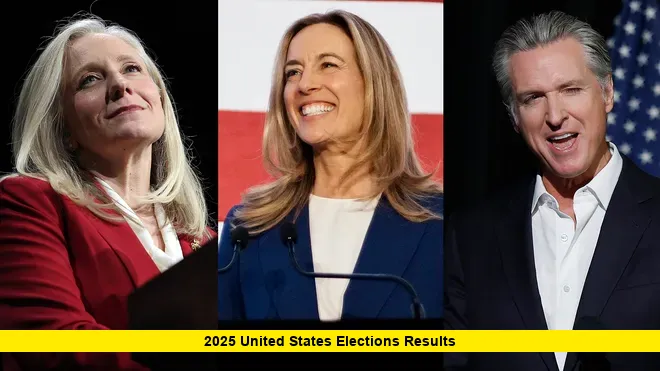

The 2025 United States elections results are now official, marking a decisive night for Democrats across several key states and major cities. Voters went to the polls on November 4 to cast ballots in off-year elections that included gubernatorial races in Virginia and New Jersey, the New York City mayoral contest, and a pivotal redistricting measure in California. The results have reshaped the political landscape and provided a glimpse into what could come in the 2026 midterm elections.
Major Outcomes Across the Country
New York City Mayoral Race: A Historic Win for Progress and Diversity
New York City made national headlines as Democrat Zohran Mamdani won the mayoral election in a stunning and historic victory. Mamdani, a 32-year-old state assemblyman and community activist, defeated independent candidate Andrew Cuomo—the former governor making an unprecedented political comeback—and Republican radio host Curtis Sliwa.
With over one million votes cast in his favor, Mamdani became the first Muslim and youngest mayor in the city’s history. His campaign was built around bold, progressive policies focusing on affordable housing, transit justice, climate action, and police accountability. He championed a people-first message that resonated deeply with working-class families and younger voters seeking change.
The city saw record-breaking voter turnout, especially in Queens, Brooklyn, and the Bronx—boroughs that have become symbols of New York’s cultural and political diversity. Mamdani’s grassroots campaign, powered by volunteers and local organizations, created a movement that reflected the city’s progressive future.
His victory also marks a generational shift in New York politics, away from establishment figures like Cuomo toward leaders with community organizing roots. Political observers note that Mamdani’s win could serve as a model for other urban progressives aiming to translate activism into electoral power.
New Jersey Gubernatorial Election: Mikie Sherrill Extends Democratic Stronghold
In New Jersey, Democratic Representative Mikie Sherrill secured a decisive win against Republican Jack Ciattarelli, ensuring that the governorship remains in Democratic hands after Phil Murphy’s two-term tenure. Sherrill’s 56–43 percent victory margin underscored her broad appeal among suburban, independent, and moderate voters—groups that have proven pivotal in New Jersey’s statewide contests.
A former Navy helicopter pilot and federal prosecutor, Sherrill’s campaign struck a chord with voters by focusing on education, job creation, and affordability. She promised to strengthen public schools, improve infrastructure, and expand access to childcare—issues that resonated across party lines. Her emphasis on practical governance and bipartisan cooperation helped her maintain strong support in both urban and rural regions.
In contrast, Ciattarelli’s campaign, built around tax reform and public safety, struggled to overcome the state’s Democratic lean and a perception that his platform lacked inclusivity. Despite strong Republican enthusiasm in southern counties, turnout among younger and diverse voters tilted heavily toward Sherrill.
Sherrill’s victory signals stability and continuity for the Democratic Party in New Jersey and establishes her as a potential rising figure in national politics. Her leadership is expected to focus on progressive economic policies while maintaining a centrist tone that appeals to a broad spectrum of constituents.
Virginia Gubernatorial Election: Abigail Spanberger Makes History
In a major political shift, Virginia returned to Democratic control as Abigail Spanberger triumphed over Republican Winsome Earle-Sears in the gubernatorial race. Spanberger won by approximately 57 percent to 42 percent, marking a decisive comeback for Democrats after losing the seat in 2021.
A former CIA officer and congresswoman from Virginia’s 7th District, Spanberger ran a policy-driven, unifying campaign that appealed to moderate voters and independents. She focused on economic revitalization, affordable healthcare, public education investment, and bipartisanship, avoiding divisive rhetoric. Her message of “governing for everyone” struck a chord with Virginians seeking practical leadership after years of partisan conflict.
Earle-Sears, the incumbent lieutenant governor, emphasized conservative social values and tax cuts but failed to expand her base beyond traditional Republican voters. Spanberger’s success in Northern Virginia and Richmond’s suburbs—areas that have increasingly leaned Democratic—was pivotal in securing her victory.
Her win is historic, making her the first woman elected governor in Virginia’s history, a milestone that highlights the changing face of leadership in the South. Political analysts suggest her victory could help redefine the Democratic brand in swing states by blending moderation with inclusivity and pragmatism.
Spanberger’s victory speech called for “a new era of problem-solving,” signaling her intent to bridge partisan divides and focus on issues that unite Virginians—such as job creation, infrastructure investment, and public safety.
California Proposition 50: A Redistricting Shift with National Consequences
Out west, California voters approved Proposition 50, a closely watched ballot measure designed to reshape the process of drawing congressional districts. The measure grants the state legislature greater authority in redistricting while maintaining citizen oversight and transparency requirements.
The approval of Proposition 50 represents more than just a procedural change—it could reshape the balance of power in Congress over the next decade. By consolidating certain competitive districts and accounting for shifting population patterns, Democrats stand to gain an advantage heading into the 2026 midterm elections.
Supporters of the measure argued that it ensures “fair and responsive representation” for California’s diverse population, while opponents expressed concern about increased political influence over mapmaking. Nonetheless, voter turnout for Proposition 50 was high, particularly in Los Angeles, San Francisco, and San Diego counties, where residents favored the measure by wide margins.
Political analysts see this as part of a broader national pattern in which states are re-evaluating how redistricting impacts electoral fairness and representation. California’s approach could inspire similar measures in other states seeking to modernize their electoral systems.
In practical terms, Proposition 50 is likely to strengthen the Democratic Party’s congressional positioning, particularly in districts that have been narrowly contested. It also reflects the continued dominance of progressive policy momentum in the nation’s most populous state.
The Broader Significance
Together, these four outcomes—New York City, New Jersey, Virginia, and California—represent a major political momentum shift toward the Democratic Party in 2025. They signal growing voter confidence in inclusive governance, policy-driven leadership, and candidates who balance progressive ideals with pragmatic solutions.
Across urban centers and coastal states, the electorate showed a clear preference for leaders focused on affordability, accountability, and equity. These elections reaffirm the importance of grassroots engagement and issue-oriented campaigns that directly address the concerns of everyday Americans.
The 2025 off-year results may not have the nationwide spotlight of a presidential race, but their collective impact is unmistakable. They have already begun shaping the strategies, messages, and alliances that will define the next phase of American politics.
Voters across the nation have spoken — and their message is clear: progress, inclusivity, and accountability are the defining forces shaping America’s political future. Share your thoughts below and stay tuned for more election insights.
Breakdown of Key Results
| Race | Winner | Party | Approximate Margin | Key Impact |
|---|---|---|---|---|
| New York City Mayor | Zohran Mamdani | Democrat | +9% | First Muslim mayor in NYC history |
| New Jersey Governor | Mikie Sherrill | Democrat | +13% | Maintains Democratic leadership |
| Virginia Governor | Abigail Spanberger | Democrat | +15% | First female governor in Virginia |
| California Proposition 50 | Approved | — | N/A | Redistricting reform strengthens Democrats |
Voter Turnout and Trends
Voter participation in the 2025 off-year elections reached one of the highest levels in recent history, defying expectations that non-presidential elections typically draw less enthusiasm. Across the United States, turnout figures showed a noticeable increase compared to similar cycles over the past decade. Analysts attributed this surge to a mix of expanded voting access, demographic changes, and heightened political engagement driven by economic and social concerns.
Several key factors played a crucial role in this record-setting participation:
Increased Early Voting and Mail-In Ballots
States that offered early voting and no-excuse mail-in ballots reported significantly higher participation rates. Many voters, particularly those in urban and suburban areas, took advantage of extended voting windows that reduced congestion at polling stations. Digital voter education campaigns and reminders about absentee deadlines also contributed to smoother election-day operations. This accessibility helped first-time voters and working-class citizens who previously struggled to find time to vote.
Younger Voter Engagement in Major Cities
One of the most striking shifts came from young voters under 35, who turned out in record numbers. Cities like New York, Richmond, Los Angeles, and Newark saw a surge in youth participation, particularly among first-time voters energized by progressive candidates and issue-based campaigns. Topics such as housing affordability, student debt relief, and climate change resonated deeply with this demographic. The trend suggests a generational realignment toward activism-driven civic engagement rather than passive observation.
Heightened Political Polarization and Motivated Bases
While polarization has often been viewed as divisive, it undeniably motivated both parties’ bases to engage more actively. Many Democratic voters viewed these elections as a referendum on local governance and national direction, while Republican voters mobilized around economic and cultural issues. The result was robust turnout across ideological lines, though Democrats ultimately benefited from stronger urban and suburban participation.
Community and Grassroots Mobilization
Local organizations, civic groups, and digital platforms played a vital role in voter education and mobilization. Grassroots movements successfully reached disengaged voters through door-to-door canvassing, social media outreach, and multilingual voter guides. These efforts were particularly effective in immigrant-heavy districts, where language and accessibility barriers had historically suppressed participation.
Changing Suburban Dynamics
One of the most notable electoral shifts occurred in suburban regions that once leaned Republican but have increasingly turned blue. Suburban voters—especially women and younger professionals—supported Democratic candidates who emphasized cost-of-living issues, healthcare access, and education funding. This change reflects a broader realignment in American politics, where the suburbs have become contested political battlegrounds rather than conservative strongholds.
High Turnout Despite Fatigue and Disillusionment
Even amid widespread political fatigue and frustration with national politics, voter turnout remained resilient. The increased use of localized messaging by candidates—focusing on city infrastructure, school funding, and public safety—helped keep voters engaged. This approach allowed citizens to feel their vote had a direct, tangible impact on daily life, countering apathy that often accompanies off-year elections.
Demographic Influence and Diversity in the Electorate
The 2025 elections also showcased a more racially and culturally diverse electorate. Immigrant communities in states like New York, California, and New Jersey turned out in large numbers, demonstrating growing political influence. Black and Latino voters maintained strong support for Democratic candidates, while Asian American participation rose significantly, especially in key swing counties.
Despite these gains, Republicans faced notable setbacks, even in districts they previously dominated. While turnout among their base remained solid, they struggled to expand beyond it. Issues such as abortion access, reproductive rights, and healthcare affordability galvanized moderate voters to back Democratic candidates. Many independents—traditionally seen as the deciding bloc—were drawn to pragmatic, forward-looking platforms rather than partisan extremes.
Overall, the 2025 voter turnout surge underscored a renewed belief in civic participation and accountability. Americans demonstrated that engagement doesn’t depend solely on presidential cycles but can thrive when local and state issues take center stage. The data reveals a more informed and diverse electorate—one increasingly motivated by practical solutions rather than political ideology.
The 2025 elections proved one thing clearly: when voters feel their voices matter, democracy strengthens. Stay tuned and share how your community participated in shaping this year’s results.
What the Results Mean for Both Parties
For Democrats: Momentum and Renewal
The 2025 United States elections results represent a powerful resurgence for the Democratic Party, signaling a clear comeback after a string of competitive and uncertain races in 2024. Democrats managed to strike a winning balance between progressive energy and moderate pragmatism, crafting a message that resonated with a wide cross-section of the electorate.
The party’s strategic focus on kitchen-table issues—including the cost of living, healthcare access, education reform, and job creation—proved decisive in appealing to working- and middle-class voters. By emphasizing affordability and practical governance over ideology, Democrats reconnected with communities that had drifted toward political disengagement in recent years.
Equally important was the party’s investment in local leadership and grassroots mobilization. Figures like Zohran Mamdani in New York City and Abigail Spanberger in Virginia symbolized a new generation of Democratic leaders who blend idealism with administrative competence. Their victories showcased how a data-driven, community-oriented approach can outperform establishment-style campaigns.
The results also demonstrated the effectiveness of a broad coalition approach. Democrats successfully united urban progressives, suburban moderates, and key minority voting blocs around a shared agenda focused on fairness, inclusion, and economic security. This unity provides the party with valuable momentum heading into the 2026 midterm elections, where maintaining House and Senate strength will be paramount.
Additionally, the Democrats’ performance in state-level races and ballot measures—particularly in California’s redistricting reform—lays the groundwork for institutional advantages in future federal contests. With favorable voter demographics and strong urban engagement, the party now holds both the momentum and a roadmap for consolidating its gains.
For Republicans: A Moment of Reckoning
For the Republican Party, the 2025 elections served as a wake-up call. Despite maintaining their foothold in rural America, the GOP struggled to expand its base or adapt to shifting voter dynamics in metropolitan and suburban regions. The results revealed critical weaknesses in messaging, tone, and leadership direction.
Republican candidates continued to perform well among older and conservative voters, but their inability to connect with younger, diverse, and suburban electorates significantly limited their success. The emphasis on cultural wedge issues and divisive national narratives alienated moderate and independent voters who were more concerned with tangible problems like wages, healthcare, and housing.
Internally, the GOP faces growing debate over its future identity—whether to continue aligning with the populist tone of Trump-era politics or to rebrand around a more inclusive, policy-oriented message. Many within the party acknowledge the need to modernize outreach, improve voter engagement efforts, and build credibility on economic and environmental issues that appeal to a broader audience.
In some regions, Republican candidates who focused on local problem-solving and fiscal responsibility performed relatively well, suggesting that pragmatic conservatism may still hold appeal. However, until the party reconciles its internal divisions and broadens its appeal beyond its base, it risks further electoral setbacks in competitive states.
The 2025 results underscore that relying solely on rural and ideological loyalty is no longer enough to secure major statewide victories. The GOP’s next test will be whether it can evolve its messaging and leadership structure before the pivotal 2026 midterms.
For Voters: Issue-Driven, Not Ideology-Driven
The 2025 election cycle revealed a defining shift in voter behavior: Americans are increasingly prioritizing policy outcomes over partisan identity. Across the country, turnout data and post-election surveys point to an electorate that values practical solutions, transparency, and accountability above all else.
Voters responded most positively to candidates who offered clear, actionable plans for economic recovery, infrastructure improvements, and community safety, rather than those who leaned on party loyalty or political grandstanding. This evolution in voter mindset highlights a growing demand for authenticity, evidence-based governance, and real-world results.
A noticeable trend is the rise of local engagement and civic ownership. Communities across the U.S. demonstrated a desire to hold leaders accountable not just for national rhetoric but for everyday governance—issues like school funding, transit systems, and neighborhood safety. Voter enthusiasm was strongest where candidates emphasized inclusivity and direct action rather than abstract ideology.
This behavior suggests that American democracy is maturing in its expectations. While polarization remains a national challenge, voters are increasingly aware of their power to shape policy at the local and state levels. In essence, 2025 reaffirmed that elections are not merely contests between parties but reflections of the public’s trust in problem-solving and leadership integrity.
In the broader picture, these results hint at a future where both major parties must adapt to an electorate that is more informed, diverse, and pragmatic. The age of emotional, personality-driven politics is giving way to a new era—one defined by data, empathy, and measurable outcomes.
The 2025 results mark not just a turning point for the two major parties, but a renewed chapter for American voters—one where participation, accountability, and practical change take center stage. Stay tuned and share your view on what these results mean for the nation’s next political chapter.
Regional Highlights
Mid-Atlantic Momentum: A Resurgence of Democratic Strength
The Mid-Atlantic corridor emerged as one of the strongest regions for Democrats in the 2025 United States elections results, signaling a renewed political foothold that could shape the national narrative heading into 2026. Victories in New Jersey and Virginia—two states that often serve as bellwethers for broader national sentiment—demonstrate how Democrats have rebuilt coalitions that once appeared fractured.
In New Jersey, Mikie Sherrill’s commanding win reaffirmed the state’s solid blue alignment, but it also revealed something more significant: suburban voters are not only remaining loyal to Democrats but are actively expanding the party’s margins. Her pragmatic approach to education, healthcare, and economic stability resonated deeply with middle-income families and moderate Republicans frustrated by partisan gridlock.
Meanwhile, Abigail Spanberger’s historic victory in Virginia underscored a return to Democratic control in a region that had briefly tilted red in 2021. Her message of bipartisanship, competence, and empathy resonated in both urban centers like Richmond and the surrounding suburban counties, which have become increasingly influential in determining statewide outcomes. Together, these Mid-Atlantic wins reflect a strategic rebalancing of the Democratic Party’s regional influence—anchored in moderate, solutions-oriented governance that appeals to independents as well as progressives.
The Mid-Atlantic’s importance extends beyond state borders. With its blend of diverse populations, economic hubs, and swing districts, this corridor often sets the tone for upcoming national elections. If 2025 is any indication, Democrats have regained not only voters’ trust but also a long-term advantage in shaping political direction across this critical region.
Urban Power Shifts: A New Era of Diverse and Progressive Leadership
America’s urban centers once again proved to be the engines of political transformation. Cities like New York, Newark, Richmond, and Los Angeles saw overwhelming support for progressive and forward-thinking candidates, signaling a powerful shift toward younger, more inclusive, and community-oriented leadership.
The most notable example came from New York City, where Zohran Mamdani’s historic win represented more than a change in leadership—it symbolized a cultural and generational awakening. His campaign drew strength from immigrant communities, grassroots organizations, and youth movements, all demanding greater representation and tangible reforms. This reflects a broader national urban trend where voters are prioritizing authenticity, equity, and direct engagement with local issues.
In addition, progressive candidates across other major metropolitan areas secured council seats and local offices, building a deeper bench for future leadership. The growing influence of cities in shaping state and federal politics is unmistakable. Urban regions have become testing grounds for progressive policy experiments, including rent stabilization, renewable energy expansion, and community policing reforms—many of which could influence national party platforms.
These victories also highlight how diversity and representation are reshaping American politics. The emergence of leaders from varied cultural, racial, and generational backgrounds reflects an electorate eager for inclusion and innovation. Urban America is increasingly leading the charge in defining what governance in the 21st century looks like—dynamic, forward-looking, and unafraid of change.
Western Stability: California’s Enduring Role as a Policy Trendsetter
Out west, California reaffirmed its reputation as a political and policy bellwether through the passage of Proposition 50, a redistricting measure with far-reaching implications. The state’s voters, often at the forefront of progressive reforms, once again demonstrated their commitment to equitable governance and structural modernization.
By approving Proposition 50, Californians endorsed a system designed to make district boundaries more reflective of demographic realities while ensuring greater accountability and transparency. This reform is expected to strengthen Democratic representation in several competitive districts, solidifying the state’s influence on the balance of power in Congress.
California’s role as a policy incubator extends beyond redistricting. The state continues to lead in areas such as clean energy, environmental protection, and technology innovation, setting benchmarks that other states frequently emulate. Its progressive governance model—anchored in data, inclusion, and sustainability—offers a template for how large, diverse populations can be effectively managed in a rapidly changing world.
Moreover, the state’s political consistency provides a sense of stability in an otherwise volatile national environment. While other regions oscillate between parties, California remains a stronghold of progressive policy experimentation and civic engagement. Its decisions often influence national debates, shaping everything from climate policy to digital regulation.
The 2025 elections reaffirmed that California remains not just a political powerhouse, but a laboratory of democracy—one whose policies are likely to reverberate far beyond its borders in the years ahead.
National Reflection
Together, these regional trends—Mid-Atlantic resurgence, urban transformation, and Western stability—paint a vivid picture of an evolving political map. The Democratic Party’s success in diverse geographic and demographic areas suggests a more adaptive and interconnected strategy, while the Republican Party faces the challenge of reasserting relevance in changing political landscapes.
Each region tells a story of voter engagement, evolving priorities, and renewed civic identity. Whether in the bustling streets of New York, the suburban corridors of Virginia, or the innovative heart of California, Americans are reshaping democracy from the ground up.
These regional shifts highlight a defining truth about modern America: its strength lies in diversity, dialogue, and the collective power of its voters. Share your thoughts on how your region shaped the 2025 elections and what these changes mean for the nation’s future.
Economic and Social Issues That Shaped the Vote
The 2025 elections were heavily influenced by domestic economic challenges. Inflation concerns, housing affordability, and healthcare costs dominated voter discussions. Candidates who offered pragmatic, community-based solutions were rewarded. Additionally, issues like reproductive rights, education funding, and gun safety also played decisive roles, especially among women and younger voters.
Social unity and civic engagement were recurring themes, with campaigns emphasizing cooperation over confrontation. This resonated with voters seeking stability and trust in governance after several years of national political volatility.
Implications Moving Toward 2026
As the dust settles from the 2025 United States elections results, the political focus now turns sharply toward the 2026 congressional midterms, a pivotal moment that will determine control of Congress and set the stage for the 2028 presidential race. The outcomes of this year’s off-year elections have not only redefined momentum for both parties but also provided key insights into emerging voter behavior, demographic shifts, and regional dynamics that will shape the national conversation in the coming months.
Democratic Momentum and Strategic Advantage
The Democratic Party enters the 2026 cycle with renewed energy and a clear sense of direction. Their strong performance in 2025—marked by victories in New York, New Jersey, Virginia, and California—has bolstered confidence across the party’s leadership ranks. These wins demonstrated the effectiveness of a coalition-based approach that unites progressives, moderates, and suburban voters under a shared focus on affordability, education, healthcare, and infrastructure.
One of the biggest advantages Democrats will carry into 2026 is favorable redistricting, particularly following California’s Proposition 50 approval and similar measures in other states like Colorado and Oregon. These changes could help solidify Democratic control in several competitive congressional districts, giving them a structural edge in the House of Representatives.
Additionally, the party’s ability to cultivate new, dynamic leaders such as Zohran Mamdani and Abigail Spanberger underscores a strategic shift toward generational renewal. By elevating leaders who connect authentically with younger and more diverse constituencies, Democrats are building a base that is not only energized but also forward-looking.
Heading into 2026, Democrats are expected to focus on:
- Protecting economic gains and addressing cost-of-living pressures.
- Investing in education, clean energy, and healthcare reforms to maintain broad appeal.
- Strengthening grassroots and digital organizing, especially among youth and minority voters.
- Expanding influence in suburban and swing districts, where moderate messaging continues to resonate.
If Democrats sustain their momentum and avoid internal fractures between their progressive and centrist wings, they could not only defend their current congressional majority but potentially expand it—particularly in districts shaped by new demographic and redistricting trends.
Republican Recalibration and the Battle for Identity
For the Republican Party, the road to 2026 presents both challenges and opportunities. The 2025 results exposed deep cracks in the GOP’s voter outreach and messaging, especially among suburban, independent, and younger voters who increasingly view the party as out of touch with evolving national priorities.
Party strategists are now calling for a strategic reset—a move away from purely ideological campaigning toward a results-oriented message centered on fiscal responsibility, economic competitiveness, and public safety. Rebuilding trust among moderate voters will be crucial, particularly in battleground states like Pennsylvania, Michigan, and Arizona, where GOP influence has steadily eroded over recent cycles.
Republicans are expected to:
- Modernize their communication strategy, using local issues to reconnect with communities.
- Recruit fresh candidates who reflect the changing electorate, focusing on diversity and generational representation.
- Reframe their economic narrative, emphasizing growth, small business support, and energy independence.
- Distance themselves from divisive rhetoric, instead promoting pragmatic, solution-based governance.
However, the GOP’s greatest challenge may lie within its own ranks. Internal divisions between traditional conservatives and hardline populists continue to undermine unity and voter confidence. Unless the party can reconcile these factions and present a coherent national vision, it risks losing further ground in the suburban and independent strongholds essential for reclaiming congressional seats.
Emerging Battleground States and Shifting Electoral Maps
The 2025 elections have also redrawn the strategic map for both parties heading into 2026. States such as Georgia, Arizona, Pennsylvania, and Nevada remain at the center of the fight for congressional control, but emerging dynamics in North Carolina, Michigan, and Texas suggest new opportunities—and risks—for each side.
- Democrats are poised to make gains in states with growing urban and suburban populations, where diversity and education levels are driving a more progressive electorate.
- Republicans still maintain dominance in rural regions and could strengthen their base by addressing local economic issues, agriculture policy, and border security.
- Swing districts in the Midwest and Mountain West will likely determine the balance of power, as voter sentiment continues to shift with inflation trends, employment rates, and social policy debates.
The outcomes in states like Virginia and New Jersey also offer predictive insight: voters are rewarding competence, moderation, and practical problem-solving over partisanship. This suggests that whichever party can best articulate a vision of stability and progress will hold a decisive advantage in 2026.
The Broader National Outlook
Beyond congressional races, the 2025 results are shaping the early contours of the 2028 presidential election. Both parties are now testing messages, building grassroots networks, and refining their voter engagement strategies based on lessons learned from this cycle.
For Democrats, success in 2025 has strengthened their narrative of governance and inclusion, proving that tangible policy solutions can win elections. For Republicans, the coming year will be defined by whether they can evolve beyond reactive politics and present a unified, forward-facing agenda capable of appealing to a changing America.
The midterms of 2026 will not only determine congressional control but also serve as a referendum on the nation’s political direction—testing whether the Democratic resurgence of 2025 was a lasting realignment or a temporary surge driven by short-term factors.
Ultimately, the path to 2026 is about adaptation and connection. Both parties face the same challenge: to listen to voters, evolve with them, and lead with authenticity in a nation that demands accountability and hope. The next election cycle begins now—one shaped by lessons learned, alliances formed, and a renewed sense of democratic purpose.
Final Reflection
The 2025 United States elections results highlight how local and state-level contests can shape the nation’s political future. From groundbreaking victories in New York and Virginia to structural reforms in California, the message from voters is clear: leadership, inclusion, and accountability matter. These outcomes will echo through the coming years as America prepares for another pivotal political chapter.
The conversation about America’s direction is far from over — share your thoughts and stay tuned as the story continues to unfold.