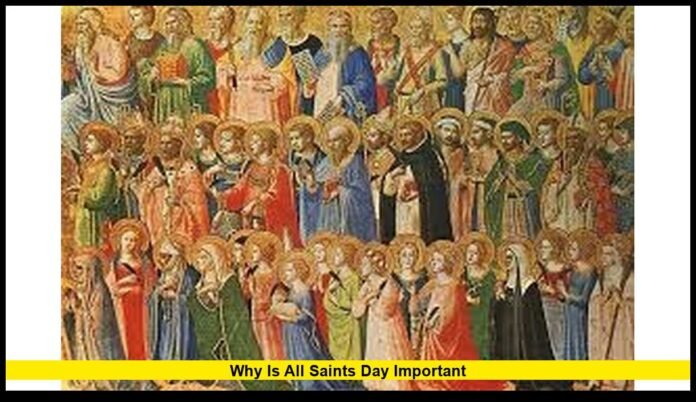

For Christians in the United States, understanding why is All Saints Day important goes beyond tradition—it opens a window into the meaning of holiness, community and hope. On November 1 each year, this Christian feast invites believers to remember not only the canonized saints but the many “ordinary” faithful who lived with love, integrity and compassion. In 2025, when All Saints Day falls on a Saturday, thousands of parishes will still offer special liturgies and moments of remembrance, underscoring this day’s lasting relevance.
Origins and Theological Roots
All Saints Day has deep roots in Christian history. It emerged as a way to honour all who have reached heaven, not just those formally recognized by the Church. From its earliest observance—often in the East around Pentecost—to its later formal adoption on November 1 by Western Christian tradition, the feast evolved into a universal celebration of sanctity.
In many Christian traditions, this day is called the “Solemnity of All Saints.” It reflects the belief that Christian holiness is not confined to the extraordinary—but is a call to each believer. For Americans today, this means that each person’s life, however quiet or hidden, can contribute to the greater story of faith.
Why Is All Saints Day Important in the U.S. Context
1. Affirming Every Person’s Call to Holiness
One of the primary reasons All Saints Day matters is that it expands the notion of sainthood. It teaches that holiness isn’t reserved for clergy, public figures or religious luminaries—it can be lived out in everyday acts of kindness, justice and faithfulness. In the U.S.—a nation shaped by diversity and individualism—this message resonates deeply. It says: your life matters. You can live with purpose.
2. Connecting Past, Present and Future
In a fast-moving society, we often lose sight of our roots and the people who shaped us. Whether family members, mentors or inspiring friends, many lives embody saint-like values. On All Saints Day, communities across America visit cemeteries, light candles, display photos of loved ones and share stories of faithful service. These rituals bridge generations and build a sense of continuity. They answer the question: what legacy do we pass on?
3. Offering Hope and Meaning Amid Modern Uncertainty
In an era marked by upheaval, change and disconnection, All Saints Day brings a counter-cultural message: life matters, goodness endures and death is not the final word. The feast celebrates the “Church Triumphant” – those in heaven – and invites hope for everyone. For U.S. Christians coping with losses, crises or personal struggles, this day provides a anchor of faith, reminding them that love lasts.
4. Supporting Community and Shared Practice
In America, the feast strengthens communal bonds. Churches schedule special services with hymns, readings and reflections focused on the communion of saints. Schools, family groups and parishes organise memory tables, candle-lighting ceremonies or even children’s events where younger members learn about what it means to live well. This fosters belonging, identity and mutual support—important in a society where individualism often dominates.
Practices and Observances That Highlight Its Importance
How we observe All Saints Day in the U.S. reinforces why it matters. Here are key practices that give tangible shape to the feast:
- Liturgies and Worship Services: Most Catholic dioceses list All Saints Day as a solemnity. For 2025-2026 the calendar indicates November 1 as the Solemnity of All Saints for U.S. dioceses.
- Cemetery Visits and Candles: Celebrants and families visit graves, place flowers and light candles to honour the deceased—even those not formally canonised—all of whom reflect the saintly life.
- Memory and Story-Telling: Many churches invite parishioners to submit names of recently deceased members and hold a candle-lighting ceremony, bringing into focus the idea that holiness lives among us.
- Reflection and Personal Commitment: Beyond external acts, the day encourages introspection: What virtues do I admire? How can I live more kindly, more faithfully, more fully?
- Acts of Service: Many Americans mark the day by donating to charities, helping the vulnerable or simply offering a gesture of kindness—in imitation of the saints whose lives reflected service.
Modern Relevance: Why the Feast Grows in Significance
Several trends highlight why All Saints Day’s importance is increasing in the U.S.:
Cultural Integration and Diversity
America’s diverse cultural fabric means that the feast is observed in new ways. In many Hispanic communities, the celebrations of All Saints Day and All Souls Day (November 2) merge with ancestral and communal customs. These expressions enrich the feast and show how its message transcends cultural boundaries.
Digital and Virtual Participation
In the wake of the pandemic, many parishes livestreamed their services with All Saints Day themes. This allowed homebound individuals, distant family members and younger tech-savvy believers to engage online. The advance of digital connectivity ensures that the feast remains accessible—and its importance remains intact in a changing world.
Focus on Everyday Saints
Increasingly, U.S. churches emphasise the “hidden saints” among us: the caregivers, the volunteers, the faithful neighbors. This shift reflects the understanding that sanctity is not only in dramatic gestures but in quiet constancy. It makes the feast more relevant and personal.
Integration with Allhallowtide
All Saints Day forms an integral part of the broader season of Allhallowtide (October 31–November 2). That season invites remembrance, transition and reflection—giving the feast a wider cultural and spiritual context. In the U.S., this positions the day not only as religious but as meaningful within family traditions and community life.
A Table of Core Themes and Their Impact
| Theme | How It Shows Up in U.S. Life | Why It Matters |
|---|---|---|
| Universal call to holiness | Families reflect on personal virtues, not just famous saints | Makes faith accessible to everyone |
| Life, death and hope | Cemetery visits, candle lighting, remembrance rituals | Offers comfort and meaning in loss |
| Community and continuity | Parishes read names, hold memorial services | Builds shared identity and intergenerational ties |
| Faith in action | Acts of charity, service events tied to the feast | Encourages living faith, not just observance |
| Cultural and digital evolution | Multi-ethnic expressions, online observances | Keeps the feast relevant in modern, connected society |
Why the Feast Matters Personally
On a personal level, recognising why is All Saints Day important can transform the way we live. Here’s how:
- It invites each person to reflect: What kind of life do I want to lead?
- It compels us to see beyond ourselves, to neighbours, community, and the past.
- It reassures us that life has purpose: acts of love matter, service counts, memory endures.
- It connects us to something larger—generation to generation, living to departed, temporal to eternal.
In this way, All Saints Day is not just a date on the calendar—it becomes a moment of recalibration, of remembering purpose and reconnecting with deeper values.
How to Recognise the Importance of All Saints Day This Year
If you’d like to engage with the feast in a way that honours its importance, try this:
- Attend a worship service on or around November 1.
- Light a candle, at home or in church, dedicated to someone who lived with faith or kindness.
- Visit a cemetery or memorial, or simply spend time reflecting on loved-ones and the example of faithful lives.
- Choose one act of service or kindness in the spirit of those honoured by the feast.
- Talk with family or friends about the meaning of the day—what it means to you, how you’re inspired to live.
These steps bring the feast’s importance into tangible practice.
Final Thoughts
Understanding why is All Saints Day important reveals it as a feast of hope, connection and purpose. Whether you’re attending church, placing flowers at a grave, lighting a candle or helping someone in need, the day invites you to pause—remember, reflect and recommit.
We welcome your thoughts or stories below—how does All Saints Day matter in your life, and what does the example of the saints inspire you to be?