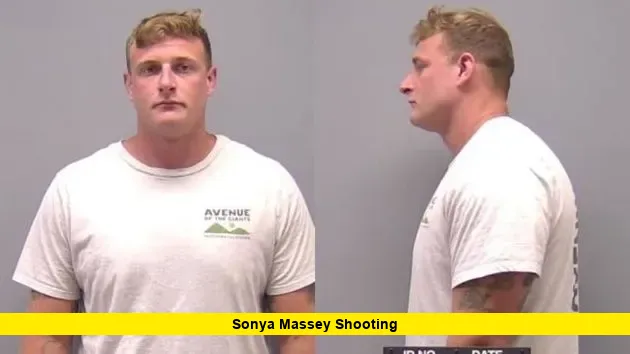

The Sonya Massey shooting case has delivered a pivotal moment in law-enforcement accountability as former deputy Sean Grayson was found guilty of second-degree murder for the fatal shooting of 36-year-old Sonya Massey inside her Springfield, Illinois home after she called 911 for help.
Verdict Delivered: A Landmark Decision
On October 29, 2025, a jury in Peoria County delivered its verdict: Grayson was found guilty of second-degree murder in connection with the Sonya Massey shooting. The jury opted against convicting him on three first-degree murder counts and instead found the situation met the criteria of intentional but not premeditated killing.
He faces a sentencing range of 4 to 20 years—with eligibility for probation—though many observers deem probation unlikely. Sentencing is scheduled for January 29, 2026.
The Incident Unfolded
On the night of July 6, 2024, Sonya Massey, fearing an intruder, dialed 911. Deputies from the Sangamon County Sheriff’s Office—including Grayson—responded. After searching the property and finding no one, officers entered her home. Body-camera footage shows a pot of boiling water on the stove and Massey lifting it while uttering “I rebuke you in the name of Jesus.” Grayson perceived this action as a threat, drew his firearm, threatened the homeowner, and fired three shots—one striking her in the head.
Multiple official investigations later found Massey was unarmed and posed no immediate threat, deeming the use of deadly force unjustified.
Charges, Trial and Conviction
Grayson was indicted on three counts of first-degree murder, plus aggravated battery with a firearm and official misconduct. He pleaded not guilty, arguing self-defense, claiming that Massey threatened him with hot water and that a Taser would not have been effective. Prosecutors countered that the evidence showed Massey posed no assaultive danger and that Grayson’s response escalated beyond what policy or law permitted.
The trial, relocated due to publicity concerns, featured intense scrutiny of body-cam footage, expert testimony on policing and use of force, and a focus on departmental hiring and oversight failures. Ultimately, the jury concluded that while Grayson acted deliberately, he did not plan the killing in advance—thus the second-degree murder verdict.
Victim Profile and Community Response
Sonya Massey, a 36-year-old Black woman, was described by friends and family as deeply spiritual, kind-hearted, and always willing to help others. On the night of her death she called for assistance—not for confrontation. The fact that she was killed in her own home after seeking help deeply resonated and triggered widespread outrage.
In the hours, days and months following the verdict, demonstrations and vigils took place in Springfield and beyond. Massey’s family continues to speak publicly about their grief, the injustice they believe was done, and the broader implications for victims of law-enforcement violence.
Systemic Fallout and Reforms
The Sonya Massey shooting triggered multiple institutional responses:
- An investigation by the U.S. Department of Justice into the Sangamon County Sheriff’s Office, focusing on patterns, practices and how Ms. Massey’s call was handled.
- A $10 million settlement between Sangamon County and Massey’s estate.
- Announcements of changes in hiring, training and use-of-force protocols within the sheriff’s office and at statewide level.
- Legislative moves in Illinois to tighten vetting of law-enforcement officers, spurred in part by this case.
Read Also-Sean Grayson Found Guilty of Murder in the Death of Sonya Massey
Key Issues in the Case
Use of Force and Reasonable Perception
Central to the trial was whether Grayson’s belief that Massey posed a threat was objectively reasonable. While Grayson claimed fear of being scalded by hot water, prosecutors and expert witnesses argued that Massey’s actions did not justify that perception.
Officer Conduct & Background
Grayson’s background became a major focus: prior misconduct, multiple previous law-enforcement postings, and a discharge from the U.S. Army for serious misconduct raised questions about hiring and oversight.
Mental Health Crisis Response
At the time of the 911 call, Massey was reportedly experiencing a mental-health crisis. Her mother had called for help the previous day, warning law-enforcement not to harm her daughter. Officials later acknowledged the call was routed without full awareness of that prior warning.
Transparency & Accountability
Body-camera footage and dispatch transcripts revealed significant inconsistencies, including early suggestions that Massey’s death might have been self-inflicted—later retracted. This sparked concerns about cover-up and eroded public trust.
What Comes Next
The sentencing hearing will determine Grayson’s fate: whether he receives prison time, probation, or a combination thereof. Analysts believe the high-profile nature of the case, public scrutiny and gravity of the misconduct reduce the likelihood of a light sentence—though the law allows for flexibility.
Meanwhile, Massey’s family and supporters remain committed to pushing for broader reform. They are monitoring how the sheriff’s office implements promised changes and whether legislative reforms take hold. The case continues to be referenced in national debates on law-enforcement transparency and racial equity.
Why the Sonya Massey Shooting Matters
This case stands out because of how it ticked multiple alarm boxes: a citizen calls for help and is killed; use of force appears disproportionate; systemic hiring and training issues emerge; racial disparity underpins public perception. The verdict represents a measure of accountability—but for many, the conversation is far from over.
It raises the question: if someone seeking aid can become a casualty, what must change so this doesn’t repeat?
Reforms may follow, but the legacy will only matter if they are implemented meaningfully.
Final Reflection
The Sonya Massey shooting brought tragedy, outrage and a challenge to how we define safety and trust in law-enforcement. The conviction of Sean Grayson offers some measure of justice—but also leaves open deep, unresolved questions about policy, culture and community-police relations.
I invite you to share your thoughts and stay tuned as this story continues to unfold.