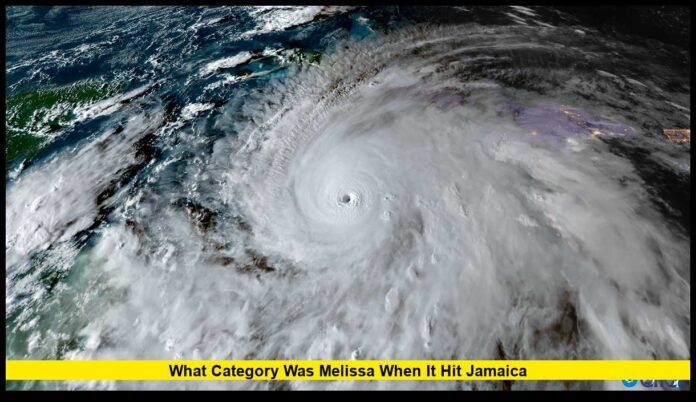

Hurricane Melissa made history in late October 2025 when it slammed into Jamaica as a Category 5 hurricane, unleashing catastrophic winds and torrential rainfall across the island. The storm struck Jamaica on October 28, 2025, with maximum sustained winds reaching 185 mph (295 km/h) — making it the strongest hurricane to ever make landfall in the country.
Hurricane Melissa’s Category and Strength
To answer the question directly — what category was Melissa when it hit Jamaica — the storm was classified as a Category 5 hurricane on the Saffir-Simpson Hurricane Wind Scale. This is the highest possible rating, reserved for storms with sustained winds of 157 mph (252 km/h) or higher.
When Melissa made landfall near New Hope in Westmoreland Parish on Jamaica’s southwest coast, it had intensified dramatically overnight, dropping to a central pressure of around 892 millibars. This placed it among the most powerful Atlantic hurricanes ever recorded.
Meteorologists described Melissa’s rapid intensification as “explosive,” transforming from a Category 3 storm to a Category 5 monster in less than 24 hours. The combination of record-warm Caribbean waters and low wind shear fueled the storm’s unprecedented strength.
Timeline of Hurricane Melissa’s Landfall
| Date | Event | Details |
|---|---|---|
| Oct 25 2025 | Storm forms | Tropical Storm Melissa forms east of the Windward Islands |
| Oct 26–27 2025 | Rapid intensification | Becomes a major hurricane while moving west toward Jamaica |
| Oct 28 2025 | Landfall in Jamaica | Hits near Westmoreland as a Category 5 hurricane with 185 mph winds |
| Oct 29 2025 | Moves into Caribbean Sea | Weakens slightly while heading toward the Cayman Islands |
| Oct 30 2025 | Threatens Yucatán | Forecast models shift toward the Gulf of Mexico |
Impact on Jamaica
The effects of Hurricane Melissa on Jamaica were devastating. The southern and western parts of the island bore the brunt of the storm, with extensive flooding, storm surges, and severe infrastructure damage.
- Wind Damage: Gusts exceeding 200 mph flattened trees, tore roofs from buildings, and damaged essential facilities.
- Flooding: Intense rainfall caused flash floods in multiple parishes, including St. Elizabeth, Manchester, and Clarendon.
- Power Outages: More than half a million customers lost electricity during and after the storm.
- Casualties: Early reports confirmed multiple fatalities and injuries, though rescue operations were still ongoing as of October 29.
- Infrastructure: Roads, bridges, and hospitals sustained major damage, forcing emergency crews to rely on helicopters and boats for rescue missions.
Jamaica’s Prime Minister Andrew Holness declared the entire island a disaster zone, mobilizing the army and emergency services for relief efforts. Schools, airports, and ports were temporarily closed as the government coordinated humanitarian aid.
Category 5 – What It Means
A Category 5 hurricane represents the highest level of destruction on the Saffir-Simpson scale. These storms cause total roof failure on many homes, widespread power outages lasting weeks, and near-complete infrastructure collapse in affected regions.
The key characteristics include:
- Sustained winds: 157 mph (252 km/h) or higher
- Storm surge: 18 feet or more above normal tide levels
- Rainfall: Typically 10–20 inches, leading to catastrophic flooding
- Damage potential: Catastrophic – most framed houses destroyed, and large areas uninhabitable for weeks or months
Melissa met every criterion for a Category 5 hurricane at landfall, making it not only Jamaica’s most severe storm in recorded history but also one of the most powerful storms ever observed in the Caribbean.
Comparison With Previous Jamaican Hurricanes
| Hurricane | Year | Category at Landfall | Maximum Winds (mph) |
|---|---|---|---|
| Gilbert | 1988 | 3 | 125 |
| Ivan | 2004 | 4 (offshore) | 150 |
| Dean | 2007 | 4 | 145 |
| Beryl | 2024 | 4 | 155 |
| Melissa | 2025 | 5 | 185 |
Hurricane Melissa surpassed all previous storms in both strength and impact, surpassing the devastation caused by Hurricane Gilbert in 1988 and Hurricane Beryl in 2024.
Wider Caribbean and U.S. Implications
After crossing Jamaica, Melissa moved westward into the Caribbean Sea, maintaining Category 4 strength as it approached the Cayman Islands and the Yucatán Peninsula. Its trajectory placed it within the Gulf of Mexico’s monitoring zone, prompting early alerts for parts of southern Florida and the Gulf Coast.
The storm’s rapid intensification served as a warning to both Caribbean and U.S. residents about the rising frequency of strong Atlantic hurricanes. Climate experts noted that warmer ocean temperatures in 2025 likely contributed to Melissa’s explosive power.
U.S. authorities also began coordinating potential relief operations through agencies such as USAID and FEMA, preparing to assist Jamaica in recovery and reconstruction efforts.
Jamaica’s Recovery and Ongoing Efforts
As of October 29, 2025, cleanup and rescue operations were still underway across Jamaica.
Emergency shelters remained active in every parish, and the government urged citizens to conserve resources as power restoration efforts continued.
Key recovery priorities included:
- Restoring electricity and water supplies in heavily damaged areas
- Clearing debris from major roadways to reopen transportation routes
- Providing shelter and aid to displaced residents
- Rebuilding hospitals and schools affected by flooding and wind damage
The country’s tourism industry, a key economic driver, faced temporary disruptions as airports and resorts closed for safety assessments. However, officials expressed optimism that recovery would progress quickly with international support.
Final Overview
To sum up, Hurricane Melissa was a Category 5 storm when it hit Jamaica — the most powerful ever to strike the island. With wind speeds of up to 185 mph, catastrophic flooding, and widespread destruction, Melissa’s landfall on October 28, 2025, will be remembered as one of the most severe weather events in Jamaica’s modern history.
The story of Hurricane Melissa is a stark reminder of nature’s power and the importance of preparedness in the face of extreme weather. Share your thoughts below on how Jamaica and the wider Caribbean can better strengthen resilience for future storms.